

Local Mover's 6–8 Week Plan for Families Moving to Niagara Falls


Niagara Falls works best for first-time buyers, retirees, remote workers, and hospitality employees who want lower housing costs than the GTA and don’t mind planning around a seasonal, tourism-driven economy. The trade-off is real: affordability and space come easy, but noise, traffic, and short-term rental turnover cluster hard around the tourist corridors. The fix is simple: pick your neighbourhood by lifestyle first, and the rest of the move gets a lot easier.
TL;DR:
Expect higher short-term rental density near tourist corridors, especially around Clifton Hill and Fallsview, with parking and noise becoming prominent during peak season.
Family-friendly neighborhoods like Stamford and Chippawa offer quieter streets, larger yards, and better access to schools and healthcare, unlike tourism-oriented areas.
Housing prices in Niagara Falls remain significantly lower than the Greater Toronto Area, with older homes requiring thorough inspection, especially for electrical systems and moisture issues.
Commuting to Toronto is possible via QEW or regional transit, but daily drives are lengthy, and local transit may not replace a personal vehicle for most errands.
Moving costs and planning should factor in seasonality, with booking at least four weeks in advance to avoid peak traffic and rental schedules.
Table of Contents
City Zones: Tourist Core vs Residential Pockets
Niagara Falls splits into three distinct zones, and confusing them is the single biggest mistake newcomers make. The tourist corridor around Clifton Hill and Fallsview runs loud and busy nearly year-round, with hotel traffic, tour buses, and a dense concentration of short-term rentals. Downtown and mid-city areas sit closer to everyday life, mixing retail, older housing stock, and moderate traffic. The quieter residential pockets, farther from the falls themselves, feel more like a typical Ontario suburb, with single-family homes, backyards, and far less foot traffic.
Tourism swells from May through September, and that seasonal surge changes how streets near the attraction feel and sound. A block that’s peaceful in February can turn into a parking nightmare on a July weekend.
Drive or walk candidate streets on a weekday morning and again on a summer Saturday night.
Check listings for proximity to Clifton Hill, Lundy’s Lane, and the Rainbow Bridge corridor.
Ask about short-term rental density on the block, not just the neighbourhood name.
Pro Tip: Test your actual commute route at rush hour before you sign anything. Ten minutes on a map app can look very different at 5 p.m. on a Friday in August.
Which Neighbourhood Fits Your Family?
Local real-estate guides consistently point families toward Stamford and Chippawa for quieter streets, while steering investors and short-term rental buyers toward Fallsview and downtown condo towers. Each area serves a different kind of mover.
Stamford: Established, family-friendly, mostly detached homes, close to schools and grocery stores, minimal tourism spillover.
Chippawa: A former town now folded into the city, offering a small-town feel, larger lots, and river access, popular with families wanting more space.
Fallsview: Condo-heavy and tourism-adjacent, best suited to investors or buyers who want walkability to attractions over quiet evenings.
Drummond: Centrally located with a mix of older bungalows and newer infill, convenient for commuters who need quick highway access.
Mount Carmel: A quieter residential pocket near schools and parks, appealing to buyers who want suburban calm without a long drive from downtown.
Lundy’s Lane: Historically tourism-oriented with motels and commercial strips, though side streets off the main corridor offer more affordable starter homes.
McLeod: A growing suburban area with newer builds, plazas, and easy QEW access, attractive to young families and first-time buyers.
Families weighing schools, parks, and hospital access generally do better in Stamford, Chippawa, Mount Carmel, or the quieter pockets of McLeod.
What Should You Budget for Housing?
Niagara Falls housing runs noticeably more affordable than Greater Toronto Area pricing, which is the main draw pulling GTA buyers east. Detached homes in family neighbourhoods still cost more than condos, but they typically come with a yard, more storage, and fewer monthly fees. Condo living near Fallsview suits investors chasing short-term rental income more than families wanting stability.
Older housing stock across the city, especially in Drummond and parts of Lundy’s Lane, comes with inspection risks worth taking seriously.
Check the age and condition of the furnace, roof, and electrical panel.
Ask about basement moisture, especially near the escarpment.
Confirm whether knob-and-tube wiring or aluminum wiring is present in pre-1970s homes.
Get a sewer scope on any home over 40 years old.
Local guides emphasize that housing condition and tourism exposure vary street-by-street, so the same price band can mean very different living conditions depending on the exact block.
Schools and Childcare: What to Check First
Two boards cover K to 12 education here: the District School Board of Niagara and the Niagara Catholic District School Board, and each publishes catchment maps online before you commit to a street. Families with older kids should also look at Niagara College’s Welland Campus and Brock University, both within a short drive and useful for co-op programs or part-time work.
Confirm your exact catchment school using the address, not the neighbourhood name.
Register for licensed childcare early. Waitlists in popular areas often run several months.
Ask new schools about mid-year transfer paperwork if you’re moving during the school term.
Jobs and Commuting: What’s Realistic
Tourism and hospitality anchor the local job market, which means plenty of seasonal work but fewer steady, year-round openings outside peak months. Remote work has opened up more flexibility for residents who don’t need to be tied to the tourist economy. GO Transit expansion into Niagara has made occasional GTA trips more workable, though daily commuting to Toronto remains a long haul for most people.
Expect strong seasonal hiring in hospitality, retail, and attractions from spring through fall.
The QEW connects Niagara Falls to Hamilton and the GTA for drivers willing to commute.
Niagara Region transit and WEGO cover local routes but won’t replace a car for most households.
Finding a Doctor and Other Essential Services
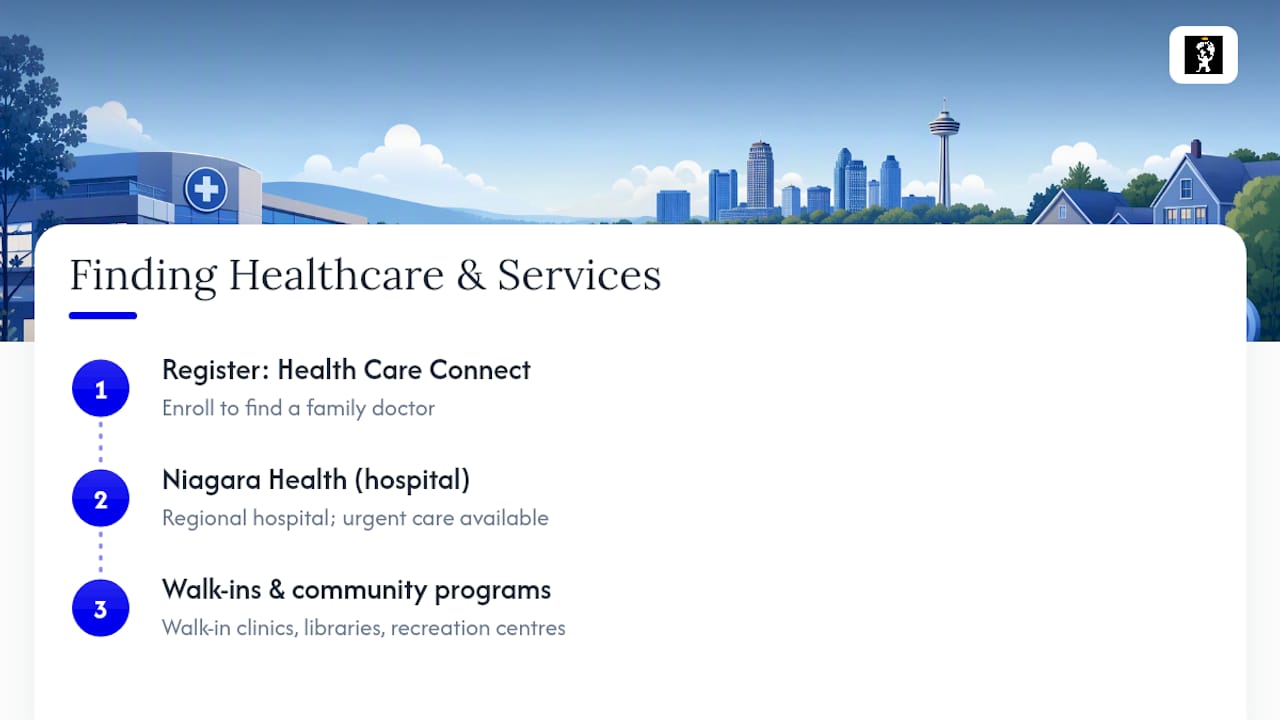
Register with Ontario’s Health Care Connect service to find a family doctor, since many local practices have closed lists. Niagara Health operates the regional hospital serving the city, with urgent care and walk-in clinics filling gaps for non-emergency needs. Public libraries and recreation centres across the city also offer low-cost programs worth checking out early.
Getting Around Without Guessing
WEGO buses handle tourist-corridor routes well, but Niagara Region transit covers the wider city for errands and commuting. A car becomes practical fast once you’re outside walking distance of downtown, and parking near Clifton Hill or Fallsview during peak season can eat up more time than the drive itself. The Niagara Transit hub in St. Catharines connects riders to regional routes, while the Rainbow Bridge offers quick access to Niagara Falls, New York, for cross-border trips. Test your planned commute before moving day, not after.
Setting Up Utilities and Property Tax
New residents need to contact the City of Niagara Falls and Niagara Region to set up hydro, water, and waste collection on their new address. The city’s official moving resource page lists garbage and recycling schedules along with property tax details.
Bring a lease or closing documents plus government ID for utility setup.
Confirm your garbage and recycling collection day immediately. Schedules vary by street.
Look up your property tax rate and due dates before your first bill arrives.
Your 6 to 8 Week Moving Checklist
Moving into Niagara Falls goes smoother with a written timeline instead of a mental one.
8 weeks out: Research neighbourhoods, test-drive commute routes, and start collecting mover quotes.
6 weeks out: Book your mover, confirm a moving date that avoids peak tourist weekends, and register kids for school.
4 weeks out: Start packing non-essentials, order moving boxes, and submit your change-of-address to Canada Post.
2 weeks out: Confirm utility transfer dates, finalize inventory lists for movers, and pack a first-week essentials box.
Moving week: Pack remaining rooms, defrost the fridge, and confirm arrival windows with your mover.
Moving day: Walk the old home for a final check, then walk the new home before boxes arrive.
First week post-move: Register for a family doctor, update your driver’s license, and locate your nearest grocery store and pharmacy.
When comparing mover pricing in Ontario, insist on a written binding or not-to-exceed quote rather than an open hourly estimate, confirm what insurance actually covers for damage, and require an itemized inventory for anything fragile or high-value.
Pro Tip: Older Niagara Falls homes often have narrow stairwells and tight basement doors. Measure your largest furniture pieces against doorways before moving day, not after the truck arrives.
What a Local Family-Run Mover Wants You to Know
After coordinating moves across Niagara Falls, we’ve learned that scheduling around tourism season saves real time and money. Atlas Kings quotes jobs with itemized, flat-rate pricing so families know costs upfront. One habit we swear by: book your move date at least four weeks ahead of long weekends, when local roads and rentals get tightest.
— Natalie
Local Moving Help That Doesn’t Nickel and Dime You
Some moving companies offer combined services handling transport, delivery, and decluttering, with itemized and flat-rate pricing intended to avoid surprise fees common in this industry.

If you’re relocating locally, the Small Move service fits households with fewer than 10 large items, while a full Small Move booking covers larger household transitions. Already bought furniture off a marketplace listing before your move? Inhouse Delivery gets it to your new address and assembled. And if downsizing before the move feels overwhelming, the ADHD Reset service helps declutter and organize a space so you’re not moving boxes you’ll never unpack. Pair that with tips from organizing your home before a big transition for a head start on packing light. Request an on-site estimate or book your quote directly through Atlas Kings’ booking page to lock in your moving date before peak season fills up.
FAQ
Is Niagara Falls a Good Place to Live?
Niagara Falls suits families, retirees, and remote workers who want affordability outside the tourist corridor and don’t mind a seasonal local job market. Quieter neighbourhoods like Stamford and Chippawa offer suburban living, while areas near Fallsview and Lundy’s Lane carry more noise and traffic from tourism.
Why Is Niagara Falls, New York, So Run Down?
This guide covers Niagara Falls, Ontario, which has a different economic base and housing market than Niagara Falls, New York. The Canadian side benefits from a much larger tourism economy and cross-border investment, giving it more consistent maintenance and development along its main corridors.
What’s the Nicest City to Live in Canada?
Rankings vary depending on what matters most to a mover, whether that’s affordability, climate, or job access, so there’s no single agreed-upon answer. For families prioritizing lower housing costs than the GTA with lake access and tourism-driven amenities, Niagara Falls consistently ranks as a strong regional option.
Are House Prices Dropping in the Niagara Region?
Niagara Falls remains more affordable than the GTA, which continues to draw buyers priced out of Toronto. Specific price trends shift by season and neighbourhood, so check current local listings or a regional real-estate professional for the latest numbers on your target street.
How Do I Find a Family Doctor After Moving to Niagara Falls?
Register with Ontario’s Health Care Connect service as soon as you arrive, since many local practices maintain closed patient lists. Niagara Health operates the regional hospital, and walk-in clinics across the city can bridge the gap while you wait for a permanent doctor.
Recommended
Comments