

Mover Tested Tier Method for Furniture Anchoring After 500 Moves

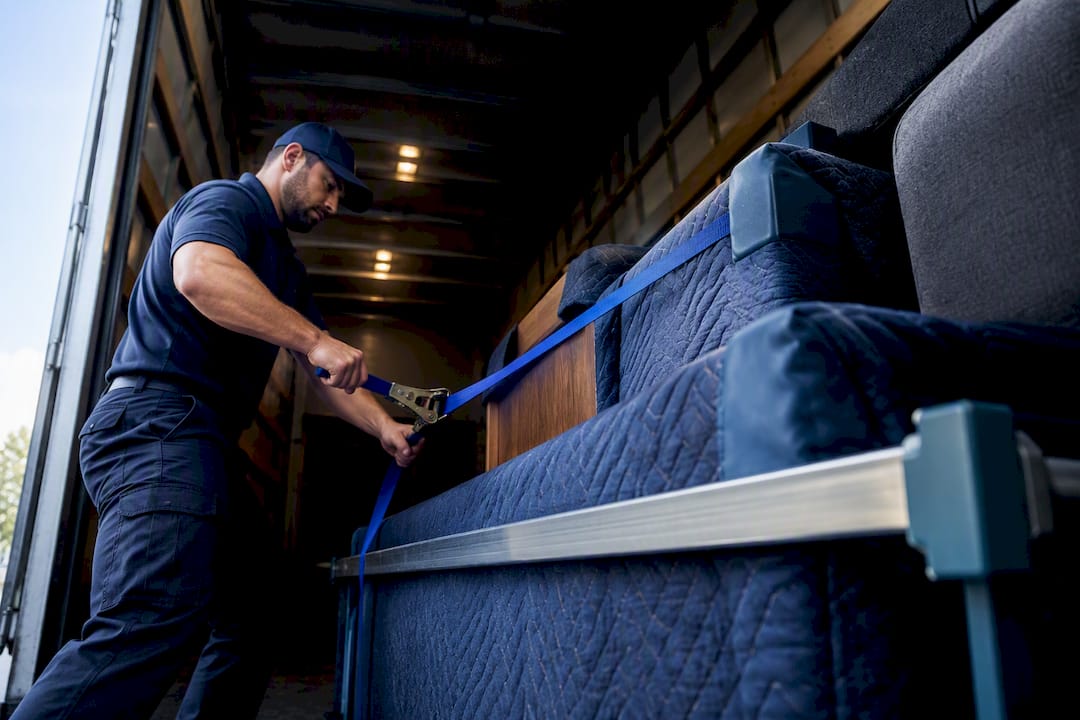
Secure furniture by building tight vertical tiers from the truck’s cab wall backward, padding every finished surface, and locking each tier down with rated ratchet straps and load bars before you move to the next. That sequence, not any single strap or blanket, is what actually keeps a load stationary through highway speeds, hard braking, and stairwell turns. Get it out of order, and even the best straps in the world won’t save a dresser from tipping.
TL;DR:
Properly building vertical tiers with ratchet straps and load bars in the correct sequence prevents shifting and damage during transport.
Using rated equipment above your load’s weight capacity and rechecking strap tension at the first fuel stop improves load security.
Wrap and pad furniture before strapping, avoiding direct tape on finishes and ensuring fragile items are protected with dedicated packing methods.
Securing top-heavy and irregular furniture with X-pattern straps and additional supports reduces tipping risks, especially in narrow or unstable pieces.
Professional movers are recommended for complex jobs like stairs, long-distance hauls, or handling fragile antiques, as they bring the proper gear and expertise.
Table of Contents
What Does Furniture Anchoring Safety Actually Mean?
In the moving trade, furniture anchoring safety refers to how you secure pieces for transport and handling, not how you bolt a bookcase to a bedroom wall. That second topic, anti-tip anchoring, is a real safety issue in its own right, but it’s a different job with different hardware. What we’re talking about here is load securement: the padding, strapping, and bracing that keeps a couch, a dresser, or a dining set from shifting, sliding, or crashing into your other belongings between pickup and delivery.
Professional movers sometimes call this “the wall method” or “tiering,” and it borrows more from cargo logistics than from carpentry. At Atlas Kings, we’ve run this process on more than 500 moves since 2021, and the pattern holds regardless of truck size: loads fail when people skip a step, not when they lack the right gear. The gear matters, but the sequence is what prevents damage claims and re-dos.
Essential Securement Kit: What You Actually Need
Most damage during a move traces back to missing or mismatched equipment, not bad luck. Before you touch a single piece of furniture, lay out your kit and check quantities against your load size.
Moving blankets or furniture pads: budget 8 to 12 for a small apartment move, more for a full house, since every wrapped surface needs full coverage, not a partial drape.
Stretch wrap: bands blankets in place without adhesive, so nothing peels paint or varnish on arrival.
Mattress and box spring bags: keep fabric clean and prevent snags on hardware or splinters.
1-inch ratchet straps rated near 1,000 lb: the workhorse for heavy wardrobes and dense case goods; plan on 4 to 6 for a typical load.
Cam-buckle straps: gentler tension for fragile or antique pieces where a ratchet’s pull could crack old joinery.
Load bars, spring-loaded and ratcheting steel: the ratcheting type handles dense tiers, while spring bars suit lighter loads; two per truck is a reasonable baseline.
E-track fittings or rail-compatible strap ends: match your strap hardware to whatever anchor system the truck actually has.
Soft loops and edge protectors: stop webbing from biting into corners or upholstery.
Appliance dolly and furniture sliders: reduce the handling that causes most scuffs before the truck is even loaded.
Buy or rent gear rated above what you think you need. A strap rated for exactly your heaviest item leaves no margin for a sudden stop.
How Do You Load and Anchor Furniture Step by Step?
The tier method treats the truck bed like a masonry wall: build it flat, tight, and one full layer at a time, and each row supports the next. Skipping around, loading a dresser here and a box there, is how gaps form and gaps are what let furniture start moving.
Stage everything by weight before the truck arrives. Sort heavy appliances, dense furniture, and boxes so you’re not improvising the order mid-load.
Load heavy items against the cab wall first. Refrigerators, dressers, and washers go in low and forward, since that’s the position least affected by braking forces.
Build a complete floor-to-ceiling, wall-to-wall tier before starting the next one. Filling roughly 1,000 cubic feet in five tiers is typical for a two-bedroom load in a 20-foot truck.
Strap the finished tier’s face rail-to-rail at roughly chest height, then install a load bar directly behind it to block forward migration.
Use an X pattern for tall or top-heavy pieces like wardrobes, so the strap counters both forward and sideways lean.
Route straps behind E-track slots, not looped over the top, for real leverage instead of a strap that slides under vibration.
Protect every point where webbing touches furniture with cardboard or a soft loop before you tighten anything.
Snug straps firm, not maximum. Over-tensioning crushes veneer and cracks old finishes just as fast as a loose strap lets something fall.
Recheck tension at your first fuel stop. Loads settle in the first few miles, and straps that felt tight at the curb often aren’t after ten minutes on the highway.
Pro Tip: Never leave the final tier at the back door unstrapped. An unsecured face can jam the roll-up door on arrival or spill the moment you open it.
Protecting Finishes While You Anchor
Anchoring and protecting a piece happen in one motion, not two separate steps. Wrap first, band second, strap third. Skip the order and you’re either damaging the finish or leaving it unsecured.
Blanket or pad every piece, then band it with stretch wrap. Adhesive tape directly on finished wood can pull varnish and paint right off when it’s removed.
Bag mattresses and box springs before they go anywhere near a tier, since bare fabric picks up grime and snags on hardware.
Bag and tape loose hardware to the piece it came from, not into a random box where it disappears for a week.
Slide cardboard or a soft loop under any strap contact point to stop webbing from denting edges or cutting into upholstery.
Wrap drawers and doors shut with stretch wrap instead of tape. It holds them closed through the whole trip without leaving residue or lifting the finish. For hardware that tends to swing loose on cabinetry, non-damaging securement techniques built for doors and closets translate well to furniture with similar hinges.
Fragile items under 45 pounds deserve their own pass. A dedicated packing approach for lightweight breakables prevents them from getting crushed between heavier tiers.
Securing Tall, Top-Heavy, and Irregular Furniture
Wardrobes, tall dressers, and anything narrow at the base need more than a single strap across the middle. An X strap counters the tipping motion that a straight horizontal band can’t stop on its own.
Cross an X strap over wardrobes and tall dressers, then add a second, lower strap to block forward tipping specifically.
Stand mattresses and sofas on edge rather than laying them flat, then strap them tight to the rail so they can’t slide or fold.
Sandwich mirrors and framed art between mattresses or box springs, glass side protected, so nothing else in the tier can press directly on the frame.
Flag pianos and similar specialty items as pro-only work. They need dedicated ramps, straps, and often a second crew member, and improvising here risks both the instrument and whoever’s carrying it.
For anything glass or framed, a proper packing and shake test before loading catches loose glazing before it becomes a problem on the highway. And if a mattress is part of the load, matching the transport method to the mattress type keeps foam and hybrid models from developing permanent creases.
Pro Tip: If a piece feels unstable when you nudge it by hand before strapping, it’ll feel a lot more unstable at 60 miles per hour. Fix the base support first, then strap.
When Should You Re-Check Strap Tension?
Straps that were tight at the curb rarely stay that way. Padding compresses, boxes settle, and vibration works webbing loose within the first several miles, which is exactly why professional crews build a recheck into the trip instead of treating strapping as a one-time task.
Check tension at the first fuel stop, typically 20 to 40 minutes into the drive, since that’s when initial settling has already happened.
Test by hand, not by guesswork: a properly tensioned strap gives slightly under firm pressure but doesn’t sag or rattle.
Watch for over-tightening signs like compressed foam corners, dented veneer edges, or a strap that’s cutting a visible line into upholstery.
Run a quick pre-arrival pass: confirm straps, load bars, and padding are still in place, doors haven’t popped open, and no webbing shows fraying or abrasion.
When Should You Hire Professional Movers?
Certain jobs are hard to do safely without a crew and the right gear, no matter how many straps you own. Stairs, long-distance hauls, fragile antiques, heavy appliances, and anything requiring more hands than you have on-site are the clearest signals to book professional help.
Qualified movers arrive with blankets, rated straps, load bars, and working knowledge of whatever anchor system the truck uses, plus the disassembly and reassembly skills that keep a bed frame or sectional from becoming a puzzle on the other end. At Atlas Kings, that shows up as Small Move for compact loads under about ten large items, Inhouse Delivery for large or bulky purchases, and Assembly Service plus Space Reset for households that want the placement handled too. Pricing is itemized and flat-rate, quoted before the truck shows up, so there’s no guessing at the final bill.
Securing Furniture in Vans, Box Trucks, and Trailers
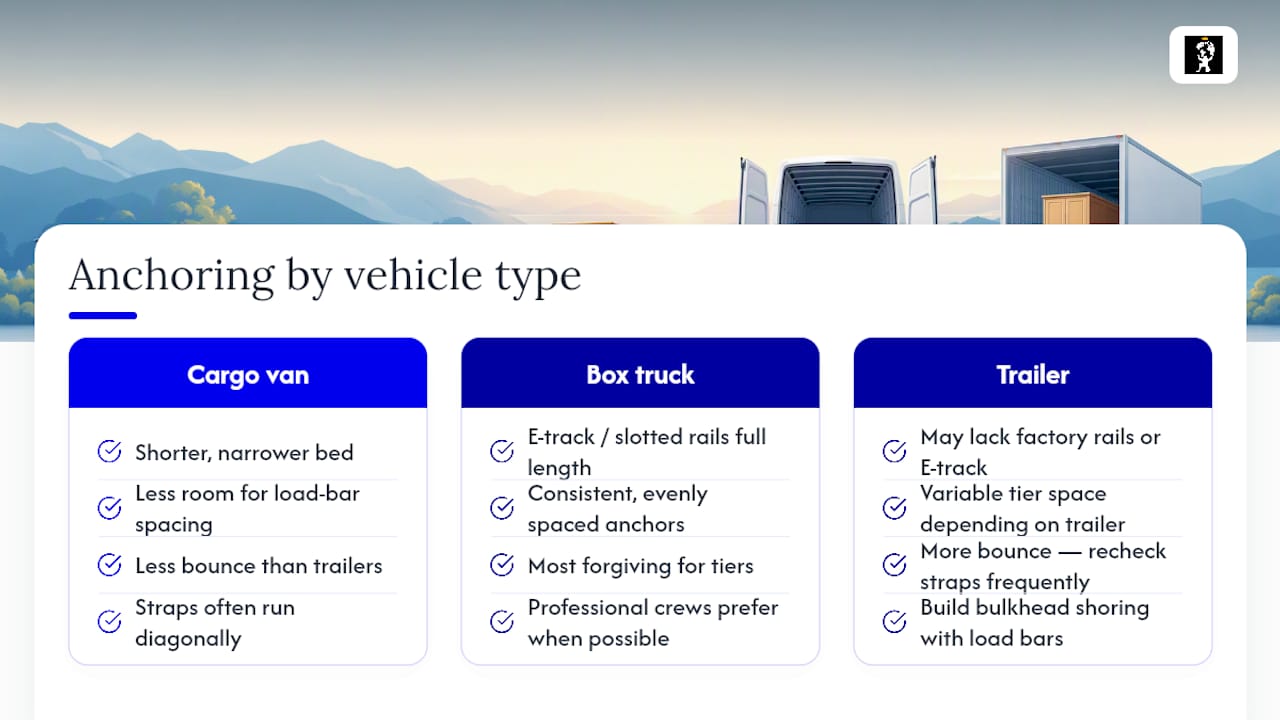
Every vehicle type handles a load a little differently, and the anchoring approach has to adjust with it. A cargo van’s shorter, narrower bed means tiers get built faster but have less room for load bar spacing, so straps often need to run diagonally across a tighter footprint to get real coverage.
Box trucks are the most forgiving setup for the tier method because most have E-track rails or slotted rails running the full length of both walls. That gives you consistent, evenly spaced anchor points for every tier, which is why professional crews default to box trucks whenever the load size allows it.
Trailers introduce a variable the other two don’t have as often: bounce. An enclosed trailer riding on a different suspension setup than a straight truck can transmit more vibration into the load, which means straps need rechecking more frequently, not less. If the trailer lacks factory rails or E-track, building bulkhead shoring with load bars and blankets against the front wall gives the load something rigid to lean on instead of relying on straps alone.
Whatever the vehicle, the same rule applies: heavy and dense goes low and toward the front, lighter and more fragile goes higher and toward the back, and no tier gets built past what you can strap off immediately. Matching the vehicle to the load in the first place also matters more than most people expect. Choosing the right truck size for the job makes it easier to build a genuinely tight pack instead of fighting empty space the whole way there.
Pre-Move Furniture Preparation Checklist
Furniture that’s still full of belongings, or still has removable parts attached, is furniture that’s guaranteed to shift, dent, or come apart in transit. A short prep pass the day before loading solves most of this.
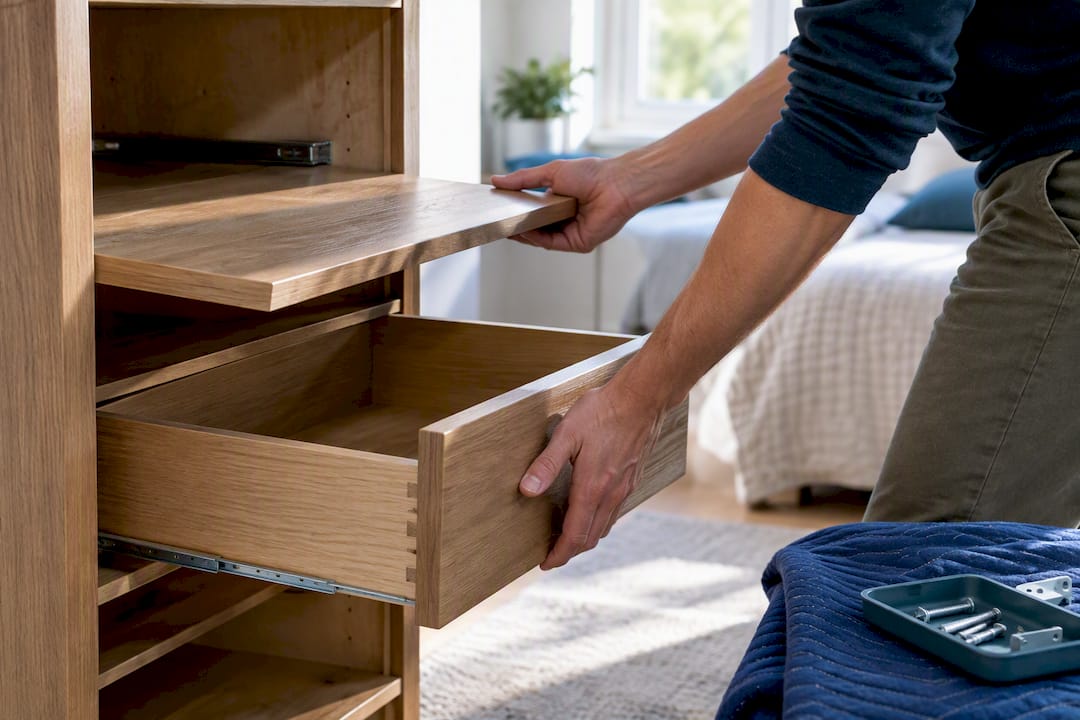
Empty every drawer completely. A loaded dresser drawer adds unpredictable weight to one side of the piece and can slide open mid-transit, catching on a strap or another item. Remove detachable legs, shelves, and glass inserts from tables, bookcases, and cabinets, then wrap and label each part so it travels with its piece instead of getting lost in a box. Take doors off anything that swings freely, like armoire fronts, if the hinges allow it without tools.
Disconnect and secure any hardware, cords, or hanging fixtures. A floor lamp’s cord wrapped loosely around the base will work itself free and drag under a strap. Bed frames should come apart into their individual rails and slats rather than traveling assembled, both for space efficiency in the tier and to avoid stressing joints that weren’t built to be moved as one rigid unit.
Confirm every wrapped piece is actually closed and won’t pop open under vibration. That’s the moment to double check stretch wrap on doors and drawers, not after the tier’s already built around it. A five-minute walk through each room with this checklist in hand catches the small stuff that turns into damage claims later.
Unloading and Positioning Furniture Safely
Unloading is where a well-secured load can still go wrong if the sequence gets rushed. Reverse the loading order: the last tier loaded comes off first, and each piece should be checked for shifted padding or loosened wrap before it leaves the truck.
Walk the delivery space before you carry anything in. Confirm doorways, stairwells, and turns can actually fit the largest pieces, and clear a path so movers aren’t making split-second decisions with a heavy dresser in their hands. Set furniture down on sliders or moving blankets initially, especially on hardwood or tile, so final positioning doesn’t mean dragging a couch across a floor that scratches easily.
Reassemble items in the order that makes the room usable fastest: bed frames and major case goods first, then smaller items and decor. Check that every leg, shelf, and door reattached during prep actually got reinstalled correctly, not just leaned back into place. A piece that looks assembled but isn’t properly seated is a hazard the moment someone leans on it.
Safety Precautions for Movers and Furniture
Anchoring furniture safely protects the people doing the lifting just as much as it protects the furniture itself. A strap that’s improperly tensioned or a load bar installed at the wrong angle can release under pressure and injure whoever’s standing nearby.
Always lift with your legs, not your back, and communicate verbally before moving anything heavy as a team, since a mistimed lift is how backs and pieces both get hurt. Keep pathways clear of loose straps, blankets, and tools while a tier is being built, so nobody trips while carrying a dresser drawer. Wear gloves when handling ratchet straps under tension, since webbing can pinch or burn fingers if it slips during tightening.
Never stand directly behind a load bar while installing it, and never place a hand between a strap and the furniture it’s securing while someone else is tightening it. When lifting mirrors, glass tabletops, or framed art, carry them vertically rather than flat whenever possible, since a flat carry concentrates weight unevenly across an unsupported surface and increases the chance of cracking.
Common Mistakes People Make When Anchoring Furniture
Most furniture damage during a move traces back to a small handful of repeat mistakes, and nearly all of them are easy to avoid once you know what to watch for.
Skipping the tier order is the biggest one. Loading whatever’s closest instead of building complete tiers leaves gaps that let items shift the moment the truck brakes. A close second is using tape directly on finished wood, which can lift paint or varnish the instant it’s peeled off, sometimes taking the finish with it. Over-tightening straps is another frequent error, since people assume tighter always means safer when it actually crushes foam corners and dents veneer.
Leaving the truck’s rear face unstrapped is a mistake that only shows up when it’s too late, either jamming the roll-up door or spilling items the second it opens. Mismatching strap type to item is equally common: using a rigid ratchet strap on an antique when a gentler cam-buckle strap would have applied even pressure without stressing old joints. And skipping the recheck at the first stop means nobody catches the settling that happens in those first few miles, which is exactly when a load that looked secure at the curb starts to loosen.
What 500-Plus Moves Have Taught Us About Anchoring
Our standard operating procedure hasn’t changed much since we started: stage by weight, pad every surface, build the tier, strap it before starting the next one, place the load bar, and recheck at the first stop. The mistakes we fix most often on-site are rushed tiers and over-tightened straps on antique pieces, both entirely preventable with the right order of operations.
— Natalie
Book a Professional Move With Atlas Kings
Hiring a crew that already knows the tier method beats renting straps and hoping for the best. Atlas Kings handles the whole securement process for you, from staging and padding to strapping and load bar placement, so nothing shifts between your old address and the new one.

Whether you need a full Small Move under ten large items, Inhouse Delivery for a bulky purchase, or Assembly Service once everything’s in the room, our crews bring rated ratchet straps, load bars, and E-track know-how to every job. Pricing is itemized and flat-rate before you commit, with no hidden fees added after the fact, and that transparency is backed by more than 500 completed moves since 2021. If storage comes up mid-move, our itemized storage and moving box rental options cover the gap. Book online and get a quote for your specific load before you decide what to strap yourself.
Sources
FAQ
What Is the Best Way to Anchor Furniture for a Move?
Build tight vertical tiers from front to back, pad and wrap every surface, and strap each finished tier rail-to-rail before starting the next one. Add a load bar behind each tier and recheck strap tension at the first fuel stop, since loads settle in the first few miles.
How Many Straps Do I Need for a Small Move?
Plan on 4 to 6 rated ratchet straps and 2 load bars as a baseline for a small apartment load. Larger homes with multiple tiers usually need more straps to strap off each completed layer individually.
Can I Use Regular Rope Instead of Ratchet Straps?
Rope lacks the consistent, controllable tension a ratchet or cam-buckle strap provides, which makes it far easier to either under-secure a load or accidentally crush a fragile finish. Rated straps designed for cargo securement remain the safer choice for anything heavier than a small box.
Does Atlas Kings Provide the Straps and Equipment?
Yes, Atlas Kings crews bring rated ratchet straps, load bars, moving blankets, and E-track knowledge to every booked job. Services like Small Move and Inhouse Delivery include this equipment as part of the itemized, flat-rate quote.
When Should I Hire Professional Movers Instead of Doing It Myself?
Hire professionals when the job involves stairs, long distances, fragile antiques, heavy appliances, or more furniture than your available help can safely lift. A crew arrives with the strapping technique, load bars, and disassembly skills that make tiering and anchoring far less risky than improvising alone.
Recommended
Comments