

After 500+ Moves: 3 Moving Estimate Types That Protect Your Price


Three types of moving estimates exist: non-binding, binding, and binding not-to-exceed (NTE). A binding estimate locks your price, a non-binding estimate leaves it flexible based on final weight or hours, and an NTE caps your cost while still letting you pay less if the move goes faster or lighter. Whatever a mover quotes you, the real financial obligation lives in the written estimate and the bill of lading or service contract, not a verbal promise.
TL;DR:
Non-binding estimates can significantly vary in final cost depending on actual weight or hours, especially if inventory or access issues change.
Binding estimates may be voided if additional items, furniture, or services are added after the initial survey, leading to unexpected charges.
Not-to-exceed estimates set a maximum price cap, allowing potential savings if the move is faster or lighter than the forecasted scope.
Accurate quotes require a detailed home walkthrough or video inspection to identify access obstacles and the true volume of items being moved.
Comparing multiple quotes is effective only if all estimates are of the same type and based on similar information, with written estimates providing the most transparency.
Table of Contents
What Are the Main Moving Estimate Types?
A non-binding estimate is a mover’s good-faith prediction of cost. Your final bill gets calculated after the fact, based on actual weight (for long-distance moves) or actual hours worked (for most local moves). You could pay more or less than the number on the paper, and that swing can be significant if the crew underestimates your inventory.
A binding estimate locks the price up front, based on the inventory you provide during the survey. That protection has a catch: if you add furniture, extra boxes, or new services after signing, the mover can void the binding terms and rebill you at non-binding rates. Industry explainers on quote types consistently flag this as the most common way binding quotes fall apart.
A binding not-to-exceed (NTE) estimate combines the best of both. You pay the actual cost if it comes in under the estimate, but you never pay more than the ceiling. NTE agreements work like a price cap layered on top of time-and-materials billing, and the contract should spell out exactly which cost categories count toward that cap.
Here’s how each plays out in practice:
Non-binding: A flexible local move where the family isn’t sure exactly how many boxes they’ll end up with.
Binding: A long-distance move where the household wants a fixed number for budgeting, and the inventory is already locked in.
Not-to-exceed: A move with some unknowns (maybe a storage unit hasn’t been fully sorted) where the customer wants a firm ceiling but doesn’t want to overpay if things go smoothly.
How Do Movers Calculate Moving Cost Estimates?
Long-distance moves are typically priced by weight, since the truck’s total load determines fuel and labor costs across hundreds of miles. Local moves are usually priced by the hour, based on crew size and a set hourly rate with a minimum time block. MoveBuddha’s cost breakdown confirms this split and lists the line items that most often get missed on a first-pass quote.
Flat-rate packages show up mostly for smaller, well-defined jobs, like a studio apartment or a handful of large items, where the scope is easy to predict without a full inventory walkthrough.
Watch for these common add-ons that inflate a bottom-line number:
Fuel surcharges, especially on long-distance routes
Full-service packing and packing materials
Stair-carry or long-carry fees when there’s no elevator access
Shuttle fees if a full-size truck can’t reach the building
Valuation coverage or third-party moving insurance
Temporary storage if delivery dates don’t line up
Why Do Moving Estimates Change After the Survey?
Estimates rarely move without a reason, and most of those reasons trace back to something that wasn’t visible when the quote was written. Access issues top the list: a narrow stairwell, a broken elevator, or a parking restriction can add labor hours that weren’t priced in. Undisclosed heavy items (a piano, a gun safe, a marble table) shift both weight and crew requirements.

Packing time gets underestimated constantly, especially in kitchens and garages where clutter hides real volume. Seasonal demand matters too. Summer weekends carry higher hourly rates and less scheduling flexibility than a weekday move in February.
A few red flags should make you pause before signing anything:
No written estimate, only a verbal number
Vague line items with no dollar breakdown
Pressure to sign immediately or lose the rate
How to Get an Accurate Moving Estimate
A better quote starts with better information, and that means giving the mover a real look at your home before moving day.
Request an in-home or video walkthrough. Canadian consumer guidance recommends this over phone-only estimates because it catches access problems and exact inventory that a phone call misses entirely.
Build an itemized inventory. List every room, and flag anything unusually heavy or awkward, like a treadmill or a china cabinet.
Photograph tight spots. Narrow doorways, spiral staircases, and low parking clearances all affect labor time.
Ask the mover to label the estimate type in writing. Confirm what’s included, what’s excluded, and which fees could still apply.
Collect multiple written quotes. Compare the terms, not just the total, since two estimates with the same number can carry very different conditions.
Pro Tip: A video walkthrough on your phone works almost as well as an in-person visit for typical access issues like stairs and elevators, and it takes ten minutes instead of an afternoon.
Which Moving Estimate Type Should You Choose?
The right choice depends on how much certainty you need versus how much flexibility you’re willing to trade for it.
Choose binding if you’re working with a strict budget and you can hand the mover a complete, accurate inventory before the move.
Choose non-binding if your move is local, your inventory might still shift, and you’re comfortable with some variability in the final number.
Choose not-to-exceed if you want protection against a runaway bill but still want the chance to pay less when the job goes faster or lighter than planned.
Whichever type you pick, get two or three written, survey-based quotes before committing. Comparing the actual contract terms, not just the headline price, is what keeps disputes from happening after the truck is already loaded. If stairs or tight hallways are part of your situation, it’s worth reading up on moving furniture upstairs safely before your survey, so you can flag those spots yourself.
What 500+ Moves Have Taught Atlas Kings About Estimates
Successful moves are almost always those where the estimate was built on real information, not guesswork. Itemized and flat-rate pricing are preferred over vague hourly ranges that leave families guessing.
During a survey, access issues are documented on the spot, from a walk-up third floor to a driveway that can’t fit a full-size truck, so nothing shows up as a surprise line item later. When quoting a not-to-exceed ceiling, exactly which costs count toward that cap are spelled out before signing. That’s the kind of clarity that keeps a written estimate honest.
What Movers Won’t Tell You About Their Own Quotes
The moving industry treats “estimate” as if it were a settled term, and it isn’t. Ask five companies for a quote and you’ll get three different pricing structures and at least one salesperson who won’t say which type they’re actually offering. That vagueness isn’t an accident. A non-binding number dressed up like a fixed price closes deals faster than an honest range ever could.
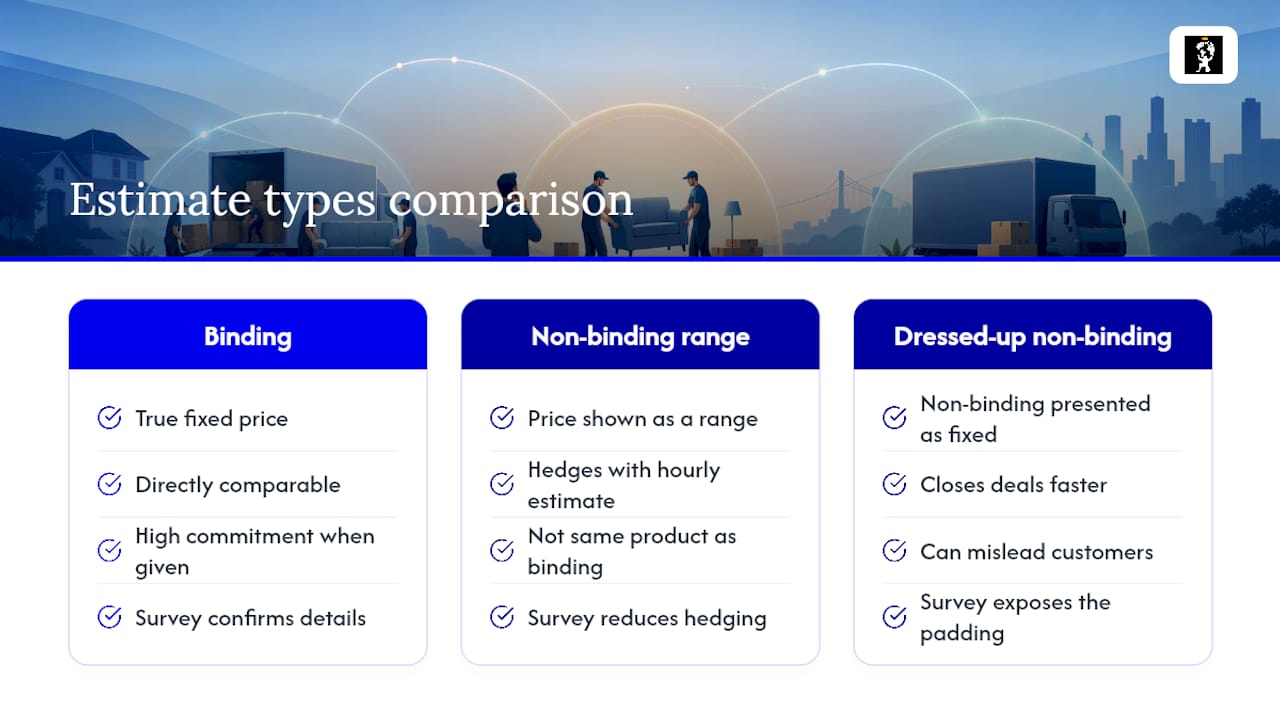
Here’s what the conventional advice gets wrong: it tells people to “get multiple quotes” without telling them to demand the same estimate type across all of them. Comparing a binding quote against a non-binding one is comparing two different products, not two prices for the same job.
If there’s one thing worth prioritizing above all else, it’s the survey. A five-minute video walkthrough forces a mover to commit to specifics instead of hedging with a padded hourly range. Skip it, and you’re negotiating blind. Do it, and you’ve already put the numbers in your favor before the truck ever shows up.
— Natalie
Book a Survey-Based Estimate With Atlas Kings
Moves are priced with a real survey, an itemized inventory, and a written estimate that names its type before signing. That’s the alternative to a phone-quote guessing game. You get itemized or flat-rate pricing, with no fee hidden until the invoice shows up.

If you’re planning a local or multi-city move, request an in-home or virtual survey and get your written quote before you commit to a date. You can book online now and tell us whether you want binding, non-binding, or not-to-exceed pricing, and we’ll walk you through what each one means for your specific move.
Sources
FAQ
What Are the Four Main Types of Moving Estimates?
The four types most guides reference are non-binding, binding, binding not-to-exceed, and hourly/flat-rate pricing, though hourly and flat-rate are really pricing methods layered under the first three. Industry explainers group them this way because each affects your exposure to a higher final bill differently.
Is $100 Each a Good Tip for Movers?
Tipping norms vary widely and there’s no fixed industry standard, so $100 per mover would be considered generous for most moves rather than typical. A common approach is basing the tip on move size and difficulty rather than a flat dollar figure, and asking your moving company directly about their usual practice is reasonable.
What Is the Difference Between a Binding and Non-Binding Moving Estimate?
A binding estimate locks your price at signing, as long as your inventory doesn’t change. A non-binding estimate is recalculated after the move based on actual weight or hours, which means the final number can land higher or lower than the original quote.
How Does a Not-to-Exceed Estimate Actually Work?
You pay the lower of your actual cost or the pre-set ceiling, so a faster or lighter move can save you money while a longer one still gets capped. NTE contracts should specify exactly which cost categories, like labor, materials, and travel, count toward that ceiling.
Does Atlas Kings Offer Written Estimates for Local Moves?
Yes. Atlas Kings provides itemized and flat-rate pricing built from an in-home or virtual survey, with the estimate type stated clearly in writing before you book. You can request a quote through the online booking page.
Recommended
Comments