

Facebook Marketplace Delivery: How to Get Items Picked Up
- William Wooldridge

- Aug 6
- 14 min read

You can have a Facebook Marketplace item delivered through Marketplace Checkout shipping (when the listing offers it) or by arranging a local pickup and delivery service. Buyers typically pay for delivery unless the seller has built the cost into the price or explicitly offers it. For small, shippable items, Checkout handles everything. For furniture, appliances, or anything that won’t fit in a car, a professional pickup service is the practical answer.
Here are the three simplest next steps:
Check the listing first. If you see a “Shipping” option at checkout, you can buy and pay through Facebook’s Checkout flow. If the listing shows “Local Pickup Only,” you’ll need to arrange transport yourself.
For shippable items, complete the purchase through Marketplace Checkout. Facebook routes payment, generates a shipping label for the seller, and gives you a tracking number.
For bulky or local items, book a local pickup and delivery service. Share the listing link, pickup address, delivery address, and item photos when you request a quote. Atlaskings handles many moves and specializes in this kind of Marketplace pickup, with insured transport and itemized pricing.
Table of Contents
What are your Facebook Marketplace delivery options?
Three delivery paths cover nearly every Marketplace situation. Choosing the right one depends on item size, distance, and how much protection you need.
Option | Price Model | Speed | Item Size | Insurance / Coverage | Booking Lead Time | Geographic Coverage |
Marketplace Checkout shipping | Seller sets shipping fee; buyer pays at checkout | 2–7 business days via USPS, UPS, or FedEx | Small to medium (fits a parcel box) | Facebook Purchase Protection on eligible orders | Instant — buy now | Nationwide |
Carrier parcel shipping (buyer arranges) | Buyer pays carrier rate by weight/zone | 2–7 business days | Small to medium | Carrier declared-value coverage (add-on) | Same day if dropped off | Nationwide |
Local pickup/delivery service (e.g., Atlaskings) | Flat-rate or itemized by distance, vehicle, and access | Same-day or 1–3 days scheduled | Any size, including furniture and appliances | Insured transport; photo documentation | Hours to 1 day | Local metro area and multi-city routes |
When to use each path:
Accept Checkout shipping when the seller offers it and the item is small enough to ship safely. You get buyer protection and a tracking number without coordinating logistics.
Arrange carrier shipping yourself when the seller won’t ship but the item is small and you’re comfortable packing it. USPS Priority Mail, UPS Ground, and FedEx Home Delivery all accept prepaid labels.
Hire a local pickup service when the item is large, fragile, or requires inside placement. If you don’t own a truck, can’t manage stairs alone, or the item is worth enough that damage would be costly, a professional service is the right call.
How does Facebook Marketplace shipping actually work?
Facebook Marketplace Checkout shipping is the platform’s built-in delivery flow. When a seller enables it, the listing shows a shipping price alongside the item price, and the buyer completes the full transaction inside Facebook.
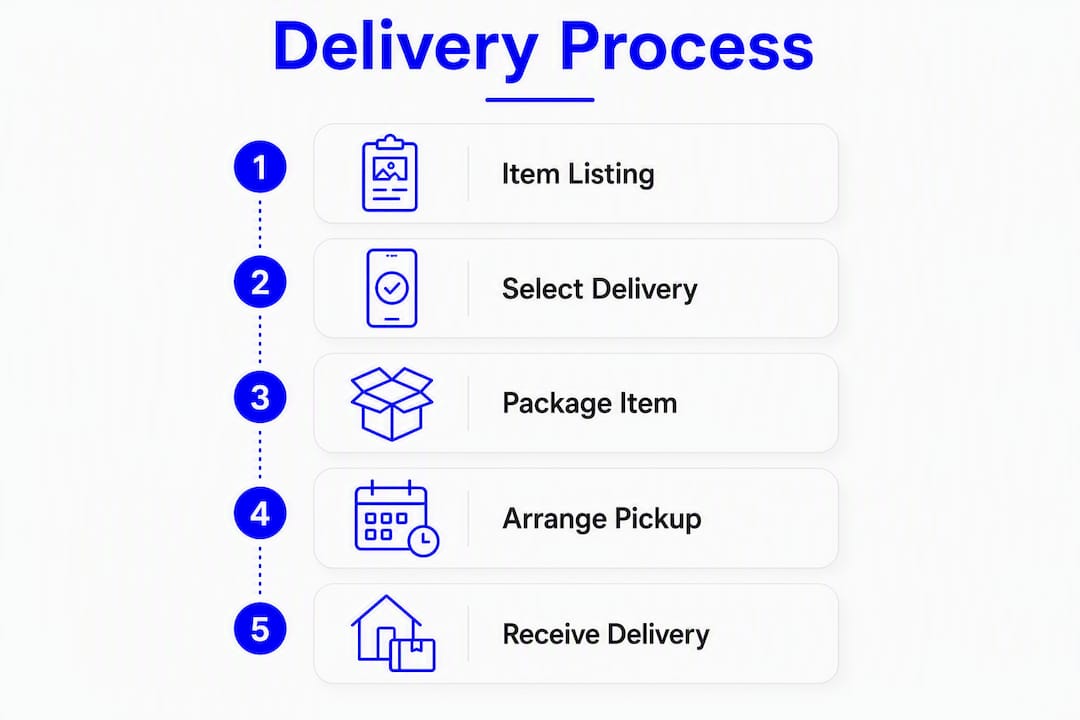
The buyer’s flow, step by step
Open the listing and select the “Shipping” option (not “Local Pickup”).
Add the item to checkout and enter your delivery address.
Pay through Facebook Checkout using a debit card, credit card, or PayPal.
The seller receives a prepaid shipping label and must ship within the window stated in the listing (typically within three business days).
You receive a tracking number by email and can monitor the shipment through the carrier’s site.
If the item arrives damaged or doesn’t match the listing, open a dispute through Facebook’s Purchase Protection flow within the claim window.
What the seller is responsible for
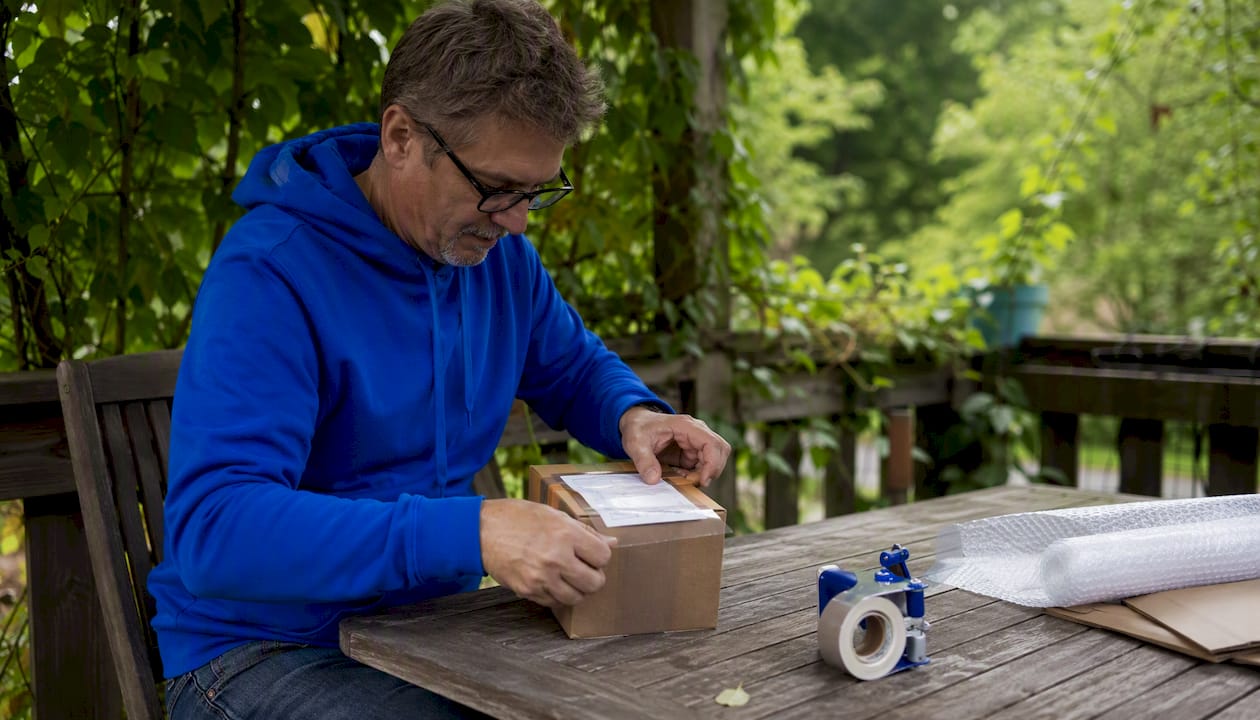
The seller packs the item, prints the prepaid label, and drops it off with the carrier. They must ship within the stated window and provide valid tracking. If they miss that window or the item is significantly different from the listing, the buyer can escalate through Facebook’s dispute process.
What Marketplace covers and what it doesn’t
Facebook Purchase Protection applies to eligible Checkout orders. It covers items that don’t arrive, arrive damaged, or are materially different from the listing description. It does not cover local pickup transactions, cash deals, or payments made outside Checkout (Venmo, Zelle, cash). That gap is exactly why payment method matters so much for local deals.
Pro Tip: Insist on Checkout when buying a shippable item from a stranger. For large furniture or appliances that require in-person inspection, local pickup with a professional transporter gives you the chance to check condition before the item leaves the seller’s hands, which Checkout shipping cannot offer.
How do you hire a pickup service for Marketplace items?
Hiring a third-party transporter for a Marketplace item is straightforward once you know what information to gather. Professional services that specialize in marketplace pickups, including insured, white-glove transport for furniture and fragile pieces, typically ask for the same core details upfront.
What to have ready before you request a quote
The listing URL or a direct link to the item
Seller’s name, phone number, and pickup address
Your delivery address
Item dimensions and approximate weight (check the listing or ask the seller)
Access notes: number of flights of stairs, elevator availability, parking or loading zone, narrow hallways or doorways
Clear photos of the item and the pickup location
Your preferred delivery window (same-day, next morning, specific date)
The booking process, step by step
Submit a quote request with the listing link, addresses, and photos. Many services return a flat-rate estimate within hours.
Confirm the price, insurance coverage, and cancellation policy in writing before paying anything.
Share the listing and photos with the transporter so they can verify the item at pickup.
The transporter contacts the seller directly to confirm a pickup window. You don’t need to be present at the seller’s location.
The transporter performs a condition inspection at pickup and documents the item’s state with timestamped photos. Pre-pickup condition inspections with timestamped photos are a hallmark of professional marketplace delivery services and dramatically reduce dispute rates.
You receive delivery confirmation with photo proof at your address.
Trust signals to verify before booking
Insured transport (ask for proof of cargo insurance, not just general liability)
Timestamped photo documentation at pickup and delivery
A written flat-rate or itemized quote with no hidden surcharges
Background-checked drivers
A clear cancellation and refund policy
Coordinate the three parties before the pickup day. Send the seller a message like: “I’ve booked a transporter for [date/time]. They’ll contact you at [number] to confirm access. Please have the item ready and cleared of obstacles. Payment is confirmed on my end.” This one message prevents most no-shows and double-booking confusion.
Pro Tip: When you book, ask the transporter to send you the driver’s name and a photo confirmation at pickup. That single step creates a paper trail that resolves most disputes before they escalate.
How much does Marketplace delivery cost?
Pricing for local pickup and delivery services follows a few common models. Understanding them helps sellers set accurate delivery fees in their listings and helps buyers compare quotes without being caught off guard.
Common pricing models
Flat-rate minimum: A base fee that covers a short local haul regardless of exact distance (common for same-day metro pickups).
Distance plus per-mile rate: A base fee plus a per-mile charge beyond a set radius.
Vehicle-based pricing: Cargo van rates for smaller items; box truck or larger vehicle rates for furniture sets, appliances, or multi-item loads.
White-glove add-ons: Inside placement, packaging removal, and assembly carry a premium over standard curbside delivery.
Example pricing scenarios
Scenario | Item Type | Distance | Estimated Cost Range | Notes |
Short local haul | Couch or loveseat | — | — | Cargo van, ground floor, no stairs |
Cross-neighborhood run | Dresser or dining table | — | — | Cargo van, one flight of stairs |
Heavy appliance with stairs | Washer/dryer or refrigerator | — | — | Box truck, stair carry, two-person team |
White-glove furniture delivery | Sectional sofa or bed frame | Under 20 miles | — | Inside placement, packaging removal |
These ranges reflect typical market rates for professional services in U.S. metro areas. Atlaskings uses itemized and flat-rate pricing with no hidden fees, so the quote you receive is the price you pay.
How to present a delivery fee in your listing
Convert the transporter’s quote into a simple line in your listing: “Delivery available for $X within [city/neighborhood] — buyer pays at booking.” If you’re offering to coordinate the transporter on the buyer’s behalf, note that too. Clarity upfront prevents negotiation friction at the last minute.
Pro Tip: Always ask the transporter whether the quoted price includes stair carries, long carries from a parking spot, and fuel surcharges. These are the three most common sources of unexpected charges. Get the full scope in writing before confirming.
How should you pack and protect items before transport?
Proper packing is the single most effective way to prevent transit damage. Professional transporters bring their own moving blankets and straps, but sellers and buyers can do a lot to reduce risk before the truck arrives.
Packing checklist by item type
Furniture: Wrap corners and legs in moving blankets or bubble wrap. Remove drawers and pack them separately. Tape doors shut on cabinets and wardrobes.
Electronics: Use the original box when possible. If not, wrap in anti-static bubble wrap, box with at least two inches of foam or packing peanuts on all sides, and mark “Fragile” on the exterior.
Appliances: Secure drum paddles in washing machines with transit bolts (or tape). Remove shelving from refrigerators and pack separately. Tape doors closed.
Professional pickup services secure items in transit with furniture pads, tie-down straps, and load bars. Insured, white-glove pickup services that offer inside placement and packaging removal command a premium but significantly lower risk for high-value or fragile items. If you’re shipping via a carrier, moving box rentals can provide the right-sized boxes for awkward or oversized pieces.
Why photo documentation matters
Timestamped photos taken before and after transport are your primary evidence in any damage claim. A reputable transporter photographs the item at pickup and again at delivery. As a seller, photograph the item yourself before the transporter arrives. As a buyer, photograph it immediately upon receipt.
If something arrives damaged
Document the damage with photos before moving the item.
Refuse delivery if the damage is severe and the transporter is still present.
Contact the transporter within 24 hours and provide photos with timestamps.
File a claim with the transporter’s insurance or the payment platform used.
Preserve all original packaging until the claim is resolved.
Consider optional declared-value coverage for items worth more than a few hundred dollars. Most professional transporters offer it at booking for a small additional fee.
What are the safety best practices for in-person pickups?
In-person exchanges carry real risks, from scams to physical safety concerns. A few consistent habits reduce those risks significantly.
Meet in a public place when the item is small enough to transport in a personal vehicle. Police station parking lots, shopping center lots, and bank parking lots are common safe-exchange locations in many U.S. cities.
Bring a friend for any pickup that requires entering a private home or moving a heavy item.
Confirm the item matches the listing photos before handing over payment. Check for damage, missing parts, and functionality where possible.
Use a documented payment method. Facebook Checkout is the most protected option for shipped items. For in-person exchanges, cash is simple but leaves no record. Peer payment apps (Venmo, Zelle, Cash App) create a transaction record but offer limited buyer protection. Bank transfer is traceable but slow.
Record the transaction. Screenshot the listing, save your messages with the seller, and note the date, time, and location of the exchange.
If a seller is evasive or cancels repeatedly, treat it as a red flag. Legitimate sellers confirm pickup details promptly and don’t ask you to pay before you’ve seen the item.
Pro Tip: When a third-party transporter is involved, pay the transporter by card or through a platform that provides a receipt. Cash payments to transporters leave no record if a dispute arises later.
How long does Marketplace delivery take?
Timeline expectations vary widely depending on which delivery path you choose. Setting the right expectation upfront prevents frustration on both sides.
Same-day local pickup: Feasible in most metro areas when you book a local service by mid-morning. Same-day marketplace pickup is achievable when transporters maintain local fleets and a quoting workflow that accepts a listing link. Expect a 2–6 hour window from booking to delivery.
Scheduled local delivery: Most professional services offer next-day or 1–3 day scheduling. This is the most common path for furniture and appliances.
Carrier parcel shipping (Checkout or buyer-arranged): USPS Priority Mail typically delivers in 2–3 business days. UPS Ground and FedEx Home Delivery run 2–7 business days depending on zone.
Tracking at each stage
Checkout shipments: You receive a carrier tracking number by email once the seller ships. Track directly on the carrier’s website.
Local pickup services: Reputable providers send booking confirmations, a pickup window notification, and a delivery photo confirmation. Some offer real-time GPS tracking through their app or a driver text update.
When to escalate
If a carrier shipment shows no movement for 48 hours after the expected ship date, contact the seller first. If the seller is unresponsive, open a dispute through Facebook Checkout. For local pickup services, contact the transporter directly if the driver misses the confirmed window by more than 30 minutes without communication.
What should you do when something goes wrong?
Most Marketplace delivery problems fall into four categories: damaged items, missing parts, seller cancellations, and no-shows. Each has a clear remediation path.
Damaged item on delivery
Photograph the damage immediately, before moving the item from its delivery position.
If the transporter is still present and damage is severe, refuse the delivery and document the refusal.
Contact the transporter within 24 hours with timestamped photos and a written description.
If you paid through Facebook Checkout, open a Purchase Protection claim through the Help Center.
Preserve all packaging materials until the claim is fully resolved.
Seller cancels or won’t ship
Document all messages showing the agreed sale and the seller’s cancellation.
Request a refund through Facebook Checkout if you paid that way. Facebook’s dispute process covers eligible orders.
If you paid outside Checkout (Venmo, Zelle, cash), contact the payment platform’s dispute team. Recovery is not guaranteed for peer payment apps.
Report the seller to Facebook if you believe it was a scam.
No-show at pickup
Contact the transporter immediately and ask for the driver’s location and an ETA.
Ask the seller for timestamped photos confirming the item was ready at the agreed time.
If the transporter cannot complete the pickup, request a full refund or a rescheduled window in writing.
No-show from the seller
Contact the seller through Facebook Messenger and document the attempt. If the seller is unresponsive, cancel the booking with the transporter (check the cancellation policy you confirmed at booking) and request a refund.
Pro Tip: Keep every message, photo, and receipt in one folder on your phone from the moment you agree to a sale. Transporters that provide pre- and post-pickup photos resolve disputes faster and with less friction than those that don’t.
How should sellers prepare a listing for easy delivery?
A well-prepared listing reduces back-and-forth, attracts more serious buyers, and makes third-party pickup go smoothly. Sellers who include delivery details upfront close deals faster.
Seller checklist before posting
Measure the item and include exact dimensions (height, width, depth) in the listing description.
Estimate the weight, especially for appliances and heavy furniture.
Take clear photos from multiple angles, including any existing damage or wear.
Note the pickup location and access details: ground floor, second floor, elevator available, street parking only, narrow stairwell.
State whether you can assist with loading or whether the buyer needs to bring help.
Decide whether you’ll offer Checkout shipping, local pickup only, or delivery for a fee.
Example listing phrases sellers can use
For buyer-arranged pickup: “Local pickup only. Item is on the second floor with no elevator. Buyer must arrange transport and bring at least one helper. Address shared after payment confirmed.”
For Checkout shipping: “Ships via Facebook Checkout. Packed securely and shipped within two business days of purchase. Tracking provided.”
For seller-coordinated delivery: “Delivery available within 20 miles for $[X]. I’ll coordinate the transporter once we agree on a price. Message me for details.”
If you’re coordinating a transporter for the buyer
Share these details with the delivery service when you request a quote on the buyer’s behalf: item dimensions and weight, pickup address with access notes, the buyer’s delivery address, and a photo of the item. Confirm with the buyer that they’ve agreed to the delivery fee before you book anything.
Key Takeaways
Facebook Marketplace delivery works best when you match the delivery method to the item size: use Checkout shipping for small parcels and a professional local pickup service for furniture, appliances, or anything bulky.
Point | Details |
Match method to item size | Use Marketplace Checkout for small shippable items; book a local pickup service for furniture and appliances. |
Protect yourself with documentation | Timestamped photos at pickup and delivery are your primary evidence for any damage or dispute claim. |
Verify insurance before booking | Confirm the transporter carries cargo insurance and provides a written quote before you pay anything. |
Use documented payments | Facebook Checkout offers the strongest buyer protection; peer payment apps offer limited recourse for disputes. |
Atlaskings for bulky Marketplace items | Atlaskings handles insured, itemized-price Marketplace pickups with photo proof and white-glove options for large or fragile items. |
The part most buyers and sellers overlook
Most of the stress around Marketplace delivery comes from one avoidable mistake: treating the delivery as an afterthought. Buyers focus on the price of the item and forget to budget for transport. Sellers list furniture without access notes and then scramble when a transporter shows up to a narrow stairwell with no warning. Both sides assume the other has figured it out.
The real risk isn’t damage in transit. Professional transporters with proper padding and tie-downs rarely damage items. The real risk is the unverified cash deal where a buyer pays before seeing the item, or the seller who accepts payment and then stops responding. Those situations have no clean resolution path.
Marketplace Checkout shipping solves the payment problem for small items. For large items, a professional pickup service with insured transport and photo documentation solves the condition verification problem. Neither option is complicated. The gap is simply that most people don’t know these tools exist or how to use them together.
One more thing worth saying plainly: the “meet in a parking lot” model works fine for a $40 lamp. It doesn’t work for a $600 sectional sofa that requires two people, a truck, and a stair carry. Matching the logistics to the item value is the single most practical thing buyers and sellers can do to protect themselves.
Atlaskings handles Marketplace pickups so you don’t have to
When the item you found on Marketplace is too big to fit in your car and too valuable to risk with an unverified stranger, Atlaskings is the practical next step. As a family-run service with over 500 completed moves since 2021, Atlaskings specializes in exactly the kind of pickup that Marketplace Checkout can’t handle: furniture, appliances, multi-flight stair carries, and same-day or scheduled local delivery with insured transport and photo proof at every stage.

Every booking includes a written flat-rate or itemized quote with no hidden surcharges, cargo insurance, timestamped condition photos at pickup and delivery, and the option to upgrade to white-glove in-home delivery with inside placement and packaging removal. For heavy or awkward items, the team arrives with the right equipment and a two-person crew when the job calls for it.
Booking is straightforward: share your listing link, pickup address, delivery address, and any access notes when you request a quote through Atlaskings transport. The team confirms the price, coordinates directly with the seller for a pickup window, and sends you delivery confirmation with photos. No guesswork, no surprise charges, and no need to borrow a truck.
Useful sources and further reading
About delivery on Facebook Marketplace — Official Facebook Help page covering delivery and shipping options, buyer protections, and how Checkout works for eligible orders.
In-Home Furniture Delivery: What to Know — Atlaskings — Atlaskings’ guide to the in-home delivery process, including what customers should expect for furniture and Marketplace purchases.
Top 6 Large Item Movers Near Me Providers 2026 — Atlaskings — Local market context and service comparisons for large-item transport, useful for buyers comparing pickup options.
Furniture Delivery and Assembly Service — Atlaskings — A local service example showing how Atlaskings delivers and assembles Marketplace-purchased furniture.
Transport | Reliable On Demand Moving — Atlaskings — Atlaskings’ primary booking page for on-demand transport and Marketplace pickups.
Inhouse Delivery | Atlaskings — Details on white-glove delivery options, inside placement, and what’s included in a premium delivery booking.
Recommended
Comments