

Family Toy Clutter Solutions Parents Can Set Up This Weekend

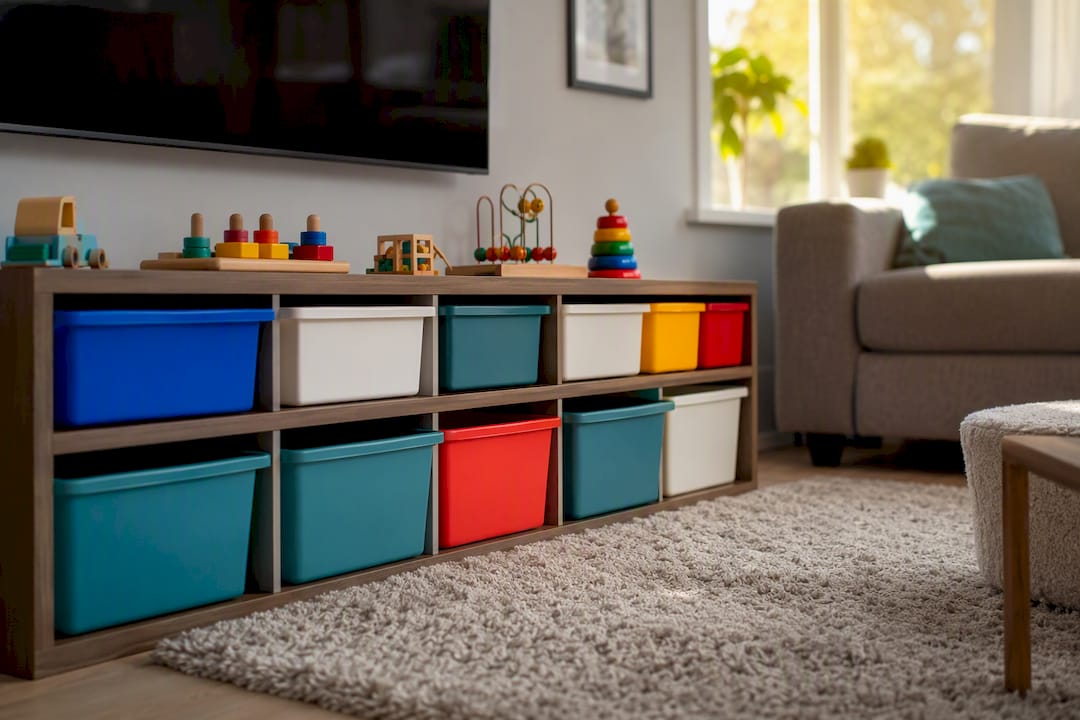
Toy clutter in your living room ends with one system: declutter to a manageable count, sort what stays into activity zones, store the overflow out of sight, and rotate it back in every two to three weeks. Add a 10-minute nightly reset and the mess stops coming back. A University of Toledo study found toddlers given 4 toys played longer and more creatively than those given 16, which is the whole case for keeping fewer items visible at once.
This weekend, you can:
Pull every toy into one pile and sort into keep, donate, and discard
Pick 3 to 4 zones (building, art, pretend play, quiet time)
Fill low, kid-height bins with the “active” set
Box the rest, label it, and put it out of sight for the first rotation
Key Takeaways
A working toy system combines a hard decluttering pass, zoned and accessible storage, a rotation cadence of roughly two to three weeks, and a nightly reset habit, and most families see calmer living rooms within two to four weeks.
Point | Details |
Cut the visible count | Sort into keep, donate, and discard, then apply the 10-toy or 20-toy rule for the active set. |
Zone by activity | Build 3 to 4 zones (building, art, pretend, quiet) that match how kids actually play. |
Store the rest out of sight | Use labeled, easy-to-reach bins for the rotation cache, not a high garage shelf. |
Rotate every 2 to 3 weeks | Swap active and stored toys on a recurring calendar date, not an “eventually” basis. |
Call in help when volume outpaces time | Atlaskings’ Inhome Refresh and Itemized Storage services deliver a full living-room reset with itemized, flat-rate pricing. |
Table of Contents
Setting Up Family Toy Clutter Solutions in an Afternoon
You do not need a weekend retreat to fix a living room buried in toys. Five steps, done in order, will get you a working system before dinner.
Audit and sort. Empty every basket and toy box into one space, then sort into keep, donate, and discard piles.
Define your zones. Most families do well with 3 to 4: building, art, pretend, and quiet/books.
Choose accessible bins. Kids need bins they can lift and shelves they can reach without help.
Build your rotation cache. Whatever doesn’t make the active cut goes into labeled, out-of-sight storage, not the trash.
Set your cadence. Pick a recurring swap date and a nightly 10-minute reset habit.
Pro Tip: Label rotation bins by category, not by toy name. “Vehicles” and “Animals” survive years of restocking; “Fire Truck Bin” doesn’t.
How Do You Declutter Toys Without a Fight?
Start with a full pull. Every toy, from every room, comes out into one central spot. This step alone reveals volume most parents underestimate, and it’s the only way to sort honestly instead of shuffling piles between rooms.
Sort into four piles: keep, donate, discard, and belongs elsewhere (art supplies that migrated to the living room, kitchen toys that ended up under the couch).
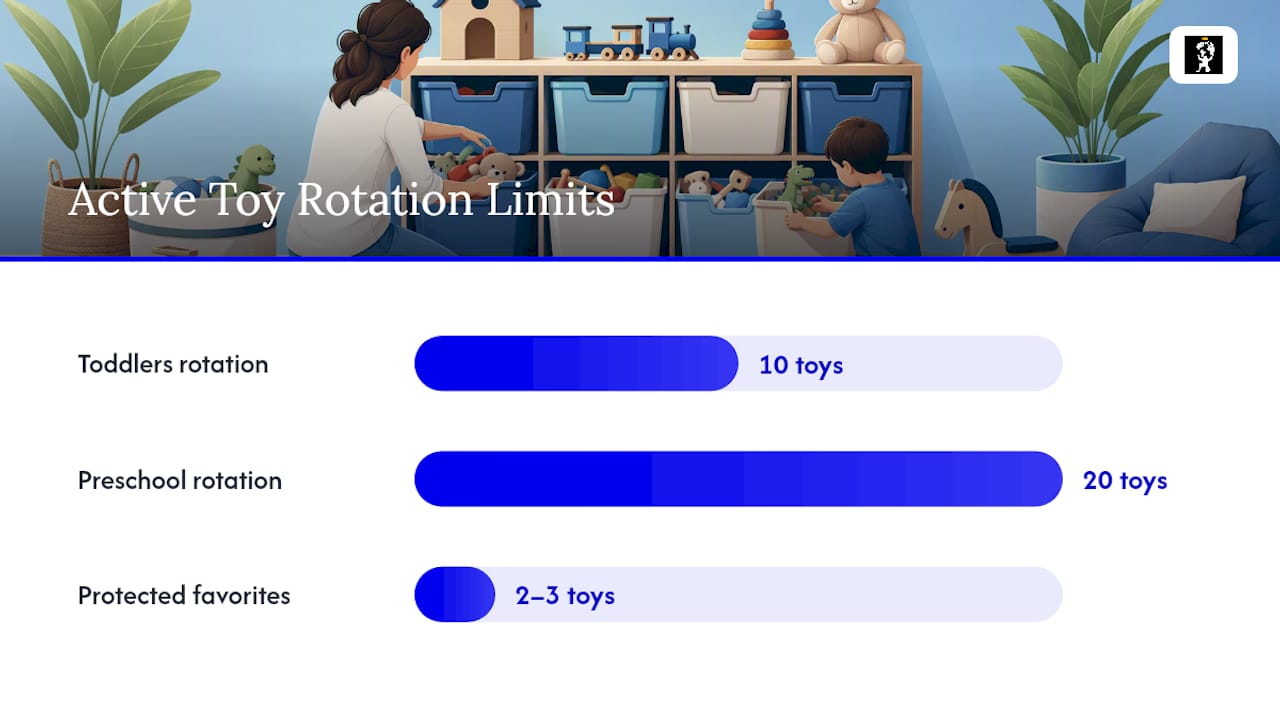
Apply a count rule. The 10-toy rule caps the active rotation at ten items for toddlers; the 20-toy rule works better for preschool and early school-age kids who play with more categories at once. Either way, add one-in-one-out for new arrivals and protect two or three clear favorites as anchors that never rotate out.
Route the donate pile fast. Bag it the same day, before sentimentality creeps back in. Local donation centers, consignment apps, or a same-day drop-off keep the momentum you built during the sort.
A first full setup usually takes two to four hours for a single living room, and the shopping list is short: a handful of labeled bins, some low shelving if you don’t already have it, and painter’s tape or a label maker for the picture tags. Total spend for most families lands under $150 if you’re not replacing furniture.
Approach | Typical Time | Typical Cost |
DIY weekend reset | 2–4 hours | $150 |
DIY full-home decluttering | 1–2 weekends | $150 |
Professional living-room reset | 2–4 hours (pro-led) | Varies by provider |
Pro Tip: Keep the discard pile visible until the end of the day. Kids (and co-parents) sometimes rescue items from “donate,” and that’s fine. Just don’t let indecision stall the whole project.
What Storage Actually Works in a Living Room?
Three approaches cover almost every family living space: hide, contain, or display. The right mix depends on your room’s traffic and how much you want toys visible at all.
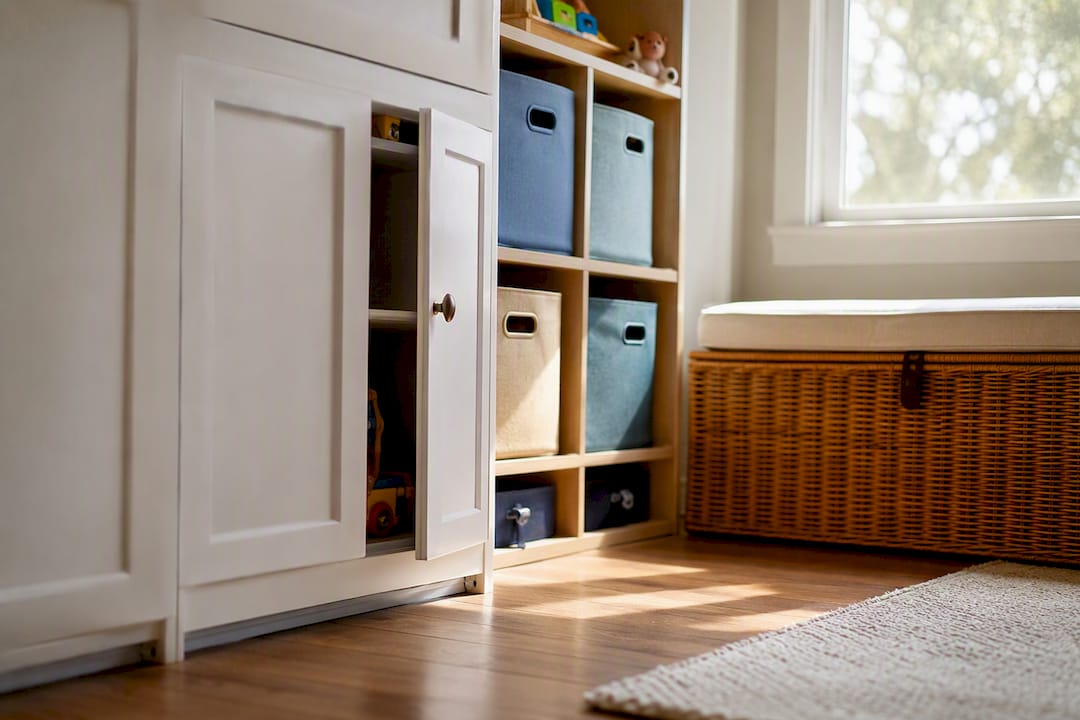
Hide works when the living room doubles as an adult space in the evening. Furniture with doors, ottomans with lift-tops, or a bench with hidden storage keeps the active rotation reachable for kids but invisible to guests.
Contain is the workhorse for most families: low, open shelving paired with baskets or bins. Kids see their options and can put things back without help, which matters more for daily maintenance than any other single factor.
Display suits a small, curated set, usually art supplies or building sets a parent wants encouraged. A single open shelf with 4 to 6 items works, echoing the same low-count principle behind the University of Toledo findings.
Accessibility rules apply no matter which approach you pick:
Bins should sit low enough for a toddler to reach without climbing.
Bin size matters more than bin style. Anything a small child can’t lift one-handed will get skipped at cleanup time.
Picture-and-word labels at kid height cut nightly reset time dramatically, especially for preschoolers who can’t read yet.
Open baskets are the fastest to use but show the mess. Lidded bins hide contents but add a step kids sometimes skip. Built-in seating storage is the best of both for small spaces, though it costs more upfront. For bulky ride-on toys and outdoor gear, assign a garage or covered outdoor bin zone instead of letting them creep into the entryway. A resource like One Day Doors & Closets covers how built-in systems support this kind of contained, low-visibility storage.
How Do You Keep the System Working Long-Term?
Zones only work if they match how your kids actually play, not how adults would categorize things. Watch where toys land after a normal afternoon, then build zones around that behavior instead of an idealized layout.
Match rotation cadence to age. Toddlers do well with a 4 to 8 item active set swapped roughly every one to two weeks; preschoolers can handle 6 to 10 items on a two to three week cycle; school-age kids often manage 15 to 25 items across zones with less frequent swaps.
Run the 10-minute nightly reset. One short, predictable cleanup before bed prevents the slow creep back to clutter.
Pick a recurring swap day. Sunday evening or a standing calendar reminder both work better than “whenever it gets messy,” which never actually happens on schedule.
Bring kids into the process. Picture labels for toddlers, a choice between two rotation bins for preschoolers, and a small assigned responsibility (returning their own zone) for school-age kids all build buy-in instead of resistance.
Pro Tip: Store the rotation cache somewhere you can reach without a stepladder. A hall closet or under-bed bin survives; a high garage shelf gets skipped after week two.
Why Fewer Toys Actually Improve Play
The case for rotation isn’t just tidiness. The University of Toledo research found toddlers with 4 toys played longer, focused more, and showed more creative use of each item than toddlers surrounded by 16. Fewer visible choices reduce the cognitive load of deciding what to play with, so kids settle into deeper engagement faster.
The number that convinces skeptical relatives: kids given a quarter of the toys played with noticeably more depth and creativity, according to the same UT study. That single comparison, four toys versus sixteen, tends to land harder with grandparents than any organizing tip.
This is exactly why rotation beats simply buying more bins. A 2026 storage guide and a Montessori-based rotation workflow both land on the same two to three week cadence for keeping the active set fresh without constant new purchases.
When Should You Call in a Professional Organizer?
Some households can execute the sort-zone-rotate system in an afternoon. Others hit a wall: too much volume, too little time, physical limitations that make lifting and sorting hard, or simply the need for a fast, complete reset before company arrives.
Signs it’s time to hire help:
The toy volume feels unmanageable even after multiple DIY attempts
You don’t have the hours (or the back) for a full pull and sort
You want a same-day, finished result instead of a multi-weekend project
A professional visit typically includes a full pull of every toy, category sorting, labeling, storage placement, and either donation pickup or transport off-site, plus a rotation plan you can maintain afterward. A single living-room reset generally runs a few hours; a whole-home declutter takes longer and scales with square footage and volume. Guides on home organization services and professional decluttering services outline what typical visits cover in more detail.
Pro Tip: Before the pros arrive, do the emotional sorting yourself. Deciding which stuffed animals stay is a parent decision; letting a pro handle the physical bins, labels, and placement saves the most billable time.
A Reset Team’s View on What Actually Sticks
Most families don’t fail at organizing. They fail at maintaining. A tight rotation with an easy-to-reach cache, paired with a nightly 10-minute reset, produces a visibly calmer living room within two to four weeks for nearly every household we’ve seen try it.
Let Atlas Kings Handle Your Living-Room Reset
If the full pull, sort, and rebuild sounds right but the time or the lifting doesn’t, that’s exactly where a booked reset earns its cost back. Atlaskings runs in-home resets built for exactly this: a living room buried under bins, furniture that needs rearranging, and a family that wants the result without the weekend.

The Inhome Refresh service covers the full pull, sort, zoning, and labeled storage setup described above, done by a team instead of a parent squeezing it in after bedtime. For families with overflow to store off-site rather than cram into a closet, Itemized Storage keeps seasonal toys and sibling keepsakes organized and retrievable instead of piled in a garage. If you’re moving bulky shelving, benches, or bins into the mix, Inhouse Delivery handles the transport and placement in one visit. Pricing is itemized and flat-rate, so you know the cost before booking, not after.
DIY works well when you have a free afternoon and manageable volume. Professional help makes more sense when the pile has grown for months, when lifting and hauling are a barrier, or when you want the whole project finished in one visit. Book your reset online and get a fixed quote before anyone shows up.
Frequently Asked Questions
How many toys should stay in the living room at once? Most families do well with 10 to 25 accessible toys split across 3 to 4 zones, with toddlers on the lower end and school-age kids handling more.
How often should you rotate toys? A rotation cadence of a few weeks is common for most ages; toddlers sometimes benefit from a more frequent swap to match their attention spans.
What’s the fastest way to declutter toys without kids melting down? Sort while they’re at school or asleep for the first pass, then let them make small choices, like picking which two toys return, during setup.
Do I need to buy new furniture to fix toy clutter? No. Low shelving and labeled bins solve most living-room clutter without new furniture; hidden-storage furniture like ottomans is optional, not required.
Sources
Recommended
Comments