

Moving With Plants: Pack, Transport and Settle Them In

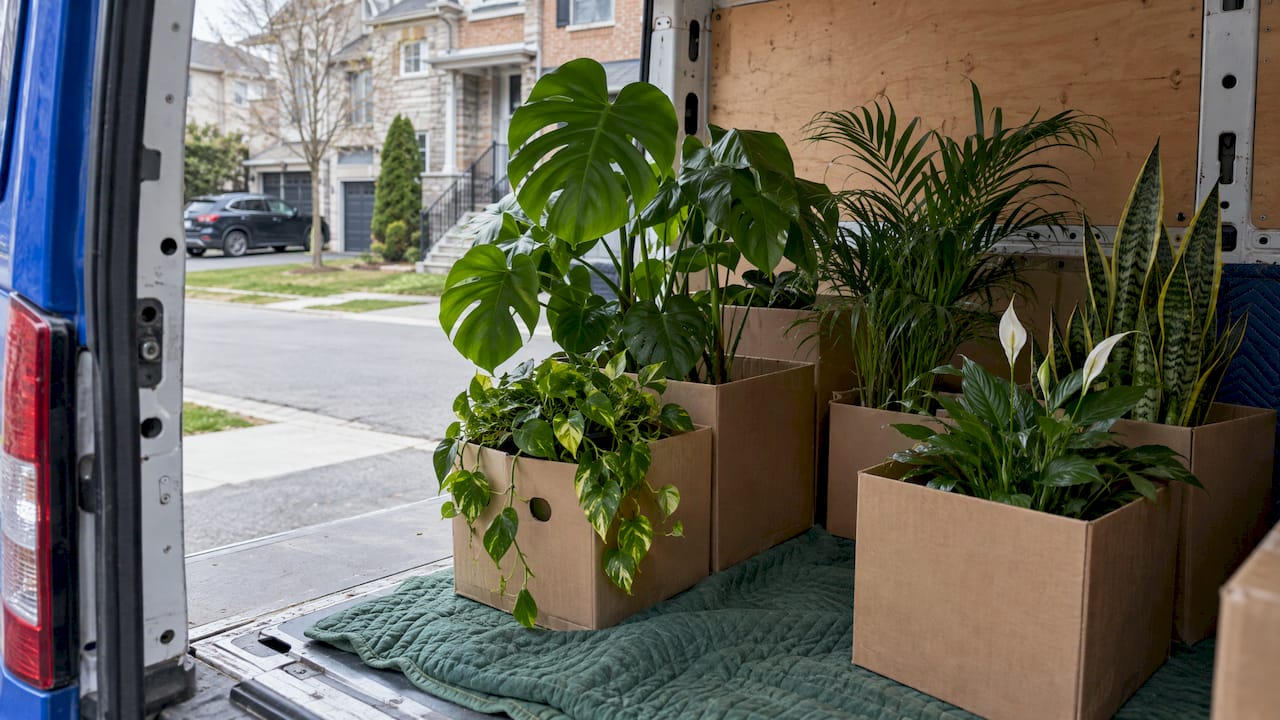
Plants move well when you water them the day before, pack them upright in boxes with air at the top, keep them out of the cold and heat, and give them light and water first thing on arrival. Garden plants and soil are a different matter in Ontario, where federal rules limit what can travel. Large pots are also heavy and awkward, which is where we come in: our Small Move covers up to 10 large items for $225 (CAD), and our Inhouse Delivery is $125.
Below is the full routine, from two weeks out to the first week in the new place, plus a section on the yard you are moving into.
TL;DR
Water houseplants the day before the move, pack them upright in boxes left open on top, and load them last so they are the first thing you unload.
Plants can handle two to three days in a box if they were watered before leaving. A few lost leaves afterward are normal.
In Ontario, plants with soil attached are a regulated item for some pests. Check the Canadian Food Inspection Agency (CFIA) rules before moving garden plants or soil, especially to another province.
Big planters are heavy. Count them as large items when you book a move so the quote is accurate.
At the new home, check sun and shade before deciding where each plant goes, and take your time with the lawn.
Table of Contents
Start two weeks out: decide what comes with you
Not every plant needs to make the trip. Two questions sort your collection quickly.
Is the plant easy to replace or replant? A six-foot monstera is bulky, and the Chicago Botanic Garden notes that for very large specimens, taking a cutting is an option instead of moving the whole plant. A cutting rooted in a jar travels in a coat pocket.
Will it have a place at the new home? Garden Therapy suggests checking the new home’s sun exposure before choosing which garden plants to move. A sun-lover is wasted on a shady yard, and some plants, peonies among them, resent being moved at all.
If you are moving a garden, do divisions and transplanting well ahead of moving day, and water them in when you do it. Reduce watering in the final week so pots are lighter to carry. Do not cut it back so far that the plant dries out.
Check the rules before you pack soil or garden plants
Houseplants in sealed pots moving within the city rarely raise questions. Garden plants, soil and cross-border or inter-provincial moves are another story.
Under the Plant Protection Act, moving anything that is, or could be, infested with a pest is prohibited unless the Act or its regulations allow it. The CFIA’s Ontario list includes plants with soil attached, boxwood (Buxus) for planting, ash nursery stock and firewood, living pine, and elm material.
The Japanese beetle rule matters most for long-distance moves. Ontario is considered infested, and whole plants and bulbs with soil are regulated year-round. Moving them to British Columbia or Newfoundland and Labrador requires meeting CFIA requirements, which can include a movement certificate. If you are heading out of province, read that page before you buy pots or start digging.
Timing: when plants cope best
For houseplants, the season matters mostly for the trip itself. In a Canadian winter, the walk from the door to the vehicle is the risky part, so wrap each plant in a blanket or cloth and keep it moving.
For garden plants, the Royal Horticultural Society advises moving deciduous trees and shrubs while they are dormant, from late October to mid-March, and evergreens in October or late March, on a calm, dull day. It also notes that plants that have grown in one spot for more than five years are much less likely to survive transplanting. This guidance comes from the UK, so in Ontario think of dormancy as after the leaves drop and before the ground thaws and growth starts. If the ground is frozen, digging is not realistic.
Pack houseplants step by step
1. Water the day before
The New York Botanical Garden’s library advises watering the plant the day before a long move. Moist soil, not soaked soil, keeps the roots comfortable without adding weight or mess.
2. Box the pot, not just the plant
Set the pot in a box with packing paper around it, and, for larger plants, place that inside a bigger outer box. The same source says to leave the top open so the foliage gets air. Fill gaps so nothing can tip. Small pots can share a sturdy tote, and a flat base keeps them upright.
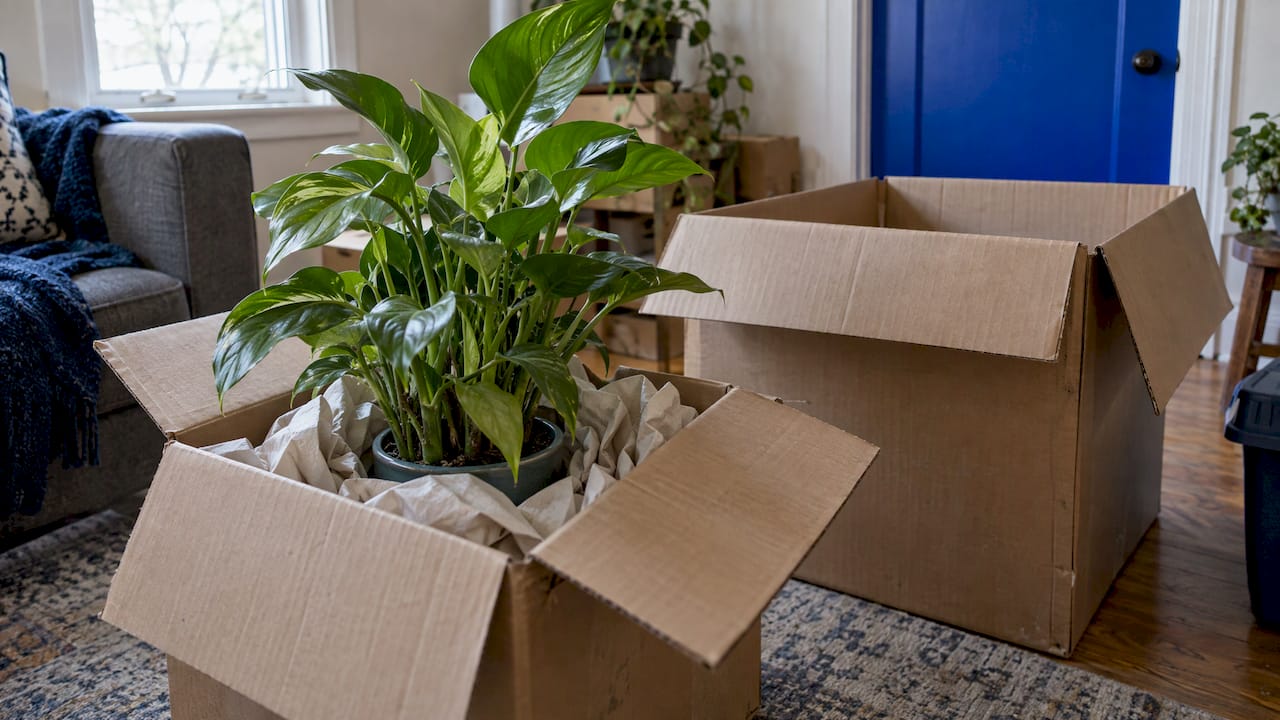
Plastic pots travel better than ceramic. Pack decorative ceramic pots like any other fragile item: our guide to packing fragile items under 45 lb covers the padding. For a box count, our moving box rental can supply boxes so you are not hunting for sturdy ones.
3. Protect the leaves
Soft materials such as packing paper or towels cushion stems and leaves. Tall, brittle plants can be loosely tied so branches sit close to the stem. Do not wrap tightly or seal a plant in plastic: it needs air, and heat inside plastic builds fast.
4. Label and decide the load order
Mark each box “plants, this side up” and note the room it goes to. Plants go on the truck last and come off first, so they spend the shortest time in the dark.
Transport: keep temperature steady
Temperature is what harms plants in transit, more than the bumps.
Keep plants in the cabin when you can. Cargo areas swing hot or cold.
Keep boxes away from vents. The NYBG advice is to keep them clear of heat and air conditioning vents.
Park in shade at stops on long trips and never leave plants in a closed vehicle in summer.
Do not stack. Anything on top of a plant crushes it.
How long can they wait? The Chicago Botanic Garden says plants tolerate two to three days in a box without major problems when watered before leaving. Beyond that, open the boxes and give them light.
When the plants are big
Large floor plants are heavy, wet soil makes them heavier, and the awkward part is the stairs. A planter that takes two people and a hand truck is a large item for planning purposes. If you are not sure about stairs, see our guide to moving furniture upstairs safely. Tell your mover about oversized plants and planters up front so the time and crew are right on moving day.
What to expect when you arrive
Unpack plants first. The NYBG advice is to give them sun and water straight away and place them in conditions similar to the ones they left. Match light before you match decor.
Expect a few lost leaves. The Chicago Botanic Garden says that is normal after a move. Drooping or wilting can also pass as a plant settles in. Do not repot immediately, do not fertilize a stressed plant, and resist moving it around the house every few days.
For garden plants, patience matters more. University of Kentucky plant pathologists note that leaf and shoot growth do not mean a plant is established: that happens when primary roots grow out into the native soil. Woody plants can take three to five years to recover, and supplemental watering is the single most important way to prevent transplant shock.
Where to put each plant
Walk the new home at different times of day and note which windows get direct sun. South and west windows suit sun-lovers, and north windows suit shade-tolerant plants. A seasonal walkthrough of drafts, vents and exposure helps too, and the seasonal home maintenance checklist for Canadian homes is a good companion for noting what each room needs through the year.
The lawn at your new place
Many people moving with plants end up looking at the yard too. Whether you are keeping the lawn or rethinking it, a few facts help.
The City of Toronto says conventional turfgrass accounts for about one-third of residential water use, and lists alternatives including clover, pollinator gardens, groundcovers such as wild strawberry and wild ginger, native grasses and xeriscaping. You do not have to convert the whole yard: low, trample-resistant groundcovers can keep the parts you use as lawn.
White clover fixes its own nitrogen and uses less water than grass. Prince Edward County describes it as a 7 to 15 cm perennial that tolerates moderate foot traffic, grows in partial to full sun and is drought-tolerant. Toronto adds that it is non-native and may need reseeding every few years.
If you want native plants instead, the David Suzuki Foundation’s toolkit describes three ways to remove turf: smother it with cardboard or newspaper under topsoil, flip turf squares, or use equipment on a large lawn. It also recommends checking municipal bylaws and talking to neighbours first. Bylaws differ by town, and some limit grass height, so confirm yours before you stop mowing.

A practical plan: move in, live with the yard through one season, note where it is sunny, wet or dry, then plant. Our guide to energy smart landscaping explains how planting can lower cooling bills.
Perspective: why plants belong in the moving plan
Plants are the part of a move that people leave to the last minute, and the part they regret most. A box of dishes can be replaced. A plant you have kept alive for eight years cannot. We run moves with itemized and flat-rate pricing so you know the cost before the truck arrives. That matters for plants, because big planters and bulky pots change the load. When you list them in advance, the quote reflects the real job and there are no surprises at the door. Since 2021 we have completed more than 500 moves, and the families who plan their plants early are the calmest on the day. Our approach is to take the heavy, awkward parts off your hands so you can carry the delicate ones yourself, in the cabin, where the temperature is steady. We also offer a Lawn Refresh and in-home resets for the days after you arrive, when the house and yard need attention at the same time. Natalie
How we can help
If your plants come with heavy planters, a Small Move is built for up to 10 large items at $225 (CAD), with itemized and flat-rate pricing so there are no hidden fees. For one big pot or a marketplace purchase going from the store to your room, Inhouse Delivery is $125. Once you are in, the Lawn Refresh is $65, and the Atlas Pass is $312 per year for repeat needs. You can see every option and book on our online booking page.

We serve London, Hamilton, Niagara, Sarnia and other parts of Ontario, so a move between them can be planned in one booking.
FAQ
What time of year is best to move plants?
For houseplants, mild weather is easiest because the trip outdoors is short and safe. For garden trees and shrubs, the RHS advises moving deciduous ones in dormancy between late October and mid-March. Evergreens do best in October or late March.
Should I water plants right after the move?
Yes. The New York Botanical Garden advises giving plants water and sun first on arrival, after watering the day before leaving. Check that the soil is moist rather than waterlogged, and keep the plant in conditions like its old spot.
How long does transplant shock last?
Houseplants usually drop a couple of leaves and recover as they settle. Woody garden plants take longer: University of Kentucky specialists say it can be three to five years before they are fully established, and regular watering is the best prevention.
Can I move garden plants and soil in Ontario?
Within your area it is generally fine, but the CFIA restricts moving plants with soil attached for certain pests, including Japanese beetle. This matters most for moves to British Columbia or Newfoundland and Labrador, so read the CFIA page before you dig.
How do I move very large plants?
Water the day before, box the pot with an outer box, keep the top open and plan for two people and a hand truck. For giant specimens, a cutting is a lighter option. Tell your mover about large planters when you book.
Sources
Recommended
Comments