

What to Do When Your Sofa Won't Fit Through the Doorway

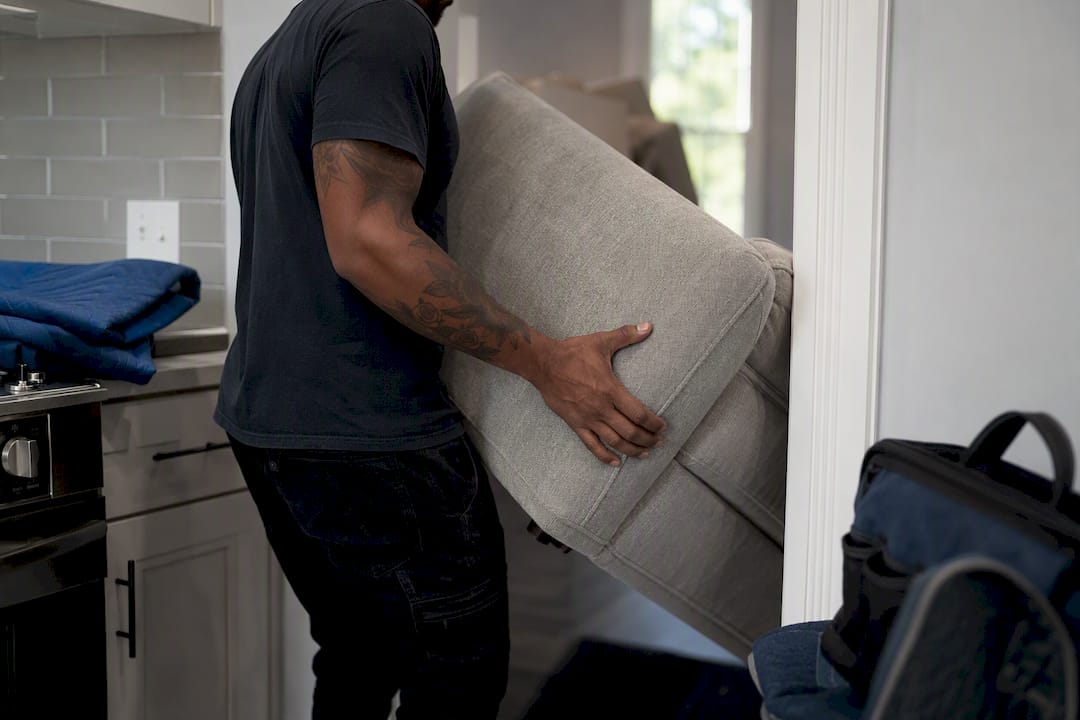
Most sofas that seem stuck can still get through. The fix usually comes down to three moves: measure the actual clear opening, pull the legs and cushions off, and try a slow tilt-and-pivot on end before you assume the piece is stuck for good.
Here’s what typically buys you enough room:
Removing the legs saves roughly 4 to 6 inches of depth.
Lifting the door off its hinges adds another 1 to 1.5 inches of clearance.
Tilting the sofa onto its diagonal often clears a 40 inch deep sofa through a 32 inch nominal door.
If you’ve done all three and the sofa still won’t budge, or you’re moving solo and the piece is heavy or awkward, that’s the point to stop and call in a crew from Atlaskings rather than risk a wall, a doorframe, or your back.
Table of Contents
Why a Sofa Won’t Fit Through a Doorway in the First Place
The doorway isn’t usually the real problem. The clear opening is. A “32 inch door” almost never gives you 32 inches to work with once you account for the door stop, hinges, and the frame itself. Measure with the door open all the way, from the face of the frame on one side to the opposite frame edge, and you’ll often find the real number is 1.5 to 2 inches narrower than the size stamped on the door.
Three sofa dimensions actually matter, and length isn’t one of them:
Depth (front to back) — this is what has to clear the opening when the sofa is upright.
Height — matters most once you tilt the sofa, since it becomes part of the diagonal.
Diagonal depth — the distance from the front lower corner to the top back corner, measured on a tilt. This single number, more than any other, decides whether a pivot entry will work.
Don’t stop measuring at the front door. The narrowest point on your route is often not the doorway at all. Check the entrance, the hallway’s tightest spot, any stair landing, the elevator interior if you have one, and the space where the moving truck’s ramp meets its cargo door. A sofa that clears the living room entrance can still get stuck at a hallway turn three feet later.
Quick measurement checklist:
Measure clear opening (door open, frame edge to frame edge).
Measure sofa depth, height, and diagonal depth.
Walk the full path and measure every pinch point: entryway, hallway, stairs, elevator, truck.
Confirm at least 1 to 2 inches of margin at the tightest point.
Pro Tip: Skip length entirely when you’re checking fit. Movers get tripped up measuring the wrong dimension, and length almost never matters unless you’re going through a straight, wide-open hallway with no turns.
How to Tilt, Pivot, and Carry a Sofa Through a Tight Door
Once you know your numbers, the technique is what makes or breaks the move. A sofa that’s technically too deep to pass flat can usually still make it through on a diagonal tilt, because you’re trading depth for the sofa’s shorter diagonal measurement.
Here’s the sequence that works for most straight-backed sofas and loveseats:
Clear the path first. Remove rugs, lamps, side tables, anything within three feet of the door on both sides.
Strip the sofa down. Pull off all legs, remove every cushion, and take off any removable arms or back cushions. This alone often solves the problem.
Stand the sofa on one end. With a helper on each side, tip it up so it’s vertical, resting on an arm or the end panel.
Lead with a bottom corner, not the middle. Angle the leading edge into the doorway first, at roughly 45 degrees, so the diagonal depth (not the full depth) is what’s passing through the frame.
Rotate slowly while one person guides from inside the room. The person on the receiving side should call out clearance on both edges, not just push.
Straighten and lower once the widest point clears the frame.
The MovingPlace guide to moving a couch solo recommends exactly this stand-and-pivot approach for tight single-mover situations, and it holds up whether you have one helper or three.
Hallway corners and stair landings need extra room to execute the same pivot. Before you commit to the maneuver, clear a “pivot zone” on the receiving side, at least a few feet of open floor where the sofa can rotate without clipping a wall or a light fixture. Furniture sliders under the sofa’s base let you rotate it in place with far less friction, which matters most on carpet or uneven flooring.
Common mistakes that turn a tight fit into a stuck sofa:
Shoving instead of rotating. Force doesn’t create clearance. Angle does.
Gripping the fabric or cushions instead of the frame.
Forgetting to remove cushions, which adds unnecessary bulk right at the pinch point.
Rushing the pivot instead of letting the inside helper call clearance inch by inch.
Role assignments matter more than raw strength here. One person should lift and lead, one should guide and call clearance from inside, and a third (if available) should manage the door and clear obstacles as the sofa moves. The Home Depot moving guide backs up this same division of labor: disassemble first, measure the route, then work the tilt with dedicated roles rather than everyone pushing at once.
What Tools and Safety Steps Do You Need for a Tight Move?
A handful of tools turn a risky squeeze into a controlled maneuver. Here’s what actually earns its place in the toolkit:
Phillips or flathead screwdriver to pull legs and remove door hinges.
Furniture sliders to protect floors and let you rotate the sofa without dragging it.
Moving straps to give two people better leverage on a heavy frame without straining backs.
Moving blankets or old towels taped around doorframe corners and wall edges.
Protect the doorframe and walls before you start, not after you’ve already scraped one. A moving blanket folded over the frame edge, held with painter’s tape, takes thirty seconds and prevents most of the paint chips and gouges that happen mid-pivot.
On safety: never lift with your back rounded, always bend at the knees, and recruit at least two people for anything heavier than a loveseat. If a lift requires you to twist your torso while bearing weight, stop and reposition instead of forcing it through.
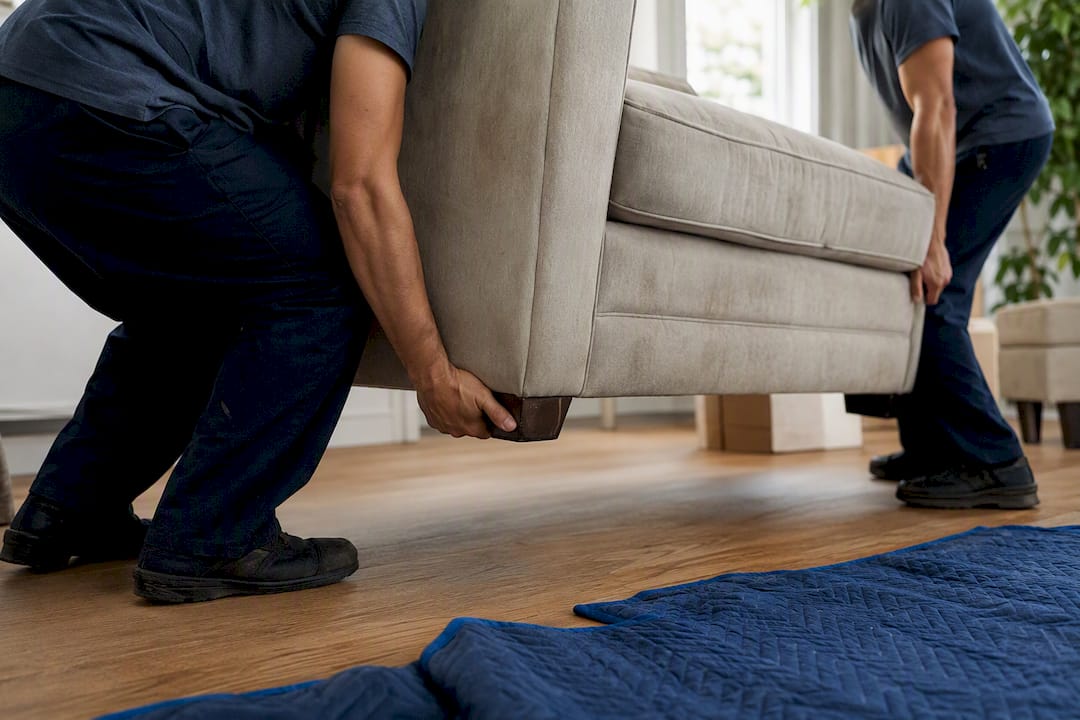
Pro Tip: A careful tight-doorway move usually takes 20 to 40 minutes once the sofa is stripped down, most of that spent on the slow pivot rather than the carry itself. Label any hardware you remove in a sandwich bag taped to the underside of the sofa so reassembly doesn’t turn into a scavenger hunt.
When Should You Disassemble the Sofa Instead of Forcing It?
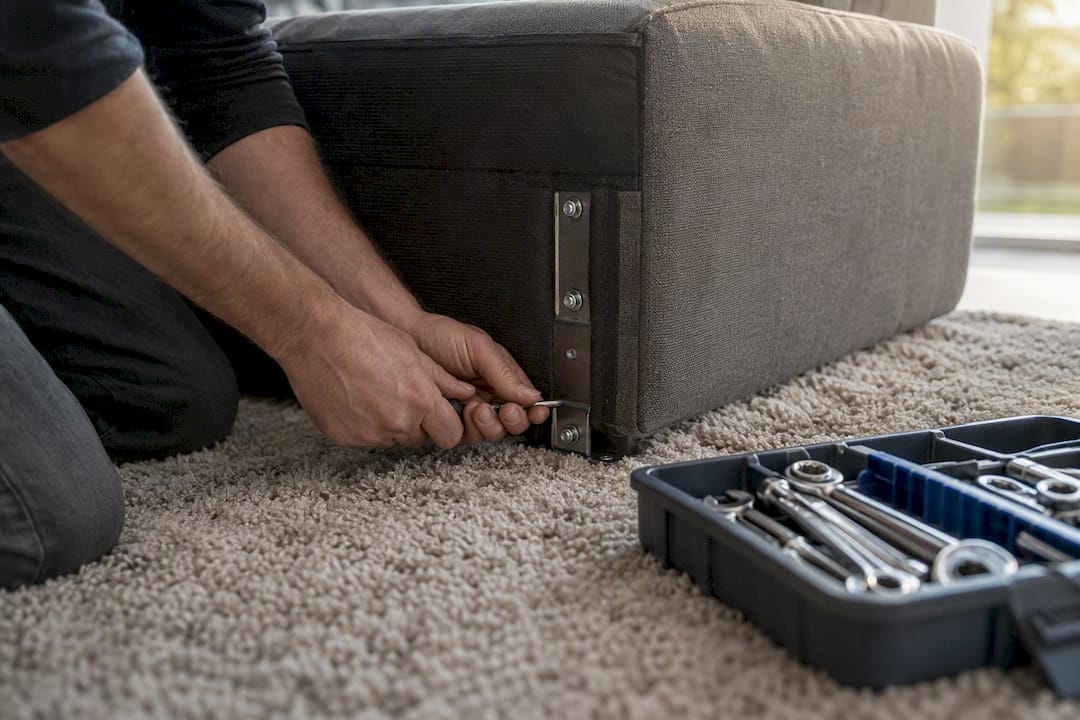
Disassembly is the next lever to pull once tilting alone doesn’t create enough clearance, and it follows a specific order:
Legs off first — always the fastest win, typically worth 4 to 6 inches.
Cushions and back pillows removed — reduces bulk at the exact point where the frame catches.
Removable arms or back panels off, if your sofa has them (check for hidden bolts under the upholstery skirt).
Sectional pieces separated at their connector clips, moved through individually.
Keep every screw, bolt, and bracket in a labeled bag. Tape it to the frame or the box it’s traveling in. It’s the single most common regret movers report: a perfectly disassembled sofa and no idea which bolt goes where.
Partial disassembly won’t help everything. Sofas with a fixed corner module, common on sectionals and some L-shaped pieces, often have a rigid frame that can’t be broken down further, and that piece determines whether the whole set fits. Sleeper sofas with a metal frame have the same problem. When you hit that wall, cutting the frame or forcing it through is a last resort that risks the sofa and the doorway. That’s the point to call a furniture disassembly specialist or a moving crew equipped for controlled deconstruction rather than improvising with a saw.
What Are Your Options If the Sofa Still Won’t Pass?
If you’ve measured, stripped, tilted, and disassembled and the sofa still won’t clear, a few paths remain before you write off the piece entirely.
Check secondary entries. A patio door, garage entrance, or sliding glass door is often wider than the front door and worth measuring before you rule it out.
Consider removing a window sash or screen, but only after confirming it’s safe to do without damaging the frame or violating a building’s structural rules if you’re in a rental or condo.
Weigh a modular or sectional replacement. If the sofa is a single rigid piece and the return window hasn’t closed, swapping it for a modular version that breaks into smaller sections can cost less than permanent alteration and causes zero damage.
Bring in professionals for controlled deconstruction. A moving crew can safely remove and reattach legs, arms, and even reupholster around a temporary frame cut in extreme cases, and in rare situations rig a piece through an upper window with proper equipment.
Run through a simple decision order: try the free fixes first (measuring, stripping, tilting), then the moderate-cost fixes (disassembly, door removal), and only then weigh the expensive or risky ones (structural changes, replacement, professional rigging). Skipping straight to the last option almost always costs more than it needed to.
When Does a Professional Move Actually Make Sense?
A tight doorway isn’t just a measuring problem. It’s a liability problem, for your sofa and your walls. Atlaskings has handled these exact squeezes across more than 500 completed moves since 2021, and the pattern holds: the moves that go sideways are almost always the ones where someone forced a sofa through without stripping it down first or measuring the full route.
A few signs it’s time to call in a crew instead of pushing through solo:
You’ve removed the legs and cushions and you’re still short on clearance by more than an inch.
The sofa has a rigid or fixed-corner frame that can’t be disassembled further.
You’re moving alone or with only one other person and the piece is heavy or bulky.
The route includes stairs, an elevator, or multiple tight turns where one mistake risks real damage.
A typical Atlaskings visit for a tight-fit sofa starts with measurements of the sofa and the route, protective padding on floors and doorframes, safe disassembly where needed, and the move itself, all under itemized or flat-rate pricing so there’s no guessing what the job costs before it starts.
What This Guide Adds Up To
The fastest path through a tight doorway is measuring the clear opening and the sofa’s diagonal depth before attempting anything else.
Point | Details |
Measure before moving | Check the clear opening (door fully open) and the sofa’s diagonal depth, not its length. |
Strip it down first | Removing legs saves about 4 to 6 inches; removing cushions and arms adds more clearance fast. |
Tilt on the diagonal | Standing the sofa on end and pivoting uses the shorter diagonal measurement instead of full depth. |
Watch the whole route | Hallways, stair landings, and elevators often cause more trouble than the front door itself. |
Call in help when stuck | Atlaskings measures, protects surfaces, and safely disassembles or moves sofas that won’t clear on their own. |
A Mover’s Honest Take on the Doorway Panic
Most of the anxiety around a sofa that won’t fit is really anxiety about not knowing the numbers. Once you measure the clear opening and the diagonal depth, the outcome is usually predictable before you lift a finger, and that’s the part conventional advice skips. Too many guides jump straight to “hire movers” or “cut the door frame” without walking through the cheap, fast fixes first.

The most overrated fix, in my view, is force. People shove, wedge, and jam a sofa toward a doorway assuming persistence will win. It rarely does, and it’s how walls get gouged and frames crack. The underrated fix is patience paired with the right sequence: measure, strip the sofa down, then pivot slowly with someone calling clearance from inside the room.
If you take one thing from this guide, prioritize the diagonal depth measurement over everything else. It’s the number that actually decides whether a tilt works, and it’s the one most people never think to check until they’re already stuck in the doorway with a couch wedged sideways.
— Natalie
Get a Tight Doorway Handled Without the Guesswork
Atlaskings exists for exactly this moment: when measuring, stripping, and pivoting a sofa isn’t worth the risk to your walls, your back, or the piece itself. Instead of gambling on a DIY squeeze with no way to know the real cost of a mistake, you get itemized or flat-rate pricing before anyone touches the sofa, so there’s no surprise bill after a scraped doorframe.

Whether the job is a straightforward in-home delivery of a new sofa or a full move where disassembly and careful maneuvering are part of the plan, the crew arrives ready to measure the route, protect your floors and frames, and disassemble the piece properly if that’s what it takes. If you’re moving an entire room and want it set up rather than just dropped off, in-home refresh service covers placement too. Book a measurement and quote before you attempt another pivot solo.
Sources
The MeltFlex sofa-fit calculator and ToolCr’s fit calculator run the diagonal math for you. The Home Depot moving guide and MovingPlace’s solo-mover guide walk through the physical technique step by step, and One Day Doors & Closets covers what’s actually involved if you decide widening the doorway makes more sense than fighting the sofa.
Recommended
Comments