

Protect Breakables: Pack Fragile Items for Moving Under 45 lb

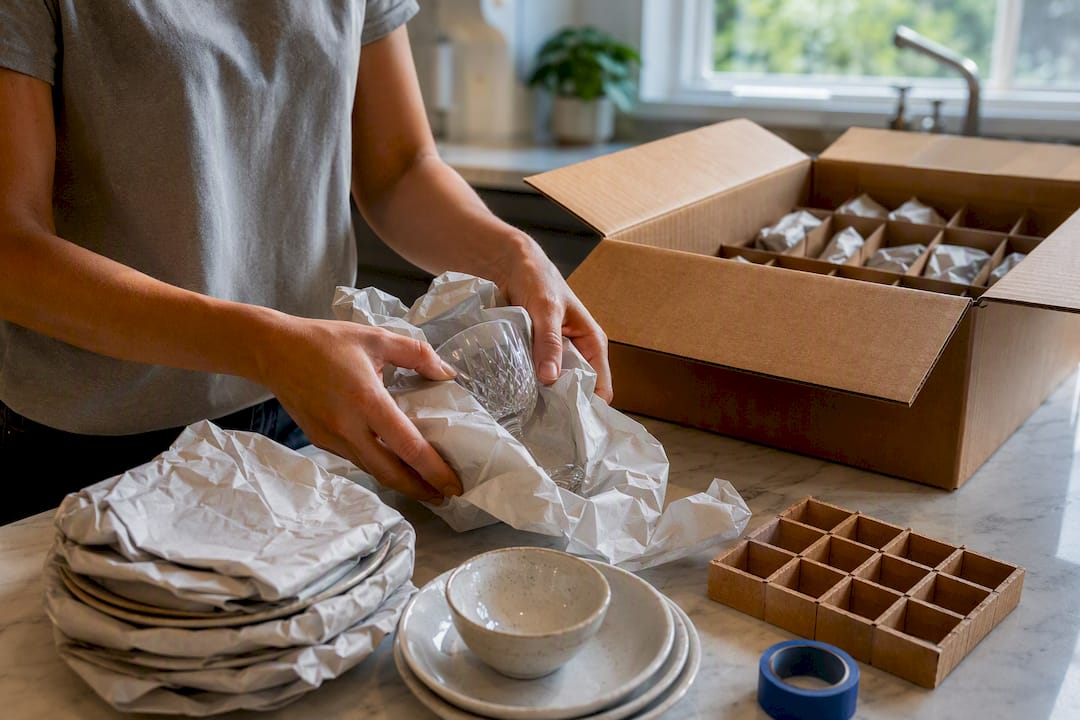
Wrap each fragile item individually, box it in the right size container, and eliminate every gap with padding. That combination prevents most moving damage. Give yourself two to three days for a full kitchen and living room, longer for art, antiques, and electronics, and decide early whether Atlaskings should handle the delicate work instead of you.
TL;DR:
Use double-wall dish-pack boxes and pack plates on edge with individual wrapping to distribute shock and prevent cracking during transit.
Always weigh each box below 45 pounds and run the shake test to ensure contents stay secure before sealing.
Protect glass items with X-taped surfaces, foam corner protectors, and load them upright to reduce shattering risks.
Wrap finished furniture in moving blankets and disassemble parts like hardware and legs to avoid damage and simplify packing.
Hire professional movers like Atlaskings for irreplaceable or fragile items to ensure proper handling and coverage, especially when insurance restrictions apply.
Table of Contents
Packing Fragile Items for a Move: Your Supplies Checklist
Good packing starts with the right materials on the table before you touch a single plate. Skimping here is the single most common reason boxes arrive with something broken inside.
Dish-pack (double-wall) boxes: thicker walls than standard boxes, built for weight and shock.
Packing paper: unprinted newsprint for wrapping and void-fill (avoid printed newspaper, which can smudge ink onto porcelain).
Bubble wrap: best for glass edges, stemware, and anything with a delicate rim.
Foam sheets or cell dividers: slide between plates, glasses, and picture frames for rigid separation.
Packing tape and a dispenser: get the wide kind, not household tape.
Permanent markers: for labeling contents and orientation.
Moving blankets and corner protectors: for furniture edges, tabletops, and framed pieces.
Household substitutes work fine for lower-risk items. Bath towels, bedsheets, and clothing make effective void-fill, and using them cuts down on both cost and waste. One comparison of bubble wrap versus packing paper breaks down when each material actually earns its keep. For genuinely irreplaceable pieces, stick with dedicated padding rather than a rolled-up sweater.
Pro Tip: Budget one dish-pack box per eight to ten place settings, and one roll of packing paper (about 25 pounds) per two to three boxes of glassware or dishes.
How Do You Pack Plates, Bowls, and Mugs Safely?
Kitchenware breaks more than almost anything else in a move, mostly because people pack it flat. Plates stacked horizontally absorb every bump straight through the pile. Packed on edge, they flex and distribute shock instead of cracking.
Build the box. Use a dish-pack double-wall box and reinforce the bottom seam with an H-pattern of tape for extra support, a method moving professionals rely on to prevent blowouts under weight.
Cushion the base. Crumple three to four inches of packing paper into the bottom.
Wrap plates individually, then bundle two to four together and stand them on their edge, like records in a crate, never flat.
Nest bowls one inside another with a sheet of paper between each, then wrap the stack as a unit.
Stuff mugs with paper on the inside and wrap paper around the handle before boxing them upright.
Fill every gap with crumpled paper until nothing shifts.
Run the shake test. Close the box and shake it gently. If you hear or feel movement, add more filler.
Cap the weight. Keep dish-pack boxes under roughly 45 pounds so they stay liftable and structurally sound.
Stemware needs its own protocol. Stuff the inside of each glass lightly, wrap it individually in bubble wrap, and slot it into a cell divider. Placing stemware in the top layer of the box, rather than under heavier dishware, keeps the thinnest, most breakable pieces from carrying weight they were never built to hold.
Protecting Framed Art, Mirrors, and TVs During a Move
Flat glass items fail differently than dishes. A mirror or TV screen doesn’t chip, it shatters, and once it’s cracked it’s usually a total loss. That makes upright, snug packing non-negotiable here.
Buy a picture box or mirror box sized to the piece; for anything oversized, custom crating is worth the cost.
Apply painter’s tape in a large X across glass or screen surfaces. This won’t stop a break, but it reduces dangerous scattering if impact does occur.
Slide foam corner protectors onto all four corners, then wrap the piece in a light layer of bubble wrap.
Finish with a moving blanket secured by tape (never taped directly to the frame or screen).
Load the box standing on its edge, never flat, and brace it so it can’t tip or slide during transit.
If the original TV box is long gone, a mirror box with extra foam padding on both faces is a workable substitute. Just make sure there’s zero play once the piece is inside.
Pro Tip: Write “GLASS” and an arrow showing “up” directly on the box in two places, not just one. Movers loading a full truck often only glance at one visible side.
Packing Lamps, Vases, and Other Awkward Shapes
Irregular items don’t fit standard packing logic, and that’s exactly why they get damaged. A lamp base packed like a vase, or a vase packed like a box of books, ends up rattling loose by the second mile.
Unscrew and box lampshades separately; they crush under almost no pressure at all.
Remove bulbs, wrap the lamp base in bubble wrap, and secure the cord so it can’t snag.
Use pool noodles or foam tubing sliced lengthwise to cushion glass rims and awkward corners.
Stuff hollow vases loosely with paper so pressure has nowhere to concentrate.
Choose a snug single-item box for anything valuable or unusually shaped; group only small, sturdy knickknacks together, and only with paper between every piece.
Claims data on fragile items shows lamps and mirrors generate a disproportionate share of damage reports compared to how often people actually pack them, which says more about rushed technique than bad luck.
How to Pack Furniture and Glass Tabletops Without Damaging the Finish
Finished wood and antique furniture need padding, not plastic. Tight-wrapped shrink film traps moisture against a finish and can pull joints apart when the wrap is removed, especially on older glued furniture.
Wrap finished surfaces in moving blankets, secured loosely with tape or stretch wrap over the blanket, never against bare wood.
Remove detachable legs, shelves, and hardware; bag screws and label which piece they belong to.
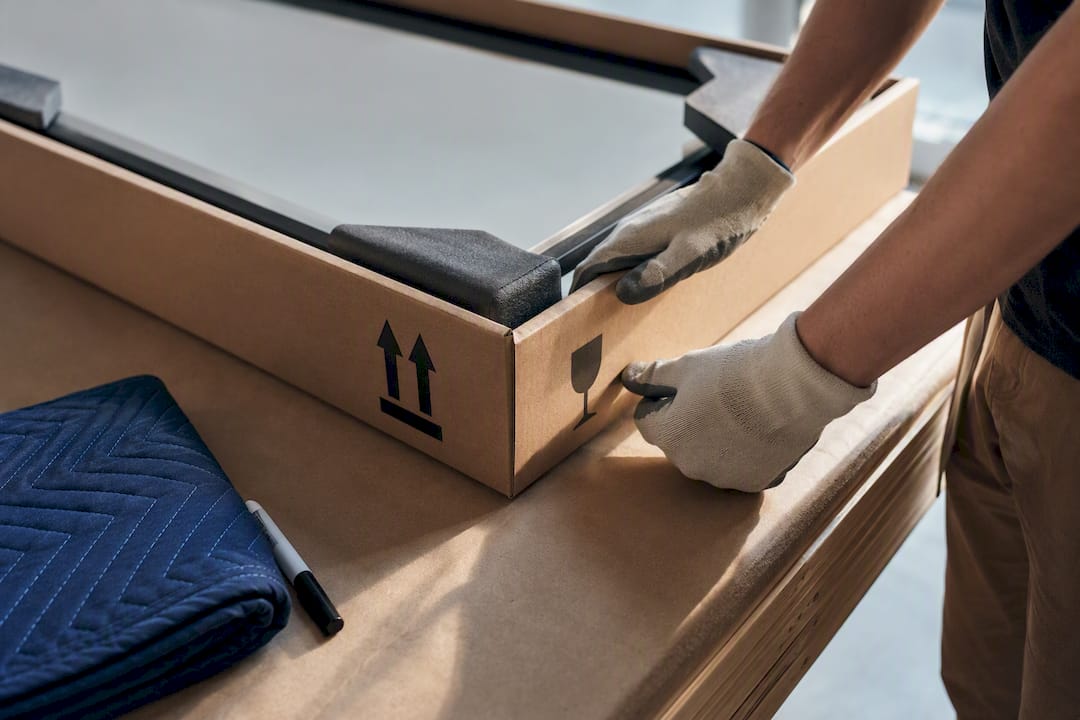
Pack glass tabletops upright, never flat, with corner protectors on all four edges.
For true antiques, consider custom crating or handing the piece to a moving crew built for delicate furniture.
Photograph every valuable piece before it’s touched. Condition photos are your evidence if a claim comes up later.
Sealing, Labeling, and Loading Fragile Boxes the Right Way
Packing correctly only pays off if loading doesn’t undo it. This is the stage where most preventable damage still happens, box contents fine, box placement careless.
Seal every box with an H-tape pattern across the top and bottom seams for reinforced strength.
Run the shake test one more time before sealing for good, and keep every box near the 45 to 50 pound range so it stays manageable.
Label at least two sides with the room, a contents summary, “FRAGILE,” and “THIS SIDE UP.”
Load fragile boxes last, on top of sturdier ones, or wedge them securely inside cabinets with padding on all sides.
Keep flat items like mirrors and picture boxes upright against a flat truck wall, never laid horizontally under other weight.
Walk the loaded truck once before departure and flag anything unstable to the crew.
Should You Pack Fragile Items Yourself or Hire Atlaskings?
The decision usually comes down to four things: how irreplaceable the item is, how much volume you’re dealing with, how much time you actually have, and whether you need insurance coverage that DIY packing won’t give you.
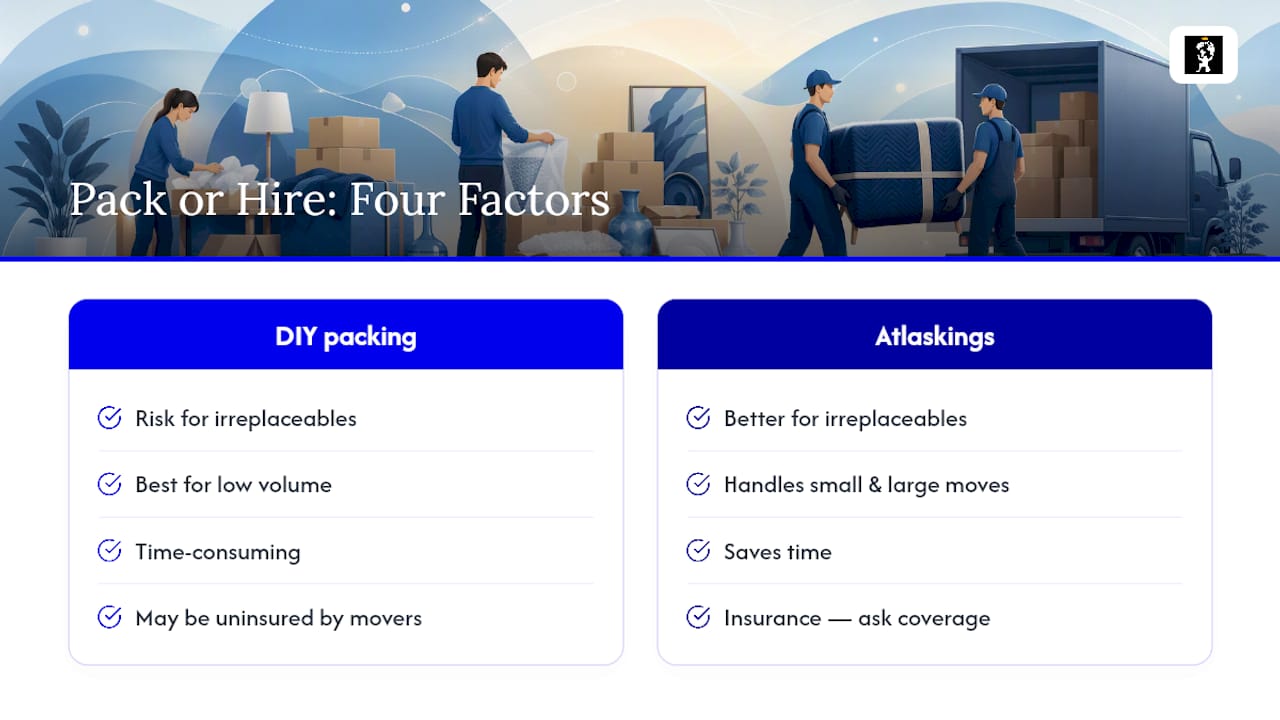
Insurance has a catch most people miss. Many moving companies only reimburse damage on items they packed themselves, so a self-packed antique vase that cracks in transit may not be covered at all. Photograph anything valuable before the truck arrives, regardless of who packs it.
Atlaskings has completed more than 500 moves since 2021, family-run, with itemized and flat-rate pricing so there are no surprise line items on the invoice. In-house delivery, small moves, and assembly services mean fragile and bulky items don’t have to be split across different providers. When booking, ask directly about the materials used, what the insurance actually covers, and the arrival window.
What I’ve Learned Packing More Moves Than I Can Count
Photograph anything of value before you wrap it, not after. A quick photo on your phone is worth more than any receipt if a claim comes up three weeks later. I also pack the kitchen first, always, because it’s the room people underestimate and the one where damage shows up most.
Keep a “last night” bag for chargers, medications, and anything you’ll need before the first box gets opened. Label every box the same way, every time, and reserve one clear corner of a room as the fragile staging area on moving day so nothing gets stacked wrong in the rush.
— Natalie
Book Atlaskings for Your Fragile-Item Move
Atlaskings is the alternative to renting a truck and hoping your dish-pack boxes survive the drive yourself. We handle in-house delivery for large or delicate pieces, small moves under ten items, professional assembly, and even decluttering through our ADHD Reset service, all under itemized, flat-rate pricing with no hidden fees added after the fact.

Choosing Atlaskings for fragile items means you get movers who already know the dish-pack, upright, and weight-cap rules covered above, without you having to supervise every box. Whether it’s a full household move or a single antique cabinet that needs careful hands, our in-house delivery service is built for exactly that kind of handling. Before you book, have a rough item count ready, flag anything irreplaceable, and ask what packing materials are included. Get a flat-rate quote through Atlaskings and lock in your moving date before the calendar fills up.
Where to Learn More About Packing Fragile Items
For a deeper walkthrough of dish-pack technique, Moving Experts’ step-by-step dish guide covers box reinforcement and weight limits in detail. If glassware and stemware are your main concern, The Spruce’s guide to glasses and goblets breaks down cell dividers and layering. For mirrors, art, and TVs, U-Haul’s fragile shipping guide explains the X-tape method and upright transport. Check supplier pages directly for exact box dimensions before you buy in bulk.
Sources
Recommended
Comments