

From 500+ Moves: Pick the Right Moving Truck Size With Movers


For a typical studio or one-bedroom home, a small cargo van or 10 to 12 ft truck with one or two movers usually gets the job done. A two-bedroom home generally calls for a 15 to 20 ft truck and a two to three-person crew. Three or more bedrooms, or a garage full of tools and storage bins usually push you into a 20 to 26 ft truck or a multi-vehicle crew. If you’re moving long-distance, size up. The extra cost of more truck space is almost always cheaper than paying for a second trip.
TL;DR:
Most moving jobs require a truck size that matches the home’s cubic footage and weight, with larger homes needing progressively bigger trucks and crews.
Movers typically use three different systems—weight-based, volume-based, or hourly—to determine the truck size, making it crucial for customers to understand which applies and verify measurements.
Accurate measurement involves a walk-through or video survey, measuring large items, adding a 15-20% buffer for loose items, and checking against cubic-foot and weight estimates for consistency.
Crew size should scale with truck size and job complexity, with larger homes and long carries demanding more personnel; access restrictions can affect both truck choice and crew planning.
Confirm truck availability during peak season or in rural areas to avoid delays or mismatched vehicle sizes, especially for long-distance moves requiring larger or specialized trucks.
Table of Contents
What Size Moving Truck Fits Your Home?
Movers size a job by weight, by cubic feet, or by the hour, and the right vehicle class depends on which one your mover uses. The table below gives typical ranges so you can sanity-check whatever a mover quotes you before the truck ever shows up.
Rooms full of furniture generally run 150 to 200 cubic feet each once you count furniture, boxes, and everything crammed into closets. A one-bedroom apartment tends to land between 2,000 and 3,500 pounds, while a two- to three-bedroom home often runs 5,000 to 9,000 pounds. Those figures matter because they’re the numbers estimators actually use to pick your truck.
Home Size | Cubic Feet | Weight (lbs) | Recommended Vehicle | Crew Size | Size Up If… |
Studio / 1BR | 250–500 | 2,000–3,500 | Cargo van or 10–12 ft box truck | 1–2 movers | You have a storage unit or large appliances |
2BR | 700–1,200 | 5,000–9,000 | 15–20 ft truck | 2–3 movers | You have a piano, gym equipment, or a full garage |
3BR | 700–1,200 | 5,000–9,000 | 20 ft truck | 3–4 movers | Move distance is long-distance |
4BR+ | 1,400–1,700 | 9,000–13,000 | 26 ft truck or two vehicles | 4–5 movers | Combining a home move with a storage unit clear-out |
Garage/storage add-on | +150–200 | +up to a couple thousand | Bump one truck class | Add 1 mover | Contents include tools, bikes, or seasonal gear |
Piano or specialty item | +60–80 | +hundreds | Confirm crew has piano straps/dollies | Add 1 specialist | Stairs, tight turns, or no elevator access |
Garages and storage units are the most common reason a quote changes on move day. A “two-bedroom” home with a packed garage can easily need the truck space of a three-bedroom job, and heavy items like a piano or a gun safe deserve their own line item on the estimate rather than getting folded into a general cubic-foot guess.
How Do Movers Actually Decide the Truck Size?
Movers use one of three systems to size your job, and knowing which one applies to your quote tells you what to double-check before signing anything.
Weight-based: Common for long-distance and interstate full-service moves. The truck gets weighed empty (tare weight) and again loaded (gross weight); the difference is your billed net weight, verified with certified scale tickets from a weigh station.
Volume-based: Common for local and full-service moves. The mover walks your home and builds a cube sheet, assigning a cubic-foot value to every item and totaling it room by room.
Hourly / time-based: Common for small local moves, deliveries, and assembly jobs. Crew-hours drive the price far more than the truck’s length does.
Here’s a number worth remembering: a one-bedroom apartment typically runs 250 to 400 cubic feet, while a two- to three-bedroom home can hit 700 to 1,200 cubic feet. If your quote’s cubic footage falls far outside that range for your home size, ask why before you book.
If a mover claims weight-based pricing, ask for scale tickets. If they claim volume-based pricing, ask to see the cube sheet itemization. Either request takes thirty seconds and tells you whether the number you’re paying for is actually documented or just estimated by eye.
How to Measure Your Move in Three Steps
You don’t need a tape measure obsession to get an accurate cubic-foot count. You need a system, and it takes about twenty minutes per average home.
Walk each room and measure large items. For furniture, appliances, and anything bulky, measure length times width times height in feet. Tally boxes separately by size (small, medium, large) and count wardrobe boxes and specialty items on their own line.
Apply standard cubic-foot rules of thumb, then pad for loose items. A sofa runs roughly 35 to 60 cubic feet; a queen mattress and frame together run closer to 60 to 80. Once you’ve totaled the big pieces, add 15 to 20 percent on top for boxes, loose items, and things you forgot in the junk drawer.
Convert to pounds as a sanity check. Multiply your total cubic feet by roughly 7 pounds per cubic foot. If a mover quotes you by weight and the number is wildly different from your own estimate, that’s worth a conversation before moving day.
If an in-person walkthrough isn’t practical, a slow video survey works nearly as well. Walk through every room, every closet, and every storage area, and pause on anything unusual, like a treadmill or a curio cabinet. Ask your mover which angles or details they need to size the job from video alone.
Pro Tip: Open every closet and cabinet door during your video walkthrough. Movers consistently underestimate storage-heavy homes because closet contents rarely show up in a quick room scan.
Matching Crew Size to Truck Class
The truck is only half the equation. A 26 ft truck with a two-person crew on an 8-hour timeline is a recipe for a missed move-out deadline, so crew size needs to scale with vehicle size and job complexity.
A cargo van or small box truck typically pairs with 1 to 2 movers for studio and one-bedroom loads.
A 15 to 20 ft truck usually needs 2 to 3 movers to keep pace with loading and unloading.
A 26 ft truck or multi-vehicle job generally calls for 4 to 5 movers, especially with stairs or long carry distances.
Packing, furniture disassembly, and shuttle service (when a full-size truck can’t reach the building) all add time and sometimes push you toward a larger vehicle to consolidate trips. Parking restrictions, steep driveways, and building loading-dock rules can also force a smaller truck plus a shuttle vehicle, which changes your crew math entirely.
Pro Tip: If you live in a walk-up or a building with strict loading-dock hours, tell your mover before they quote you. A tight access window often changes the recommended crew size more than the square footage of your home does.
For small commercial moves or single-item deliveries, like a marketplace furniture pickup, a small delivery crew with a cargo van is usually more cost-effective than booking a full moving crew you don’t need.
Checklist for Comparing Mover Quotes
Two quotes that look similar on paper can produce very different bills on move day, and the gap almost always comes down to what’s actually included.
Confirm the pricing unit. Ask directly whether the quote is weight-based, volume-based, or hourly, and require the estimator to state it in writing.
Demand an itemized estimate. The linehaul charge (weight or volume) should be listed separately from packing, disassembly, storage, and insurance, not bundled into one lump figure.
Ask how they verify measurements. Scale tickets, a cube sheet, or post-load measurement each carry different accuracy, and you should know which one triggers extra charges if the load runs bigger than estimated.
Compare estimate types. A binding estimate locks the price. A non-binding estimate can rise with the final weight or volume. A not-to-exceed estimate caps your cost but lets it come in lower. Pick the one matching your tolerance for surprises.
Worth noting: when quotes use different pricing units, the lowest headline number often omits packing or storage entirely, and those costs surface at delivery instead. Comparing quotes side by side only works when they’re built on the same inventory and the same service scope.
Does Truck Size Availability Vary by Region or Company?
Truck availability shifts by season and by region, and it’s one of the most overlooked variables in the sizing conversation. Summer months, especially the stretch between late May and early September, account for the bulk of residential moving volume nationwide, which means larger trucks and full crews book out weeks in advance in that window. Booking a 26 ft class vehicle or a five-person crew with two weeks’ notice in July is a very different proposition than booking the same thing in February.
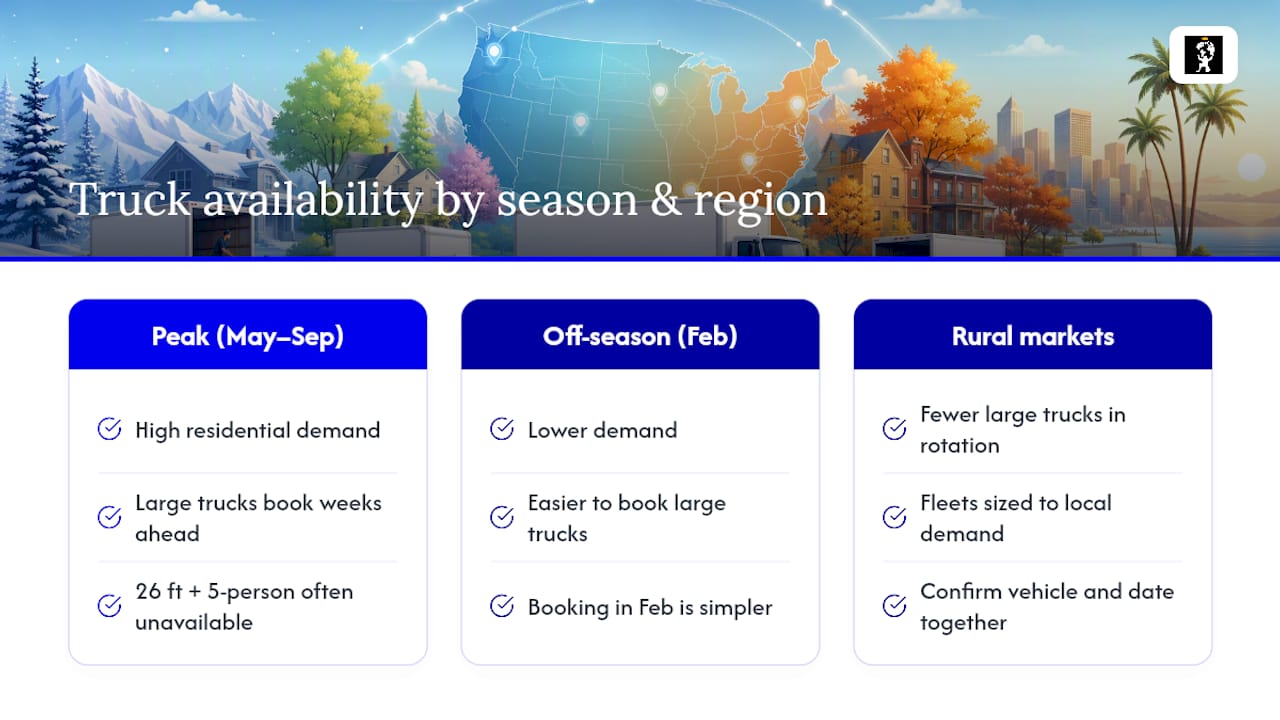
Smaller markets and rural areas sometimes have fewer large trucks in rotation, since moving companies size their fleets to typical local demand rather than stocking extra 26 ft trucks that sit idle most of the year. If your move involves a bigger vehicle class, or you’re moving during peak season, confirm the mover actually has that vehicle available on your date rather than assuming truck size and date availability are separate questions.
Multi-city and long-distance moves add another layer: a mover might have plenty of local trucks but a limited number of vehicles equipped for a longer haul, especially if the route crosses into less-traveled territory. Asking early, and asking specifically about your target date and vehicle class together, avoids the scramble of discovering three days before your move that the only available truck is a size too small for your inventory.
What We’ve Learned From 500+ Moves

Since 2021, many moves have been completed, and the sizing mistakes we see most often trace back to skipped surveys, not bad luck. A proper pre-move survey, whether in person or through a detailed video walkthrough, lets us match the right vehicle and crew to your actual inventory instead of a rough guess over the phone. Pricing is offered with itemized or flat-rate options so customers see what is covered before the truck arrives.
One thing we tell almost every client with a packed garage or overflowing closets: a focused declutter, including a specialized organization service, can drop you into a smaller, cheaper vehicle class entirely.
— Natalie
Ready to Book the Right Move?
Guessing at truck size is how a straightforward two-bedroom move turns into a second trip and a bigger bill than expected. Atlaskings replaces that guesswork with a real pre-move survey or video estimate, paired with your choice of itemized or flat-rate pricing, so the vehicle and crew you book actually match what’s in your home.

If you’re moving furniture, appliances, or a handful of large items rather than a whole household, our in-home delivery service is built for exactly that scope. If your garage or closets are working against you, our Inhome Refresh service, including ADHD Reset, can shrink your load before the truck ever gets booked. For a full local or multi-city move, start with our transport services page to request a survey.
The company currently serves communities across Ontario and select surrounding areas. Get your video estimate started today, and book the vehicle size that actually fits your home.
Sources
Recommended
Comments