

Move Framed Art Safely: 3 Step Packing, Shake Test and Transport Plan

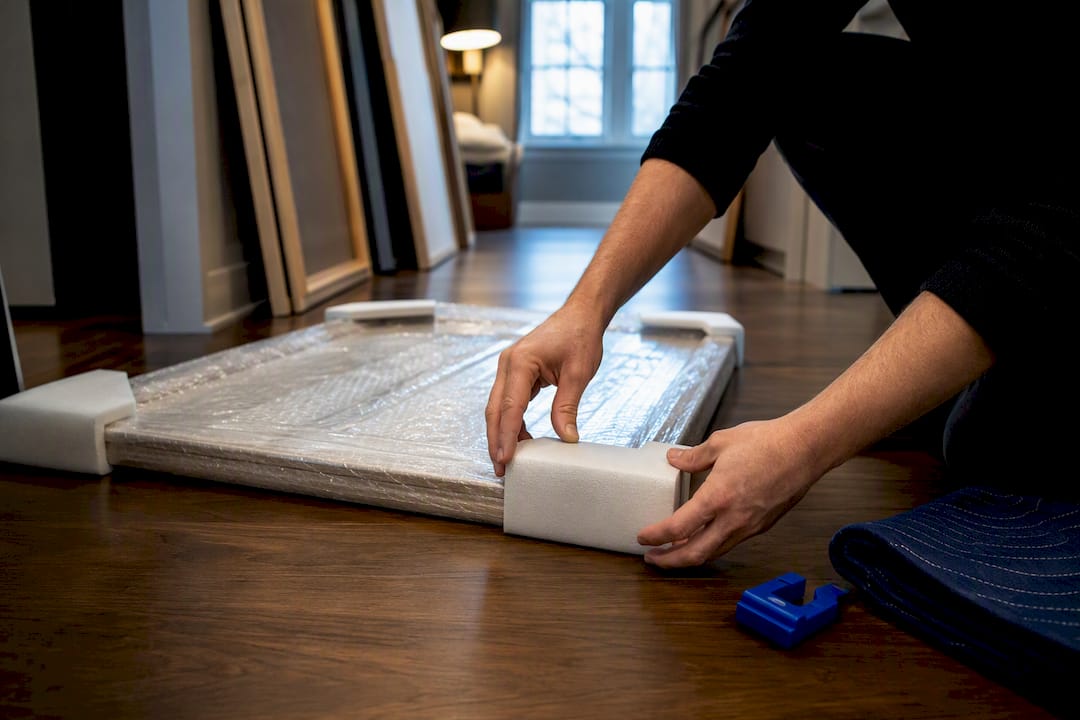
Wrap every frame in layered protection, box it upright, and transport it standing on edge. That single sequence prevents most moving damage. Tape an X on the glass, cushion the corners, and never lay a framed piece flat in a truck. If the piece matters too much to risk, Atlaskings offers professional transport for exactly this situation.
TL;DR:
Using layered protection with acid-free paper, bubble wrap, and corner guards significantly reduces the risk of damage during transport.
Framed art should always be carried upright, loaded last, and wedged securely between heavy furniture to avoid pressure and vibration damage.
Oversized, non-glass pieces, and antiques require special handling, such as breathable wrapping or custom crating, to prevent warping or cracking.
Professional movers are recommended for irreplaceable, large, or difficult-to-access pieces, especially when long-distance or extreme temperatures are involved.
Conduct a shake test after packing to ensure no movement occurs within the box, confirming that padding is adequate before transportation.
Table of Contents
What Do You Need Before You Start Moving Framed Art Safely?
Gather everything before you touch a single frame. Running back to the store mid-pack is how corners get chipped and glass gets scratched.
Acid-free paper or glassine for the face of any valuable or original piece — it will not transfer ink or discolor the surface over time.
Bubble wrap with bubbles facing outward, plus moving blankets for anything oversized or irregularly shaped.
Corner protectors (foam or cardboard) sized to the frame’s edges.
Cardboard sheets to sandwich flat pieces for rigidity.
Telescoping picture or mirror boxes that expand to fit different frame sizes.
Painter’s tape or masking tape for the glass, since it won’t leave residue.
Stretch wrap to hold blankets in place without adhesive touching the frame.
Packing tape, plus a permanent marker for labeling.
Skip regular newspaper. The ink smears and transfers onto glass and frame finishes, a problem The Spruce’s packing guidance specifically calls out. Avoid sealing anything in plastic for long-term storage too, since trapped moisture invites mold on canvas and paper mats. If a piece needs to sit for weeks before your move, a climate-controlled unit beats a garage or attic every time.
Pro Tip: Buy corner protectors before boxes. A box that’s slightly too big is fine with good padding. A frame with bare corners in a moving truck is a crack waiting to happen.
How Do You Pack a Framed Picture Step by Step?
Work through each piece in order. Skipping steps is how “fine on the shelf” frames arrive as broken glass on the other end.
Photograph the piece first. Note any existing scratches, chips, or frame damage before it goes anywhere near a box.
Remove hanging hardware. Take off wires, D-rings, or sawtooth hangers so nothing snags the wrap or pokes through a box wall.
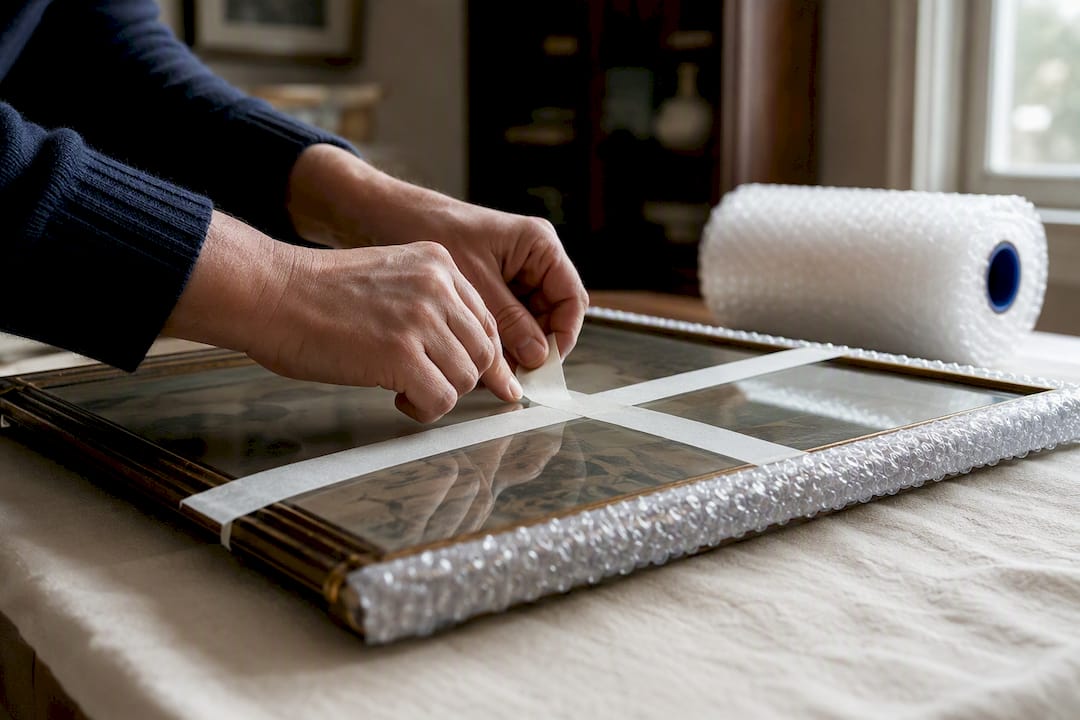
Tape an X across the glass with painter’s tape. If the glass cracks in transit, the tape holds the shards together instead of scattering them.
Lay down the first layer. Use acid-free paper directly against the face for valuable or original art. For everything else, clean packing paper works.
Add the second layer. Wrap in bubble wrap with the bubbles facing out, then secure it with tape placed on the wrap itself, never on the frame’s finish.
Attach corner protectors to all four corners before boxing.
Center the piece in a picture or mirror box, padding every gap until the frame cannot shift when you gently rock the box.
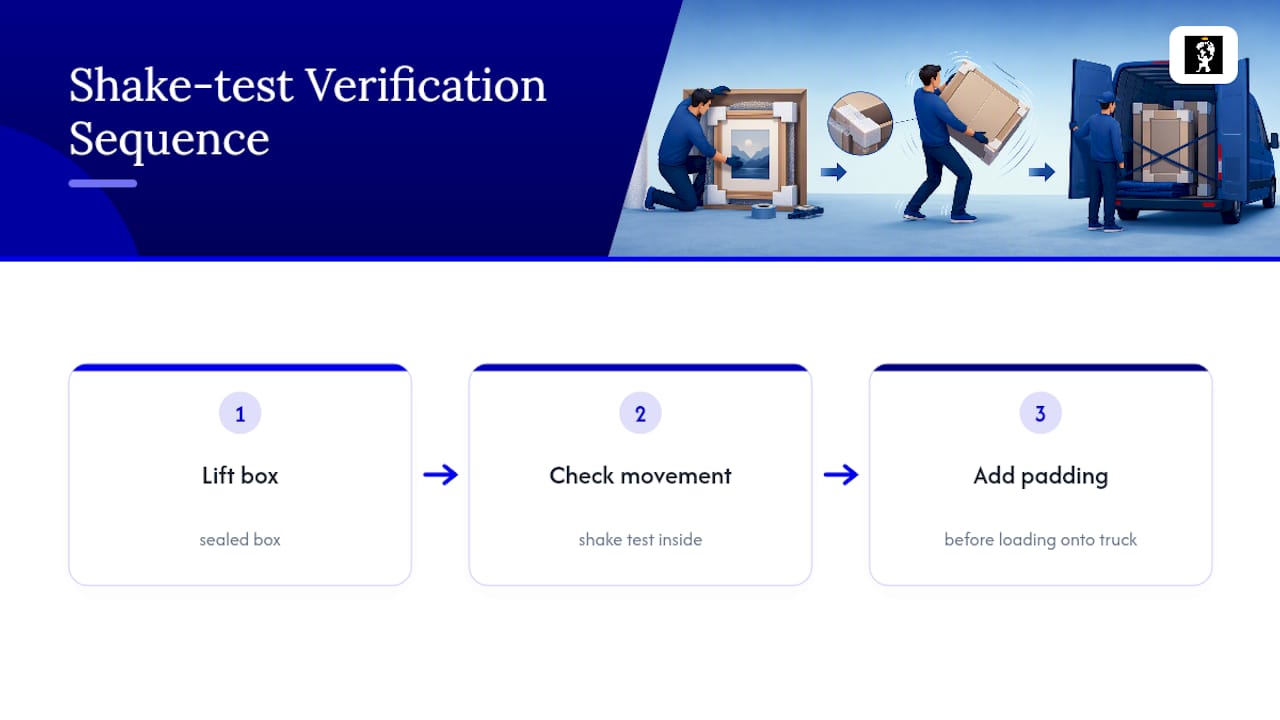
Run the shake test. Lift the sealed box and shake it lightly. Hear or feel movement? Open it back up and add more padding.
Label it clearly. Write FRAGILE and THIS SIDE UP on at least two sides, note which surface is the face, and list the destination room.
This layered method (paper, bubble wrap, then a rigid outer box) is the same three-step logic ConsumerAffairs recommends for preventing the flex and movement that cause most transit damage. U-Haul’s packing guide adds a useful detail here too: a Picture Packer Kit, which combines foam corner guards with straps, gives you interior bracing that loose padding alone can’t match.
For smaller decorative frames mixed in with other breakables, our guide on packing fragile items under 45 pounds covers techniques that overlap closely with this process.
How Should You Load and Transport Framed Art in a Moving Truck?
Carrying a frame flat, even for ten feet across a driveway, puts pressure on the glass it wasn’t built to hold. Always carry framed pieces upright, on edge, from the room to the truck and every point in between.
Load boxed frames last, right before you close the truck door, so they’re the first thing you unload.
Wedge them between immovable items, like a mattress or a dresser, rather than against the truck wall where vibration hits hardest.
Never stack anything on top of a framed art box, no matter how sturdy it looks.
Use furniture straps or bracing bars to keep the load from shifting once the truck starts moving.
Keep the load standing upright for the entire drive, not just during loading.
Packing framed art flat is one of the most common mistakes movers see, and it’s also one of the easiest to avoid once you know why upright packing matters for distributing weight evenly across the frame rather than concentrating it on the glass.
Temperature matters too. A non-climate-controlled truck sitting in a hot driveway for hours can warp canvas stretcher bars or loosen old adhesive on antique frames. If your move involves a long wait between loading and unloading, don’t push framed art into an attic or unheated garage as a stopgap.
Pro Tip: Write “LOAD LAST, UNLOAD FIRST” on the box in addition to FRAGILE. Movers juggling a dozen boxes need the instruction spelled out, not implied.
How Do You Handle Canvas, Mirrors, and Oversized Frames?
Standard boxes and standard wrapping don’t fit every piece. A few categories need a different approach entirely.
Canvas art without glass needs breathable protection, not plastic. Use a sheet of glassine or acid-free paper as an interleaf between the canvas face and anything else, and avoid letting plastic sit directly against the surface for more than a day or two. Secure the stretcher bars with a strip of tape so they don’t rack out of square if the box gets jostled.
Mirrors need the same X-taping as glass, sometimes reinforced with a full grid pattern for larger pieces. Add extra corner and center protection, since mirror glass cracks under pressure points more easily than picture glass. U-Haul recommends telescoping mirror boxes for standard sizes and custom crating for anything oversized.
Oversized or oddly shaped frames benefit from a “floating box” approach: pad every side so the frame never touches the box wall directly. That prevents the compressive load that causes warping or cracking in large pieces. Moving blankets plus rigid cardboard sheeting work for medium-oversized art; anything wall-sized usually needs custom crating.
Irreplaceable pieces should travel with you personally when possible, not in the truck.
Photograph provenance documents and any certificates of authenticity before the move.
Confirm your mover’s insurance covers fine art specifically, not just general household goods, before you book.
When Should You Hire Professional Art Movers Instead of DIY?
Not every frame needs a professional. A $40 print from a big-box store can survive a slightly imperfect DIY pack. An inherited oil painting or a large mirror in an awkward stairwell is a different calculation entirely.
Weigh these factors before deciding:
Value. Anything irreplaceable or appraised deserves professional handling and insured transport.
Size and weight. Pieces too large for standard picture boxes often need custom crating that most households can’t build themselves.
Access difficulty. Narrow stairwells, tight elevators, or steep driveways raise the risk of an accidental drop.
Climate sensitivity. Antique frames, oil paintings, and works on paper need controlled humidity that a standard moving truck can’t guarantee.
Professionals bring padded vans, expert load planning, and claims support if something does go wrong, none of which a rented truck and a weekend of effort can fully replicate.
Atlaskings is a mover built on itemized and flat-rate pricing to avoid surprise charges if a job needs extra padding or a specialty box. The company offers moving box rentals for households that want proper telescoping picture boxes without buying them outright, along with full transport services for framed art, furniture, and everything else that needs to move between homes. For households juggling clutter alongside the move itself, there are decluttering and organizing services like those in Organize Your Home for Back to School: Tips for a Smooth Transition available to help ensure packing day isn’t hindered by obstacles.
Decision factor | DIY is usually fine | Consider a professional |
Piece value | Under a few hundred dollars, replaceable | Appraised, inherited, or irreplaceable |
Size | Fits a standard telescoping box | Needs custom crating |
Access | Ground floor, wide doorways | Stairwells, tight turns, high floors |
Climate risk | Short local move, mild weather | Long-distance or extreme temperatures |
If you do bring in a mover, brief them clearly: give an inventory of every framed piece, specify which items need crating versus standard boxing, confirm pickup timing in writing, label boxes yourself before they arrive, and confirm insurance coverage before signing anything.
What Should You Do After Unpacking Framed Art?
Unpacking deserves the same care as packing, maybe more, since this is when hidden damage finally shows up.
Unbox framed pieces in the room where they’ll hang, not in a hallway where they’ll get bumped again. Remove tape and wrapping slowly, working from the outer layer inward, and check the glass for cracks before you pull the paper away completely. A crack that happened in transit can be invisible under bubble wrap until you’re staring at it directly.
Compare each piece against the photographs you took before the move. Look specifically at corners, since that’s where frames absorb the most impact even with protectors in place. Check the back of the frame too, not just the front. Hardware can loosen, backing paper can tear, and wire hangers can bend without any visible damage on the display side.
If something did shift or crack, document it immediately with photos and set the damaged item aside rather than rehanging it. This matters for any insurance claim, and timing matters: most movers and insurers want damage reported within a short window after delivery, not weeks later when you finally get around to decorating. Keep wrapping materials until you’re fully satisfied nothing is missing, since a stray corner protector or a piece of packing paper sometimes hides a small fragment worth noting.
How Do You Handle Antique or Fragile Glass?
Old glass behaves differently than modern glass, and treating it the same way is a common mistake.
Antique glass is often thinner and more brittle than contemporary picture glass, sometimes with existing hairline stress cracks that aren’t visible until light hits them at the right angle. Handle these pieces with two hands always, never one, and never by the frame alone if the glass isn’t fully secured within it.
Tape the X pattern the same way you would for standard glass, but use a lighter touch when applying it. Old glazing can be more prone to chipping at the edges under pressure than newer tempered options. Add an extra layer of bubble wrap specifically around the glass edge, not just the frame perimeter, since that’s where antique glass tends to fail first.
If a frame holds original glass from a period piece, some owners choose to have it professionally removed and packed separately from the frame itself, then reassembled after the move. This isn’t necessary for most pieces, but it’s worth considering for anything with historical or monetary value where the glass itself is part of what makes the piece original.
Never leave antique glass in direct sun inside a parked truck. Heat buildup against old glazing compounds can cause stress cracking that has nothing to do with impact at all.
Where Can You Find More Packing Guidance?
U-Haul’s picture and mirror packing guide walks through telescoping box sizing and sells the boxes and Picture Packer Kits directly.
Home Depot’s packing guide covers supply basics and sells bubble wrap, corner protectors, and boxes in-store.
ConsumerAffairs’ picture frame guide breaks down the three-layer wrapping method with independent, non-retail perspective.
Why the Standard Packing Advice Undersells the Verification Step
Most guides stop at “wrap it well and box it up.” That’s incomplete. The shake test gets treated as an afterthought, when it’s actually the only real proof that your padding is doing its job. Anyone can wrap a frame in bubble wrap and call it protected. Far fewer people actually lift the sealed box and check for movement before it goes on the truck.
The bigger blind spot is decision fatigue around hiring help. Homeowners often see professional movers as an all-or-nothing choice, either you do everything yourself or you hand off the entire move. The more useful framing is piece by piece: pack the $30 frame from the hallway yourself, and let a company with padded vans and crating experience handle the oil painting your grandmother left you. That mixed approach saves money without gambling on the pieces that actually matter.
If there’s one thing worth prioritizing above all else, it’s the corner protector. Glass cracks are annoying. Crushed corners are permanent.
— Natalie
Ready to Move Framed Art Without the Guesswork?
Atlaskings is an alternative for those who decide their art is worth more than a DIY gamble. Instead of assembling boxes, tape, and renting a truck on your own, you can obtain flat-rate pricing on transport designed to protect fragile items throughout the route.

Households juggling a full move often need more than just careful wrapping. Atlaskings handles in-home delivery for large or bulky pieces, offers moving box rentals so you’re not buying specialty boxes you’ll only use once, and provides full transport services for local and multi-city moves. If clutter is slowing down your packing before the truck even arrives, the Inhome Refresh service clears space so your framed art has somewhere safe to stage before boxing.
Get a flat-rate quote through Atlaskings and book your pickup window before moving day gets closer than you’d like.
Sources
Recommended
Comments