

When to DIY Move a 200–400 lb Fridge in Canada

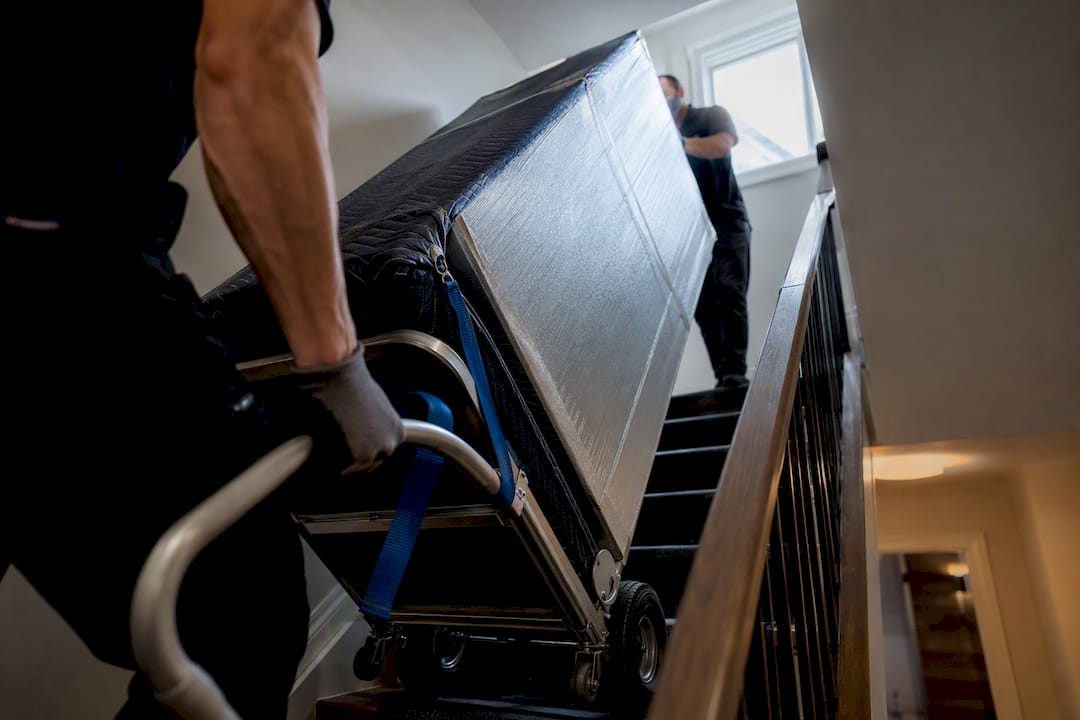
Most people can move a full-size refrigerator themselves, and the single rule that keeps the job safe is this: use an appliance dolly, bring at least one helper, and keep the unit upright the entire time. Skip the tilt-and-drag approach. Defrost it for 24 hours first, and never let it lean past a 45-degree angle on the dolly.
TL;DR:
Using the correct appliance dolly rated for the fridge’s weight and securing the unit tightly prevents accidents and damage during transportation.
Fully defrosting the refrigerator for 24 to 48 hours before the move is essential to avoid mold, odors, and moisture damage inside the unit.
Removing doors and securing shelves are critical steps for tight doorways or stairs, reducing the risk of cracks and limiting the unit’s overall size for passage.
Protecting floors with pads or plywood and using a stair-climbing dolly with three helpers drastically reduces the chance of damage and tipping risks.
Hiring professional movers is advisable for units over 400 pounds, complicated water line setups, or narrow stairwells, saving time, money, and potential damage.
Table of Contents
How to Move a Fridge Without Wrecking Your Back or the Compressor
Moving an appliance this heavy is a different job than shifting a dresser or a couch. A standard fridge weighs 200 to 400 pounds, and the weight rating on your dolly has to match or beat that number before you touch the handles. Get the gear right first, and the rest of the move gets a lot less stressful.
Here’s what to gather before moving day:
An appliance dolly rated for your fridge’s weight, or a stair-climbing dolly if you’re navigating steps
Moving blankets, furniture sliders, and ratchet straps to hold the unit against the dolly frame
A screwdriver or nut driver for pulling doors and adjustable shelves
A tape measure for checking doorways, hallway turns, stair widths, and elevator openings
Painter’s tape and towels for securing loose parts and mopping up leftover moisture
A pickup truck or moving van with a ramp, plus tie-down straps for the truck bed
Two people is the minimum crew for this job. Three is better once stairs are involved, since one person can spot corners while the other two manage the dolly.
Step-by-Step: How to Move a Refrigerator Safely
Once you have your gear staged, the actual move breaks into a predictable sequence. Rushing any single step here is where most damage happens.
Measure everything first. Get the fridge’s height, width, and depth, then walk the entire path from the kitchen to the truck, checking doorway widths, hallway turns, and stair clearance. If a doorway is tight, removing the fridge doors is usually simpler than trying to squeeze the whole unit through at an angle.
Empty and defrost. Pull out all food, then unplug the unit and let it defrost fully. Defrosting for 24 to 48 hours before the move gives condensation time to dry out, which prevents mold and musty odors from developing inside a sealed unit during transport.
Remove shelves, drawers, and bins. Wrap glass shelves separately in moving blankets or bubble wrap so they don’t crack against each other in the truck.
Secure the cord and disconnect the water line. Coil and tape the power cord to the back of the unit. If you have an ice maker, shut off the water supply, disconnect the line, and drain it into a towel before capping the valve.
Wrap and strap the fridge. Cover it in moving blankets, then load it onto the dolly. Tip it back no more than 45 degrees and strap it tight against the dolly frame so it can’t shift.
Move with a spotter. One person steers the dolly while the other watches doorframes, corners, and steps. Take stairs slowly, one at a time, and never let the fridge’s full weight rest on the dolly wheels while going down.
Load it into the truck upright. Use a ramp rather than lifting it into the bed. Once it’s in, strap it upright with tie-downs and pad the corners against the truck wall so it can’t tip during transit.
Wait before plugging it back in. If the fridge stayed upright the entire trip, a four-hour wait is usually enough for the refrigerant to settle. If it was tilted or laid on its side at any point, wait up to 24 hours before restarting it, since compressor oil needs time to redistribute.
Pro Tip: Snap a photo of the back panel before you disconnect anything. When you’re reconnecting the water line at the new place, you’ll want to remember exactly how the hose was routed.
Handling Stairs, Tight Doorways, and Fragile Floors
Stairs change the entire risk profile of a fridge move. A standard dolly can tip on a step, so a stair-climbing dolly and a third helper on the crew make a real difference in keeping the unit under control on the way down.
Floors need protection too. Never drag a fridge across hardwood, even for a few feet. Lay down moving pads or sheets of plywood along the path to spread the weight and prevent gouges or cracked tile.
For doorways that are too narrow, pulling the fridge doors off is almost always the easier fix. Removing an interior door from its frame can also buy a few extra inches when hallways are unusually tight, and it’s worth understanding the door removal process before you start unscrewing hinges.
Bring a stair-climbing dolly and three people for any move involving steps
Protect hardwood and tile with pads or plywood before the dolly rolls across it
Remove fridge doors or an interior door frame for openings under 32 inches
Pro Tip: If your fridge has a built-in water dispenser and the unit weighs close to 400 pounds, that’s usually the point where hiring help costs less than a cracked water line or a torn shoulder.
What Atlas Kings Sees Go Wrong on Fridge Moves
We’ve handled enough of these moves to know where people cut corners. The biggest one: skipping the defrost window entirely. A fridge that’s still cold and damp inside will sweat through the move, and that moisture shows up as mold in the seals within a week at the new place.
The second most common mistake is loose shelving. Glass shelves that aren’t wrapped and secured shift during transport and crack against each other. We also see floors left unprotected, which turns a five-minute dolly roll into a scratched hardwood repair bill.
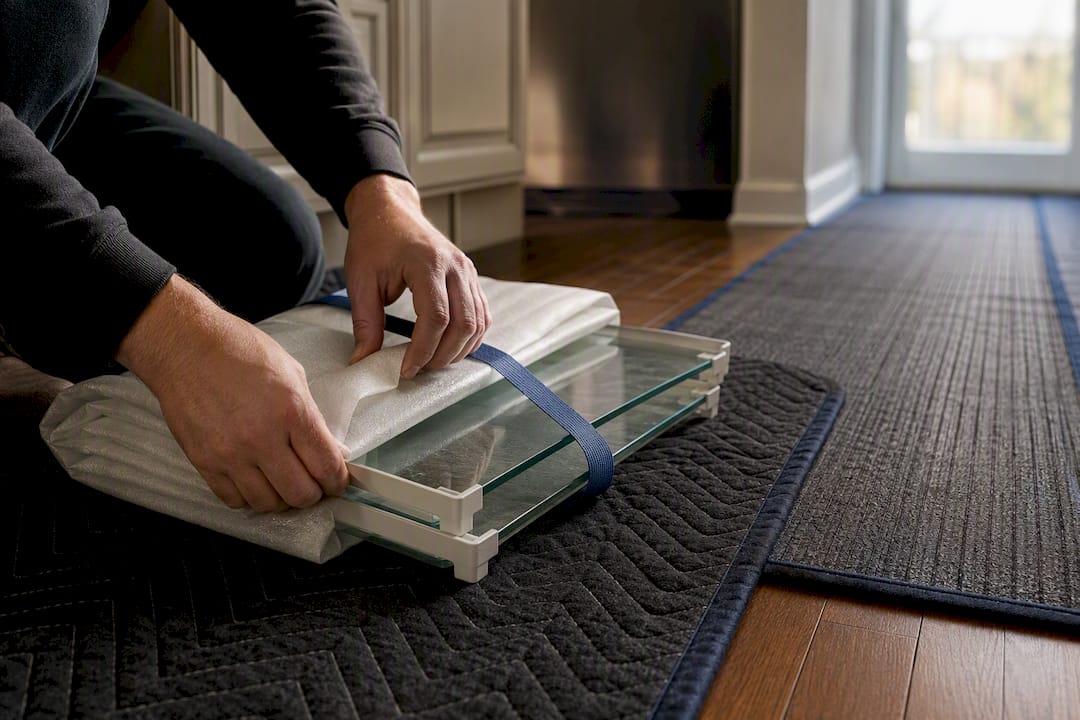
Our crews pad every corner, tape cords flat against the back panel, and confirm water line shutoffs before the fridge ever leaves the kitchen. Since 2021, a professional moving service has completed numerous moves with itemized pricing, so clients always know what they’re paying for before the truck shows up.
When It’s Time to Hire Atlas Kings Instead
Some fridge moves aren’t worth the DIY risk. If you’re facing a narrow stairwell, a unit that pushes past 400 pounds, or a built-in water and ice-maker line you’re not confident disconnecting, that’s the point where a professional crew earns its cost back fast.

Atlas Kings handles exactly this kind of job through in-home delivery for getting bulky appliances through tight doorways and up stairs, and our lift service for units that need specialized equipment to move safely. If your fridge is part of a bigger relocation, our local and multi-city transport options cover the whole job, and our assembly service can reconnect water lines and level the unit once it’s in place. Many professional moving services use itemized or flat-rate pricing, so there are no surprise fees added after the truck arrives.
Before you book, have your fridge’s dimensions, its approximate weight, and the number of stairs or tight turns at both addresses ready. That single detail speeds up your quote significantly. Check available dates and get a quote for your move.
Where to Double-Check the Details
Every fridge is a little different, so before moving day, confirm the specifics against your owner’s manual for model-specific wait times. Manufacturer pages and appliance-moving guides are the most reliable references for tilt limits and restart timing.
The Real Reason DIY Fridge Moves Go Wrong
The mistake I see repeated most in fridge-moving advice isn’t about muscle or equipment. It’s about time management. People treat the 24 hours before a move as flexible, something to squeeze in between packing boxes and calling the internet company. That’s backward.
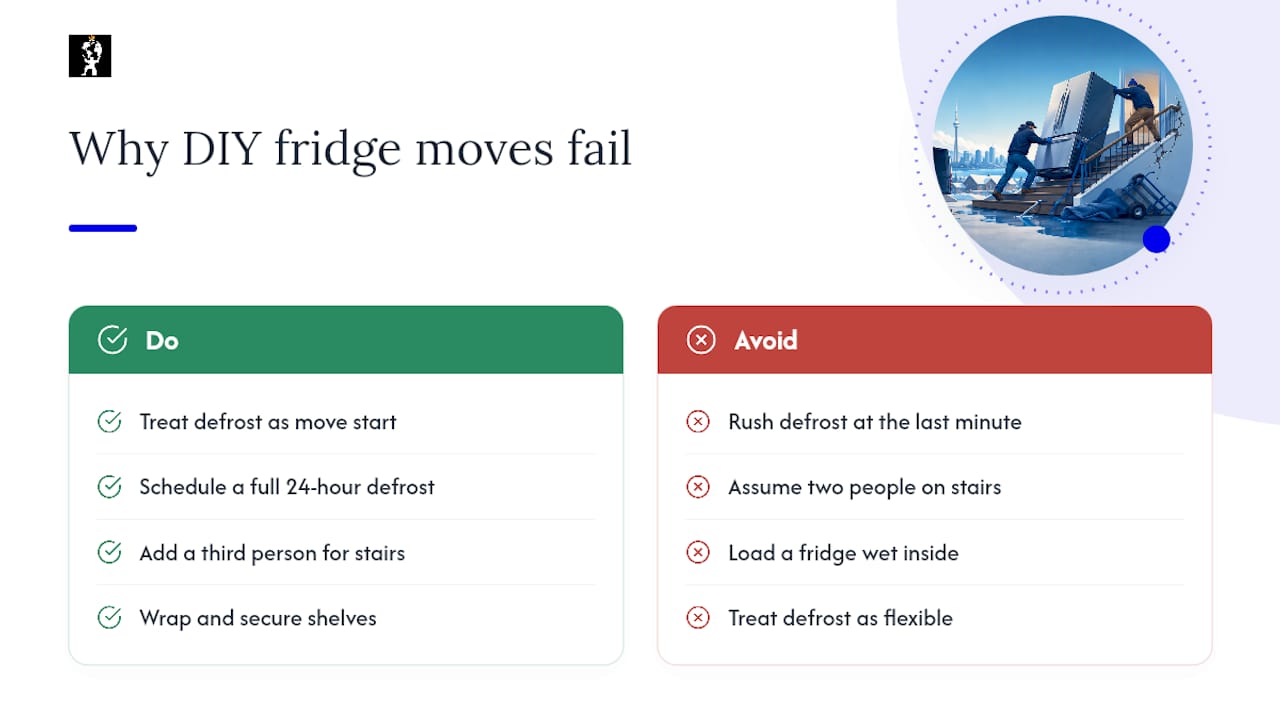
The defrost window is the one part of this job you can’t rush or fix later. Every other step, wrapping shelves, disconnecting the water line, strapping the unit to the dolly, can be redone if you get it wrong the first time. A fridge that goes into the truck still wet inside cannot be un-moldy a week later. That’s why the smartest movers treat the defrost period as the actual start of the move, not a chore to knock out the night before.
The other underestimated factor is crew size. Two people can technically move a fridge on flat ground. Add a single flight of stairs, and that same two-person team is suddenly one bad grip away from a runaway 300-pound appliance. The math on hiring a third helper, or hiring a crew outright, isn’t about strength. It’s about having enough hands to correct a mistake before it becomes an injury or a broken compressor line.
— Natalie
Sources
Recommended
Comments