

8 Week Local Move Timeline for Busy Ontario Households


Start planning a local move about 6 to 8 weeks before your target date, and give yourself more time if you’re managing a busy household or a lot of belongings. The path runs from 8 weeks to 4 weeks to 2 weeks to 1 week to moving day, then a settling-in week after. Build in a moving-day buffer of 60 to 90 minutes beyond whatever estimate you get, because almost every move runs longer than planned.
TL;DR:
Planning a local move should start at least six to eight weeks in advance to accommodate packing, decluttering, and logistics, especially for households with many belongings.
Confirm and reserve your moving company or truck four weeks before move day, ensuring utility and internet transfers are scheduled to start immediately upon arrival.
Pack in a deliberate order, focusing on seasonal and non-essential items first, while protecting fragile items with proper double-boxing and padding to prevent damage.
Build in a 60 to 90-minute buffer beyond the mover’s estimate to account for delays caused by parking, elevators, or last-minute issues during the move.
Coordinate move timing around non-flexible constraints such as lease end dates, work schedules, or school calendars by confirming deadlines early and requesting days off if possible.
Table of Contents
What Is the Best Week-By-Week Local Move Timeline?
A local move timeline works best when you treat it as a series of checkpoints instead of one giant to-do list. Each milestone has a job to do, and skipping one tends to create a backlog that lands on the week of your move, which is exactly when you have the least bandwidth to absorb it.
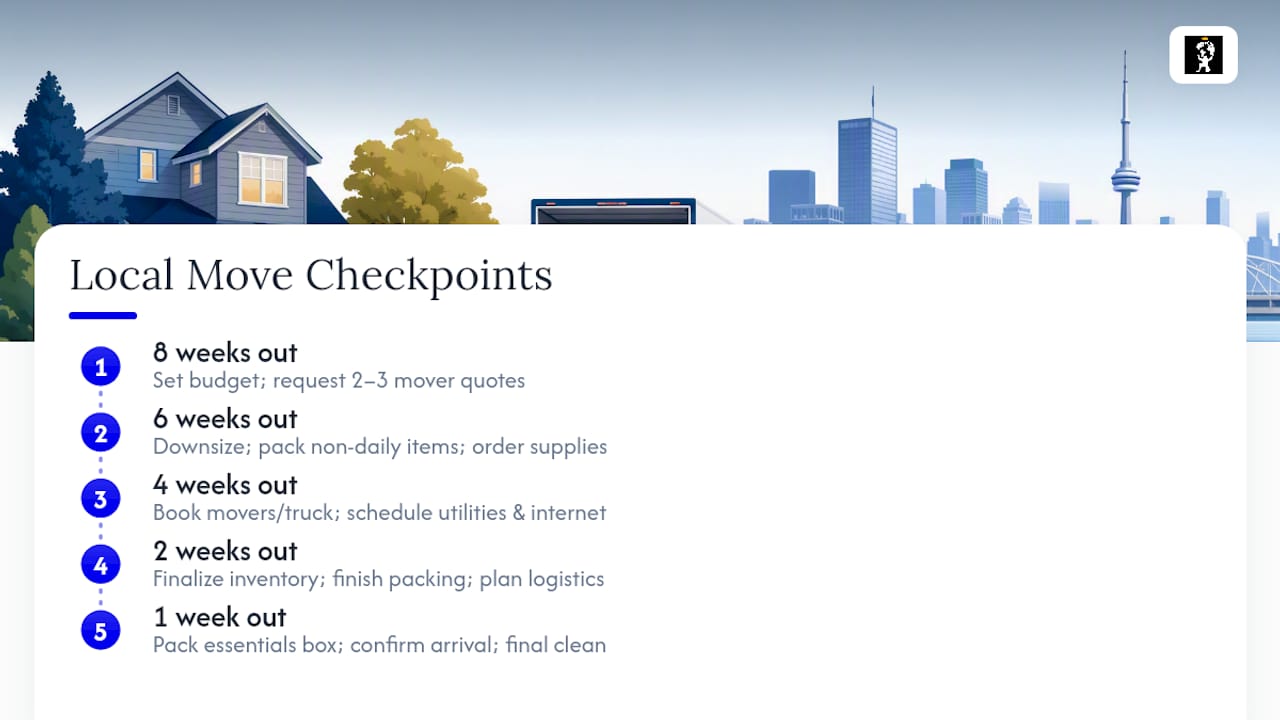
8 weeks out: Set your moving budget and request quotes from at least two or three movers. Start decluttering rooms you use least often, and begin selling or donating what you won’t bring. If you rent, notify your landlord now. Most leases and consumer moving guides recommend giving 30 to 60 days’ notice, so this is the week to check your lease terms and confirm your notice period in writing.
6 weeks out: Keep downsizing, and start packing anything you don’t use daily, books, off-season clothing, decorative items. Order boxes, tape, and padding now rather than the week you need them. Transfer or request medical, school, or veterinary records if your move puts you in a new district or service area.
4 weeks out: Confirm and book your movers or reserve a truck. This is also when to schedule utility and internet transfer dates for both homes, so service starts the day you arrive instead of two days later. Begin packing room by room in a set order, rather than jumping around based on mood.
2 weeks out: Finalize your inventory list and finish packing everything except daily essentials. Map out moving-day logistics, including parking arrangements or permits if your street or building requires them.
1 week out: Pack an essentials box, confirm arrival windows with your moving company, do a final clean, and photograph your current home’s condition before handover. This protects your deposit and gives your landlord a clear record if there’s ever a dispute.
What Does a Realistic Moving-Day Schedule Look Like?
Moving day rewards people who plan for delay instead of assuming everything runs on schedule. A realistic hour-by-hour moving day timeline typically follows this pattern:
7:00 to 8:30 AM crew arrival window. Be ready at the early end. Crews that arrive on time but find you unprepared lose momentum fast, and that lost time rarely gets recovered later in the day.
Load-out, roughly 2 to 3 hours for a one-bedroom home, 3 to 5 hours for a two-bedroom. Building access matters more than most people expect. A third-floor walk-up or a single small elevator can add a full hour compared to ground-level, driveway-adjacent access.
Transit and lunch buffer, 30 to 90 minutes. Local moves feel short on paper, but traffic, parking search time at the new address, and a food break all eat into the day.
Unload, payment, and initial setup, another 2 to 4 hours depending on furniture assembly needs and how many boxes go directly to their final rooms versus a staging area.
Statistic to plan around: professional crews commonly build in a hidden buffer of 60 to 90 minutes beyond their stated estimate, because parking issues, elevator delays, and last-minute item counts are the norm rather than the exception. Bake that buffer into your own schedule instead of treating an on-time finish as guaranteed.
How Should You Handle Packing and Decluttering?
Pack in a deliberate order: seasonal items and rarely used belongings first, everyday clothing and kitchen basics last. This keeps your home livable right up until moving day instead of forcing you into takeout meals and a bare living room a week early.
Fragile items need real protection, not just a layer of newspaper. Double-box anything breakable, cushion with packing paper or bubble wrap on all sides, and keep any single box under 45 pounds so it doesn’t split open or hurt someone’s back. A guide to packing delicate items safely offers useful principles that apply beyond instruments, mainly the idea of padding for shock, not just scratches.
Decluttering works best with small deadlines rather than one vague goal like “get rid of stuff.” Try this structure:
Pick one category per session: clothes, kitchen duplicates, paperwork, sentimental items.
Set a donation drop-off date and a sell-by date so items don’t linger in limbo.
Recycle or dispose of anything broken immediately instead of “deciding later.”
If focus is the real obstacle, break packing into 20 to 30 minute sprints with a visual checklist you can physically cross off. A structured decluttering timeline built around 6 to 8 week windows can keep momentum going, and some households hire a decluttering service specifically because a second set of hands breaks decision paralysis faster than working alone.
Pro Tip: Pack your essentials box last, not first. Fill it the night before with a change of clothes, chargers, toiletries, basic kitchenware, and important documents so day one in your new home doesn’t require unpacking ten boxes just to make coffee.
How Do You Book Movers and Compare Pricing Fairly?
Getting an accurate quote depends on what you tell the mover, not just how good the company is. Provide a full inventory, note any stairs or elevator access, mention parking restrictions at both addresses, and flag any building rules about move-in hours or loading dock use.
Before booking, ask these questions:
What insurance coverage applies to my belongings during transit?
What’s the cancellation or rescheduling policy?
Is this a binding or non-binding estimate?
What’s the crew size, and does that match my inventory?
What’s the confirmed arrival window, not just “morning” or “afternoon”?
Pricing structure changes how much you’ll actually pay versus what you expected. Flat-rate pricing quotes one number for the whole job, while itemized pricing breaks costs down by service, labor, packing materials, assembly. Itemized and flat-rate transparency, the model Atlaskings uses across its moving services, matters because it lets you see exactly what you’re paying for instead of discovering add-on fees on the invoice. Local moves offer more flexibility than long-distance ones, including smaller trucks or multiple trips, but that flexibility only helps if your quote reflects your real needs. Confirm your booking 2 to 3 weeks ahead, and reconfirm 72 hours before moving day.
What Should You Do During Your First Week After Moving?
Confirm every utility and internet service actually activated, not just scheduled, and keep every receipt and confirmation number until at least one full billing cycle passes.
Unpack in priority order: beds first, kitchen basics second, toiletries third. Set up smoke and carbon monoxide detectors immediately, and photograph any damage to walls, floors, or your belongings right away in case you need to file a claim.
Update your address with your bank, government services, and any active subscriptions.
Transfer health and education records if your move crosses a service boundary.
Schedule follow-up services like furniture assembly or minor repairs before your calendar fills back up.
Plan one final donation or drop-off run for anything you decided not to keep after all.
A detailed family unpacking guide can help if you want a room-by-room approach rather than unpacking whatever box is closest.
What Should You Do When Moving Day Doesn’t Go as Planned?
Every local move timeline eventually meets a variable it didn’t account for. Weather delays a crew, an elevator breaks, or the previous tenant hasn’t fully vacated your new unit yet. The fix isn’t avoiding delays entirely, since that’s not realistic, it’s building slack into your schedule so one delay doesn’t cascade into three.
Keep your moving company’s direct phone number, not just an email or app message thread, so you can reach a real person fast if timing shifts. If you’re driving a rental truck yourself, check the fuel and return window before your move, since a late return often carries a fee that catches people off guard on top of an already long day.
Weather is the most common surprise in Ontario, particularly in late fall and early spring. Rain and slush turn stairwells and driveways into hazards, so have towels, mats, and extra packing tape on hand to protect boxes and floors on short notice.
If your new home isn’t ready on arrival, keep your essentials box and a change of clothes accessible rather than buried in the truck. Building a short contingency plan, where to stage boxes, who to call, what happens if movers run two hours behind, takes fifteen minutes to write and can save an entire evening of stress if the day gets complicated.
How Do You Time a Move Around Work, School, or a Lease?
Your local move timeline should work backward from whichever constraint is least flexible: your lease end date, your employer’s schedule, or your kids’ school calendar. Most leases require written notice, often 30 to 60 days depending on your agreement, so confirm that window at the 8-week mark rather than assuming a standard rule applies to your specific lease.
Requesting time off early matters more than people expect. Moving day plus the day after tends to run long, especially if you’re unpacking essentials and handling any last-minute repairs at your old place. Ask your employer for the day of the move plus a buffer day if your role allows it, rather than planning to work a half day around a moving crew.
If you have school-age kids, timing a local move around a semester break or a long weekend reduces disruption significantly, since new-school paperwork and record transfers take time to process. Contact the new school district as early as your 6-week checkpoint if enrollment requires proof of address, since some districts need documentation before the first day rather than after.
Coordinating these three calendars, lease, work, school, is really just a matter of identifying your hardest deadline first and letting the rest of your local move timeline flex around it.
An Editor’s Take on Realistic Moving Timelines
Most moving advice assumes a level of free time and energy that busy households simply don’t have. The 8-week timeline isn’t a rigid script, it’s a hedge against the version of moving where everything gets crammed into the final 72 hours and something important gets forgotten in the chaos.
What surprises people most isn’t the packing, it’s how much decision fatigue builds up during decluttering. Deciding what to keep is harder than boxing what you’re keeping, which is exactly why breaking it into small sprints works better than a single marathon purge session.
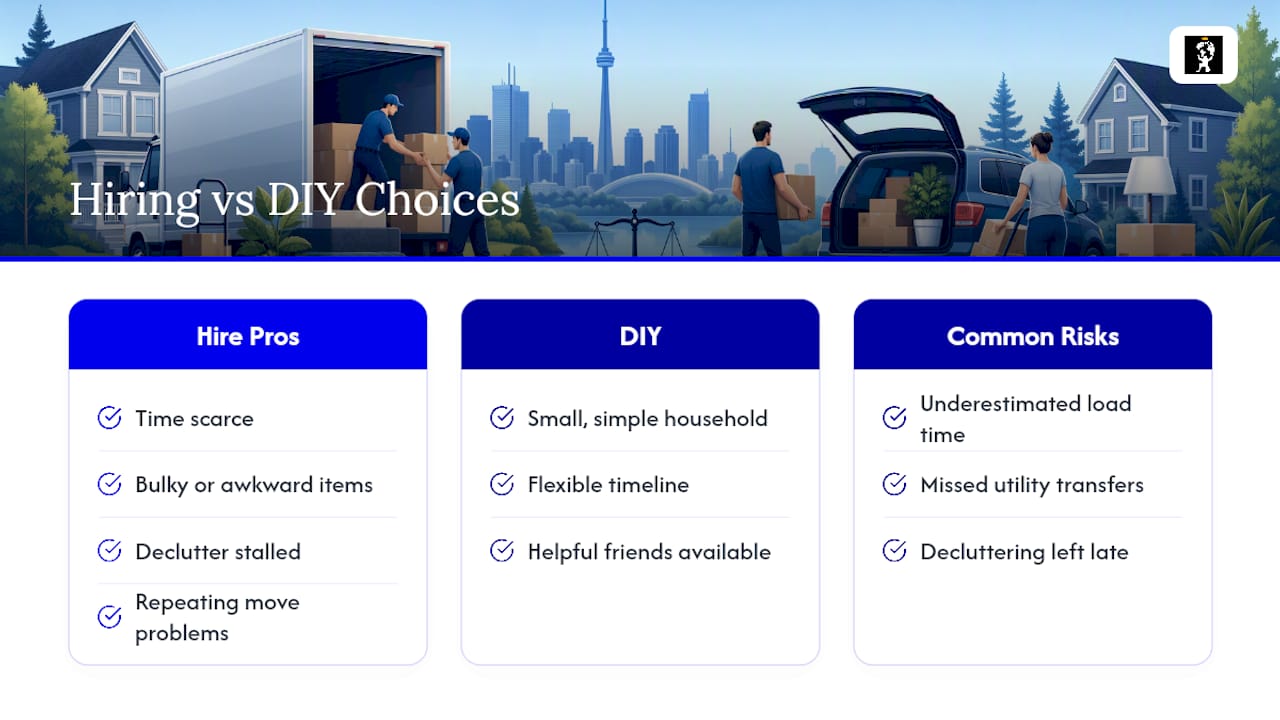
Atlaskings has completed over 500 moves since 2021, and that volume shows up in how consistently the same three problems appear: underestimated load time, missed utility transfer windows, and decluttering left until the final week. This kind of operation built around itemized and flat-rate pricing, plus a dedicated decluttering service, tends to see these patterns clearly because they repeat across nearly every local move.
Hiring professional help makes the most sense when time is genuinely scarce, when you’re moving bulky or awkward items, or when decluttering has stalled and you need outside momentum to break through. DIY works fine for a simple, small household move with a flexible timeline and helpful friends. It works far less well when any of those three conditions are missing.
— Natalie
Let Atlaskings Handle the Parts That Eat Your Weekend
Atlaskings gives you a faster route through the exact timeline covered here, without the guesswork of comparing quotes or chasing down a truck rental at the last minute.

The service lineup corresponds with the checkpoints above: local moving and small moves, in-home delivery for bulky furniture or marketplace finds, professional assembly, and decluttering services for households that need a second set of hands to break through the packing backlog. Pricing transparency helps you know costs before crew day arrives, not after. That transparency matters most during the exact weeks this article covers, when utility transfers, packing deadlines, and moving-day logistics all converge at once.
If you’re at the 4-week or 2-week mark and need confirmed movers, request a quote for your local move and lock in your crew size and arrival window before your calendar fills up. For a full look at everything available, from moving to delivery to decluttering, book online here and pick the service that matches where you are in your own timeline.
Sources
This local move timeline draws on the hour-by-hour moving day framework for crew arrival windows and buffer recommendations, the 8-week moving checklist model for the week-by-week milestones, and local move flexibility guidance for scheduling and budget options. Utility transfer and lease notice timing come from consumer moving guidance on service transfers.
FAQ
How Far in Advance Should You Start a Local Move Timeline?
Start about 6 to 8 weeks before your move date, and add more time if your household has a lot of belongings or a complicated decluttering job ahead of it.
How Long Does Loading Take on Moving Day?
A one-bedroom home typically takes 2 to 3 hours to load, while a two-bedroom home runs 3 to 5 hours depending on crew size and building access like stairs or elevators.
What’s the Difference Between Flat-Rate and Itemized Moving Quotes?
Flat-rate pricing gives one total price for the whole job, while itemized pricing breaks down labor, materials, and add-ons separately; some moving companies use both models to keep pricing transparent before moving day.
How Much Buffer Time Should You Plan for on Moving Day?
Build in extra buffer time beyond your estimated schedule, since parking, elevator access, and last-minute item counts commonly push moves past their original timeline.
When Should You Notify Your Landlord Before Moving?
Most leases require 30 to 60 days’ written notice, so confirm your specific lease terms around the 8-week mark of your local move timeline.
Recommended
Comments