

How to Find Help Moving: Where to Search and Who to Hire


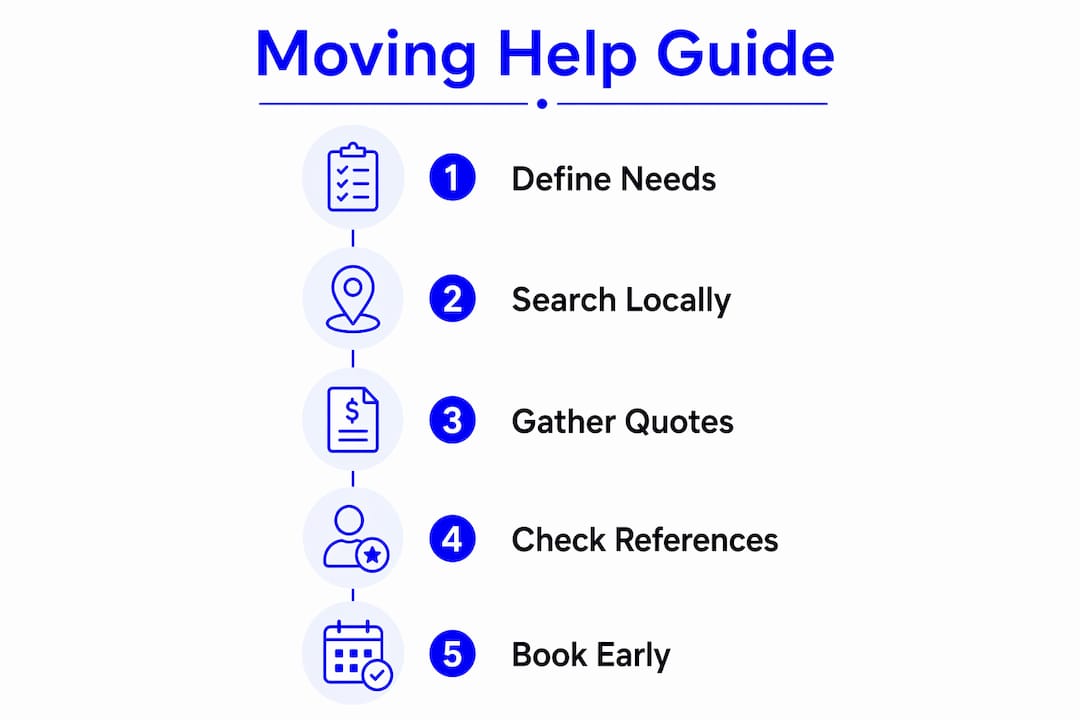
To find help moving in Ontario, decide first whether you need a full-service mover or labour-only help, then collect at least three written estimates and book your crew well ahead of your move date.
Your immediate action checklist:
Choose your service type. Full-service (truck + crew + packing) or labour-only (your truck, their muscle)?
Build an inventory. List every large item and photograph anything fragile or high-value before you call anyone.
Request three written estimates. Ask for on-site or video walkthroughs, not phone-only ballpark figures.
Check trust signals. Verify insurance, ask for references, and search complaint history with the Better Business Bureau or your provincial consumer protection office.
Secure your booking. Get a written contract before you hand over any deposit.
Timing reminder: Book local moves well ahead of time; cross-country moves require even more lead time.
Table of Contents
Where can you find moving help in Canada?
The most reliable channels for finding movers near you in Ontario are local company websites, labour-only marketplaces, community referrals, and provincial business registries. Each channel has a different strength depending on your timeline, budget, and what you need moved.
Local company websites and Google searches are the fastest starting point. Search “moving help near me” plus your city, then cross-reference any company you find against the BBB and Ontario’s consumer protection registry before you call. This two-step check takes about ten minutes and filters out the riskiest options immediately.

Labour-only marketplaces connect you directly with crews who bring muscle but not a truck. These platforms let you compare hourly rates and read verified reviews side by side, which speeds up shortlisting considerably.
Referrals from friends, family, and realtors remain one of the most dependable sources. A realtor who closes dozens of deals a year in your neighbourhood has seen which crews show up on time and which ones don’t. That firsthand knowledge is worth more than a five-star average from anonymous reviewers.
Community boards and local Facebook groups can surface smaller, independent crews at competitive rates. The trade-off is that vetting falls entirely on you, so always ask for proof of insurance and at least two references before booking anyone found this way.
Pro Tip: Before you contact any provider, photograph every room and build a rough inventory list. Crews who can see your actual volume give you a far more accurate quote than one based on a verbal description of “a two-bedroom apartment.”
What type of moving service do you actually need?
The most common and costly hiring mistake is not clarifying upfront whether you need full-service transportation or labour-only help. Getting that wrong wastes both time and money, so match your situation to the right service category before you request a single quote.
Service Type | What’s Included | Pricing Model | Best Fit |
Full-service movers | Packing, loading, truck, transport, unloading, optional unpacking | Flat-rate or weight-based | Whole-home moves, long-distance, limited DIY capacity |
Labour-only crews | Loading and unloading only; you supply the truck or container | Hourly with minimum | Local moves where you rent your own truck |
In-home / single-item delivery | Transport and placement of one or a few large items (furniture, appliances, marketplace purchases) | Flat-rate or itemized per item | Marketplace pickups, new furniture, bulky single items |
Packing/unpacking only | Box packing or unpacking; materials may or may not be included | Per packer per hour | Households that need help packing but handle their own transport |
Specialty-item crews | Piano, safe, or oversized appliance moves requiring equipment | Itemized or flat-rate | Any move involving pianos, gun safes, or commercial equipment |
Decluttering / ADHD Reset | Pre-move sorting, purging, and organizing to reduce volume | Flat-rate or hourly | Busy households, downsizers, anyone who wants to move less stuff |

Packing-only services charge per packer per hour, and materials are frequently billed separately. Always confirm what is included before you book.
If you have a piano, a large safe, or a commercial refrigerator, call that out explicitly when you request quotes. Specialty items require different equipment and sometimes a larger crew, and a provider who finds out on moving day will either decline the item or charge a significant premium.
Atlaskings covers several of these categories under one roof: small moves under ten large items, in-home delivery of bulky or marketplace items, professional assembly, and their ADHD Reset decluttering service. For households that want to reduce volume before moving day, pairing a declutter session with the move itself can meaningfully cut the total crew time needed.
How do you get accurate, comparable moving quotes?
Industry guidance is clear: request multiple written estimates and avoid any company willing to quote you without an on-site or virtual walkthrough of your belongings. Phone-only ballpark figures are more likely to be inaccurate, and they give you nothing to hold the company to if the price changes on moving day.
Get at least three written estimates. Comparing three quotes line by line is the single most effective way to spot omissions, hidden fees, and outlier pricing. It also tells you how transparent and responsive each company is before you commit.
What to include in every estimate request:
A room-by-room inventory with photos of large or fragile items
Stair counts, long-carry distances, and any narrow hallways or doorways
Elevator availability and reservation requirements at both addresses
Parking constraints (permit needed? loading zone distance?)
Any specialty items (piano, safe, large appliances)
Your preferred move date and a backup date
How to compare quotes side by side:
Confirm whether each estimate is binding or non-binding. A binding estimate locks in your price; a non-binding one can increase if the job runs longer or heavier than estimated.
Check what is explicitly included versus what triggers an extra charge (packing supplies, stairs, fuel surcharge, long carry).
Note the minimum hours and the overtime rate once the minimum is exceeded.
Look at cancellation and rescheduling terms before you sign anything.
Pro Tip: Create a simple spreadsheet with one row per company and columns for total price, binding/non-binding, inclusions, minimum hours, and cancellation terms. Side-by-side comparison takes five minutes and makes the right choice obvious.
What should you ask and check before hiring a mover?
Vetting a mover goes well beyond reading star ratings. Checking complaint histories with the Better Business Bureau and provincial consumer protection offices gives a far more reliable picture of service quality than aggregate review scores alone.
Ask every candidate these questions before you book:
Are you licensed and insured? Can you provide a Certificate of Insurance?
Is your estimate binding or non-binding?
Who will actually perform the move — your own employees or a subcontractor?
What is your crew size, and what is the minimum hours charge?
What protective materials do you include (floor runners, furniture pads, shrink wrap)?
What is your cancellation and rescheduling policy?
How do you handle damage claims, and what is the resolution timeline?
What payment forms do you accept, and when is payment due?
Trust signals to verify before you sign:
Ask for two or three references and actually call them. Ask specifically about punctuality, care with fragile items, and whether the final invoice matched the estimate.
Request photos or a portfolio of past moves, particularly if you have specialty items.
Search the company name on the BBB website and your provincial consumer protection registry for complaint patterns.
Confirm workers’ compensation coverage for the crew. If a mover is injured on your property and the company lacks coverage, you could be exposed.
One area many people overlook: owner-packed items carry limited liability. Because the mover cannot verify how those boxes were packed, most companies restrict or exclude coverage for damage to owner-packed contents. Ask specifically where this appears in the bill of lading and what valuation options are available if you want broader protection.
When should you book your moving crew?
Booking windows matter more than most people realize, and leaving it too late in Ontario’s busy spring and summer season often means paying a premium or accepting a less-than-ideal date.
Local moves: Book at least two months in advance, especially for May through September moves.
Cross-country moves: Aim for four months of lead time to secure your preferred dates and avoid rush surcharges.
Off-season moves (October through March): Four to eight weeks is usually sufficient, and you will often find better rates and more scheduling flexibility.
Specialty items: Add two to four extra weeks to any window above if you have a piano, safe, or oversized appliance that requires specialized equipment.
Tight delivery windows: If you need guaranteed delivery by a specific date, confirm in writing at booking. Most companies offer delivery windows, not guaranteed dates, by default.
Converting this into calendar tasks is straightforward. If your move date is July 1, your research and shortlisting should start by early May, estimates collected by mid-May, and a contract signed by June 1 at the latest. For a long-distance move in the same window, push everything back by two months.
For detailed cost expectations on longer hauls, the long-distance moving price guide covers what drives pricing and how to budget realistically.
What should you expect on moving day?
Moving day runs more smoothly when you know exactly what the crew will and won’t do, and when you have your paperwork ready before they arrive.
Arrival and staging: Most crews give a one-to-two-hour arrival window. Have walkways clear, parking confirmed, and elevator reservations made before they show up. The clock on your minimum hours typically starts at arrival, not at the first box lifted.
What the crew handles versus what you handle: Labour-only crews load and unload. They do not pack boxes unless packing was explicitly booked. Full-service crews handle packing, loading, transport, and unloading, but confirm assembly and appliance connection separately since those often cost extra.
Your moving-day checklist:
Photograph high-value items and fragile pieces before loading begins
Declare any items of exceptional value to the crew lead and note them on the inventory
Keep a labeled “first-night” box accessible and off the truck if possible, containing essentials you’ll need immediately
Confirm floor and door protection is in place before heavy items move
Keep your keys, phone charger, and payment method on your person
Paperwork before you sign: Moving companies are required to provide a bill of lading at least three days before loading. Once signed, it is your legally binding contract. Read every line before you sign: pickup and delivery dates, payment terms, insurance details, and any special instructions. Never sign a bill of lading with blank spaces or vague wording.
Pro Tip: Do a final walkthrough of both the origin and destination addresses with the crew lead before the crew leaves. Note any scuffs, missing items, or assembly issues on the spot. Raising a concern after the crew has driven away is significantly harder to resolve.
How much does moving help cost in Ontario?
Pricing for moving labor depends on crew size, hourly minimums, travel time, stairs, specialty items, and whether packing is included. Understanding the main variables lets you build a realistic budget and spot quotes that are suspiciously low.
Typical hourly rates for labour-only crews
Crew Size | Typical Hourly Range (CAD) | Common Minimum |
2 movers | $120/hr | 2–3 hours |
3 movers | $160/hr | 2–3 hours |
4 movers | $200/hr | 3 hours |
These labour-only hourly ranges reflect typical market pricing. Full-service moves that include a truck, fuel, and packing materials will run higher. Labour is billed in 15- or 30-minute increments after the minimum, so a job that wraps up 45 minutes early won’t cost you a full extra hour.
Main pricing drivers to watch:
Stairs and long carries: Most companies add a per-flight or per-foot surcharge above a set threshold.
Specialty items: Pianos, safes, and large appliances add a flat fee or require a larger crew.
Packing and materials: Packing-only services charge per packer per hour, and boxes, tape, and wrap are frequently billed separately.
Travel time: Some companies charge portal-to-portal (from their depot to your door and back); others charge only between addresses.
Practical ways to reduce your total bill:
Book a Tuesday through Thursday move. Weekend and month-end slots command a premium in most Ontario markets.
Declutter before you call for estimates. Fewer items means fewer hours. An ADHD Reset session before your move can cut crew time noticeably for households with accumulated clutter.
Prepare items yourself. Disassemble beds and flat-pack furniture, wrap mirrors, and have boxes sealed and labeled before the crew arrives.
Bundle services. Some providers offer a better combined rate when you book delivery, assembly, and moving together.
Pro Tip: Ask each company whether their minimum includes travel time or starts at your door. The difference between portal-to-portal and door-to-door billing can add $60–$120 to a two-hour job without changing a single box.
Red flags to watch for and what to do if something goes wrong
Most moving problems are preventable. Recognizing warning signs before you book is far easier than recovering value after a bad move.
Red flags before you hire:
Verbal-only quotes with no written follow-up
Requests for a large cash deposit upfront (a partial deposit is normal; a full or majority payment before the move is not)
Evasive or incomplete answers about insurance and licensing
Estimates that are dramatically lower than every other quote you received
No physical address, no verifiable reviews, and no references available
Pressure to sign quickly without time to read the contract
If problems appear on moving day:
Document everything with photos and video before the crew moves any item in question.
Pause work on the disputed item and speak directly with the crew lead.
Do not sign the bill of lading until any damage, missing items, or pricing discrepancies are noted in writing on the document itself.
Keep copies of all paperwork, including the original estimate, the contract, and any text or email communications.
How to file a complaint in Canada:
Provincial consumer protection offices: Ontario’s Consumer Protection Ontario handles complaints about moving companies operating within the province.
Better Business Bureau: File a complaint at bbb.org for a documented record that other consumers can see.
Federal jurisdiction (interprovincial moves): The Canadian Transportation Agency handles complaints about carriers operating across provincial lines.
Small claims court: For unresolved damage claims, Ontario’s Small Claims Court handles disputes up to $35,000 without requiring a lawyer.
Collect and preserve your written estimate, the signed contract, all invoices, photos of damage, and any written communications. That paper trail is what makes a complaint or claim viable.
How Atlaskings fits as a local moving option in Ontario
Atlaskings is a family-run moving and delivery service based in Ontario, and since 2021 they have completed over 500 moves across local and multi-city routes. Their service palette is deliberately focused: they handle what most households actually need without the overhead of a large national carrier.
What Atlaskings offers:
Local and multi-city moving for residential and commercial clients
In-home delivery of large or bulky items, including furniture and marketplace purchases
Small moves under ten large items, ideal for single-room or studio relocations
Professional assembly for furniture and flat-pack items
ADHD Reset decluttering and home organization, which can reduce the volume you move and the total crew time required
How their pricing model fits the decision framework above: Atlaskings uses both itemized and flat-rate pricing depending on the job. Flat-rate works well for predictable small moves and single-item deliveries where the scope is clear upfront. Itemized pricing suits more complex jobs where you want full transparency on what each service component costs. Either way, there are no hidden fees added after the fact.
When Atlaskings is the right fit:
Small to medium local moves in Ontario where you want transparent, written pricing
Single-item or multi-item delivery from a store, marketplace, or warehouse
Moves that benefit from a pre-move declutter session to reduce volume and cost
Households that want assembly handled on the same visit as delivery
For a broader look at labour-only service options and how different providers compare, Atlaskings also publishes practical guides on their site to help you make an informed decision before you book.
Key Takeaways
Finding reliable moving help comes down to choosing the right service type, collecting written estimates from at least three providers, verifying insurance, and booking early enough to avoid premium rush pricing.
Point | Details |
Choose service type first | Decide between full-service, labour-only, or in-home delivery before requesting any quotes. |
Get three written estimates | Compare binding vs. non-binding, inclusions, minimums, and extra fees line by line. |
Book ahead | For local moves, book at least two months ahead; for cross-country moves, book four months in advance. During off-season, four to eight weeks is usually enough. |
Verify insurance and references | Ask for a Certificate of Insurance and call at least two references before signing. |
Atlaskings for local Ontario moves | Atlaskings offers flat-rate and itemized pricing, small moves, in-home delivery, and ADHD Reset decluttering with 500+ completed moves since 2021. |
What most moving guides get wrong
Most moving checklists focus heavily on packing supplies and box counts. What they underemphasize is the decision that happens before any of that: whether the service type you book actually matches the job you have.
We see this regularly. A client books a labour-only crew expecting them to bring packing materials. Or someone hires a full-service mover for a single-room move and pays for truck capacity they don’t need. The mismatch costs money and creates stress on a day that already has plenty of both.
The other thing guides consistently underplay is the value of a pre-move declutter. Moving less stuff is the most direct way to reduce crew time and total cost. A household that spends two hours sorting and donating before moving day can save more on labour than most discount codes will ever offer. That’s the logic behind the ADHD Reset service: it’s not a luxury add-on, it’s a cost-reduction tool. Pairing home organization with your move prep is one of the most practical things you can do before the crew arrives.
One more thing worth saying plainly: a dramatically low estimate is almost never a deal. It is either a sign that something is excluded from the quote, or a red flag that the company plans to add charges once your belongings are on their truck. The middle estimate from a vetted, insured provider is almost always the better value.
Get a quote from Atlaskings for your Ontario move
Atlaskings gives Ontario residents a straightforward alternative to the guesswork of hiring an unknown crew. With transparent itemized and flat-rate pricing, no hidden fees, and a service range that covers everything from a single bulky delivery to a full local move with decluttering prep, you get a clear picture of your costs before moving day arrives.

To request a quote, have these details ready: your inventory (photos help), your move date, both addresses, any parking or elevator constraints, and whether you need assembly or decluttering added on. The more specific you are upfront, the more accurate your quote will be.
Whether you need reliable transport for a local move, a single large item delivered and assembled, or an ADHD Reset session to reduce what you move in the first place, Atlaskings can handle it. Visit atlaskings.ca/book-online to request your quote and lock in your date.
Useful sources and next steps
These resources help you verify credentials, understand your rights, and get more detail on specific services.
Better Business Bureau — Moving Companies: Search complaint histories and accreditation status for any mover you are considering in Ontario.
Innovation, Science and Economic Development Canada: Federal consumer guidance on hiring moving companies, estimate types, and your rights as a consumer.
Move.org — How to Hire a Mover: Practical three-step framework for collecting and comparing estimates.
Mover.net: Explains binding vs. non-binding estimates and what to check in a moving contract.
NerdWallet — How to Hire Movers: Covers the bill of lading, liability coverage, and key questions to ask before you sign.
Atlaskings — In-Home Delivery: Details on single-item and bulky-item delivery and assembly services in Ontario.
Atlaskings — Transport Services: Local and multi-city moving options with booking information.
Atlaskings — ADHD Reset Decluttering: Pre-move decluttering and organization service that reduces moving volume and crew time.
Atlaskings — Book Online: Request a quote or schedule your move directly.
Recommended
Comments