

Avoid Surprise Fees: Furniture Disassembly for Moving in Canada


Simple items like beds, bookcases, and standard dining tables are usually safe to disassemble yourself with basic hand tools. Antiques, motorized furniture, and anything blocking a tight stairwell or elevator are better left to professionals. Beds, sectionals, large dining tables, wardrobes, and standing desks usually need to come apart before a move, and full-service movers may charge extra if the job becomes complicated.
TL;DR:
Most standard furniture like beds with bolted rails, screw-in table legs, and modular bookcases can be disassembled DIY, but antiques and glued joints should be left to professionals.
Full-service movers normally handle basic disassembly including bed frames and tables, but complex or fragile items such as wardrobes with mirrors, pianos, or motorized desks often incur additional fees or are excluded.
Proper disassembly requires tools like screwdrivers, Allen wrenches, bags for hardware, and careful planning, including measuring doorways and photographing the process to ensure smooth reassembly.
Disassembling large furniture ahead of moving day saves time and money, with simpler items suitable for DIY pre-setup, while complex pieces are better disassembled by pros to prevent damage.
Hiring specialists makes sense for antiques, safes, and highly fragile or heavy items like pool tables and pianos, as improper handling risks injury, damage, and voided warranties.
Table of Contents
What Does Furniture Disassembly for Moving Actually Involve?
Furniture disassembly means breaking large pieces into their component parts before loading them into a truck. Beds lose their headboards and rails. Tables shed their legs. Wardrobes come apart at the seams. The goal is straightforward: smaller, lighter, more manageable pieces that survive the trip.
The payoff is real. Disassembling large furniture reduces damage risk, makes items easier to handle, and optimizes truck space, which matters when every cubic foot of a moving truck costs money.
Not everything belongs on the workbench, though. Fragile antiques and permanently glued or nailed furniture should not be disassembled by non-experts because forcing apart joints that were never designed to separate usually causes damage you cannot undo.
Good candidates for DIY disassembly typically include:
Bed frames with bolted rails and removable slats
Standard dining tables with screw-in legs
Flat-pack or modular bookcases
IKEA-style wardrobes with detachable panels
Sectional sofas with connector clips
Items to leave intact: solid wood antiques with glued joints, veneer pieces prone to cracking, and anything with a manufacturer warning against disassembly.
Do Movers Disassemble Furniture? What to Expect
Most full-service crews will handle the basics without blinking. Standard bed frames and table legs are commonly disassembled by movers as part of the service, but wardrobes, pianos, antiques, and motorized desks often fall outside that baseline and get quoted separately.
Pricing tends to follow one of two models: bundled into a flat moving rate, or billed as an hourly add-on once the crew starts unbolting anything beyond simple frames. Before booking, ask your mover:
What’s included in the base rate versus billed separately?
Do you carry insurance that covers disassembly damage?
Will you reserve elevator time in advance for high-rise buildings?
Who’s liable if hardware gets lost during transport?
Do you disassemble motorized or electronic furniture, or is that excluded?
Pro Tip: Get the disassembly scope in writing before moving day. A verbal “yeah, we’ll handle that” from a sales rep means nothing if the crew shows up and calls your wardrobe an add-on.
Tools and Materials You’ll Need on Hand
You don’t need a workshop, but you do need the right basics. A Phillips and flathead screwdriver set, a metric and imperial Allen wrench kit, an adjustable wrench, and pliers cover almost every fastener you’ll encounter on furniture built in the last two decades.
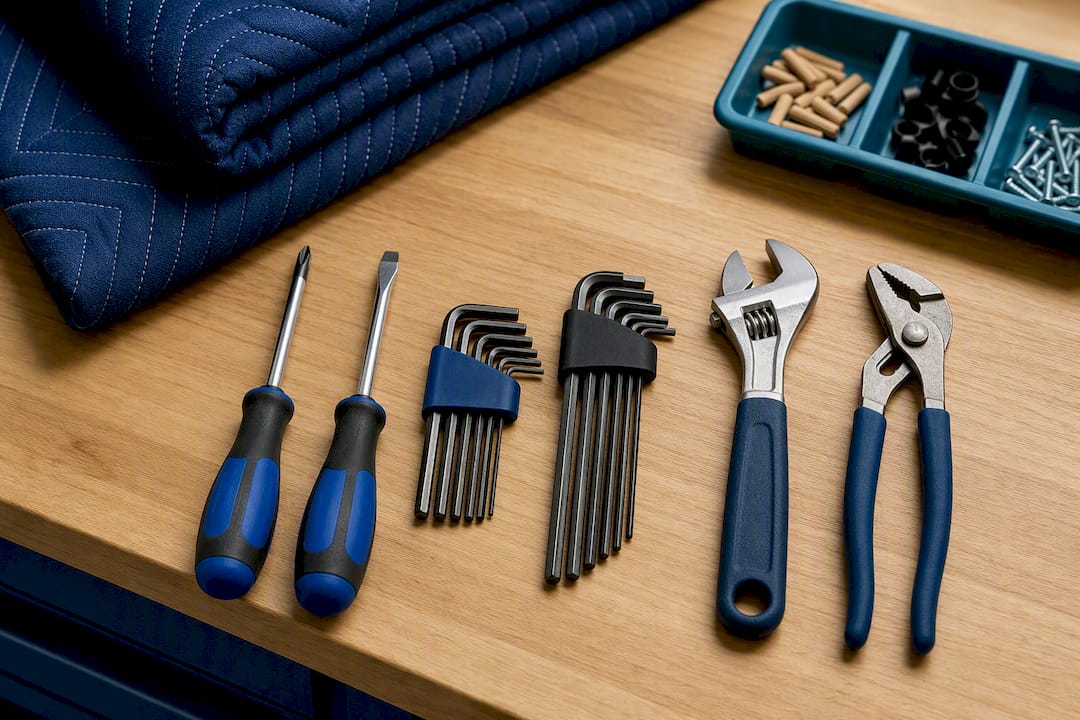
A basic disassembly toolset should include screwdrivers, Allen keys, an adjustable wrench, a rubber mallet, and zip-lock bags for hardware, and a low-torque cordless driver speeds things up considerably. Set the clutch low. Stripped screws and cracked panels happen far more often from power tools without torque control than from hand tools, so resist the urge to blast through hardware at full speed.
Beyond the toolbox, gather:
Moving blankets and stretch wrap for panels and glass
Corner guards for table edges and door frames
Zip-lock bags and painter’s tape for hardware
A furniture dolly and moving straps
Work gloves and an extra pair of hands
Fact worth remembering: most transit damage doesn’t happen while you’re unscrewing hardware. It happens later, when pieces get dragged, dropped, or squeezed through a doorway without protection.
The Step-by-Step Disassembly Workflow
Every large piece of furniture follows roughly the same teardown logic, whether it’s a bed frame or an entertainment center.
Prep first. Empty drawers, strip bedding, and take photos of the assembled piece from multiple angles before you touch a screwdriver. Measure your doorways and hallways so you know your exit route can actually fit what you’re carrying.
Remove loose parts. Take off shelves, drawers, glass inserts, and anything not structurally bolted down.
Unscrew hardware in a consistent pattern. Work top to bottom, or side to side, one connection point at a time. Random unscrewing invites confusion later.
Separate large panels carefully. Have a second person support the opposite side so panels don’t twist or fall as the last screw comes out.
Bag and tape hardware immediately. Don’t set screws aside “for later.” Bag them the moment they come out and tape the bag directly to the matching panel.
Wrap and stage. Cover panels in moving blankets, secure glass separately, and test-fit oversized pieces through your exit path before loading day.
Pro Tip: Set up a portable work light near your teardown area, even during the day. Poor lighting is a quiet cause of stripped screws and mismatched hardware bags.
Skipping the measuring step is one of the most common mistakes movers see. Skipping measurements, failing to protect floors and trim, and dumping all hardware into one bag are frequent causes of reassembly headaches and property damage.
Breaking Down Specific Furniture Types
Different pieces demand different approaches, and knowing the quirks ahead of time saves real frustration.
Beds: Remove the mattress and box spring first, then pull the slats, and finally unbolt the side rails. Tape all rail bolts directly to the headboard so nothing wanders off during the move.
Sectionals: Disconnect the metal or plastic connector clips joining each module, remove any detachable feet, and wrap each section separately. Check our couch-moving guide if your sofa is also fighting you at the doorway.
Dining tables: Remove the legs and any extension leaves. Store leaves flat, never on edge, to avoid warping.
Wardrobes and armoires: Take off the doors, pull out shelves, and remove the back panel if it’s detachable. Wrap and tape any mirrored doors separately from the frame.
Standing desks: Label motor wires with colored tape before disconnecting anything, and photograph the height and sync settings first. Reconnecting a dual-motor desk incorrectly can throw off its leveling sensors.
Entertainment centers: Pull glass shelves and doors out first, then break the frame into smaller modules for easier carrying.
If your sofa or sectional is the one piece giving you trouble at the front door, that’s a doorway-clearance issue as much as a disassembly one, and it’s worth solving before moving day.
Keeping Track of Hardware So Reassembly Isn’t a Guessing Game
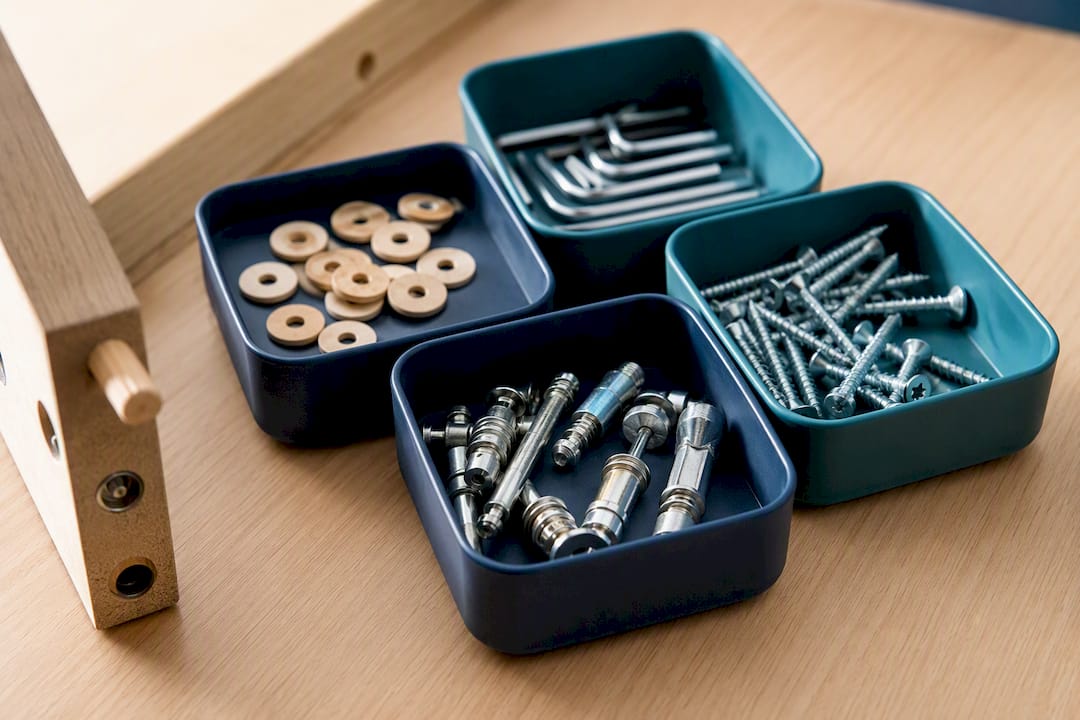
The single biggest reassembly headache isn’t disassembly itself. It’s a shoebox full of unlabeled screws three weeks later.
The “tape to furniture” method, placing labeled bags of hardware directly on the corresponding part, solves this almost entirely. Pair it with these habits:
Number each bag and jot a matching number on a simple inventory sheet
Photograph each disassembly stage before moving to the next
Store panels flat and indoors to avoid warping from humidity or cold
Hand-start every screw during reassembly, then finish with low torque to avoid stripped heads
Pro Tip: Keep one small bag of “universal” spares, extra washers, wall anchors, felt pads, taped to the inside of a drawer. You’ll thank yourself when a piece is one screw short.
How Disassembly Affects Your Moving Timeline and Budget
Disassembly takes longer than most people expect, and it’s worth building into your schedule rather than discovering the gap on moving morning. A professional crew typically handles a standard bed frame in a relatively short time, while a wardrobe with doors, shelves, and a mirror can take significantly longer depending on complexity.
Pricing follows the same split mentioned earlier: full-service movers often bundle basic disassembly into the total cost, while complex pieces get billed as flat fees or hourly add-ons. Movers commonly disassemble standard bed frames and table legs at no extra charge, but antiques and complex items often carry a separate fee.
Timing matters too. Disassembling large items two to three days before the move preserves daily functionality while keeping everything ready when the truck arrives. Save same-day disassembly for simple pieces or for a booked pro crew that’s factored the time into their schedule.
To keep costs down:
Pre-disassemble simple items like bed frames yourself
Consolidate hardware into one labeled bag per piece, not a dozen scattered ones
Clear hallways and stairwells before the crew arrives so labor time goes toward the actual job
When Hiring Professionals Makes More Sense Than DIY
Some situations aren’t worth the risk of doing yourself, and knowing the line ahead of time saves both money and frustration. Antiques, motorized furniture, safes, and anything with fragile veneer belong on a professional’s plate, not yours.
Specialty items push this further. Pool tables and slate pieces require multiple trained helpers because their components are both heavy and fragile, and a wrong lift can crack a slate top that costs more to replace than the move itself. Tight stairwells and reserved elevator slots raise the stakes further.
Before requesting a quote, have ready:
Clear photos of each item needing disassembly
Dimensions of the largest pieces
Building access rules, including stairwell width and elevator booking policies
Any known fragility issues (glued joints, veneer, glass inlays)
Heavy specialty items like gun safes and pianos fall firmly into this category too. DIY attempts on these risk injury, structural damage, and voided manufacturer warranties.
How Atlas Kings Handles Disassembly and Reassembly
Atlas Kings has completed more than 500 moves since 2021, and disassembly scope is built into every quote from the start, not tacked on later as a surprise. Pricing runs itemized and flat-rate, so you know upfront what’s bundled and what’s billed separately.
Standard items like bed frames and tables are typically included in the base rate. Complex or high-value pieces, antiques, heavy sectionals, tight-access jobs, get scoped individually, with our team flagging when a specialist consultation makes more sense than a standard crew.
An Insider’s Note on Hardware and Common Mistakes
The mistake I see most often isn’t disassembly technique. It’s people tossing all their screws into one bag “to sort out later.” Label as you go, tape bags to the matching panel immediately, and you’ll save yourself an hour of guessing on the other end.
Natalie, Atlas Kings
— Natalie
Ready to Skip the Screwdriver? Here’s How Atlas Kings Can Help
If disassembly is the one part of your move you’d rather hand off, Atlas Kings covers it as part of a broader service, not a bolted-on afterthought. Our Inhouse Delivery service handles bulky and large items from pickup to placement, while Lift is built specifically for heavy or tight-access pieces that need extra hands and careful maneuvering. For smaller jobs, our small-move option covers moves under 10 large items without the overhead of a full crew booking.

Every quote uses itemized, flat-rate pricing, so you’ll know what’s covered and what’s billed separately before the truck ever shows up. No guessing games on invoice day. If you’d rather have reassembly handled on the other end too, our Inhome Refresh service picks up right where delivery leaves off.
Ready to see what your move would cost? Book online and get a clear quote before your moving date locks in.
Sources
Recommended
Comments