

Homeowners: Energy Audit Vs Assessment In Plain English

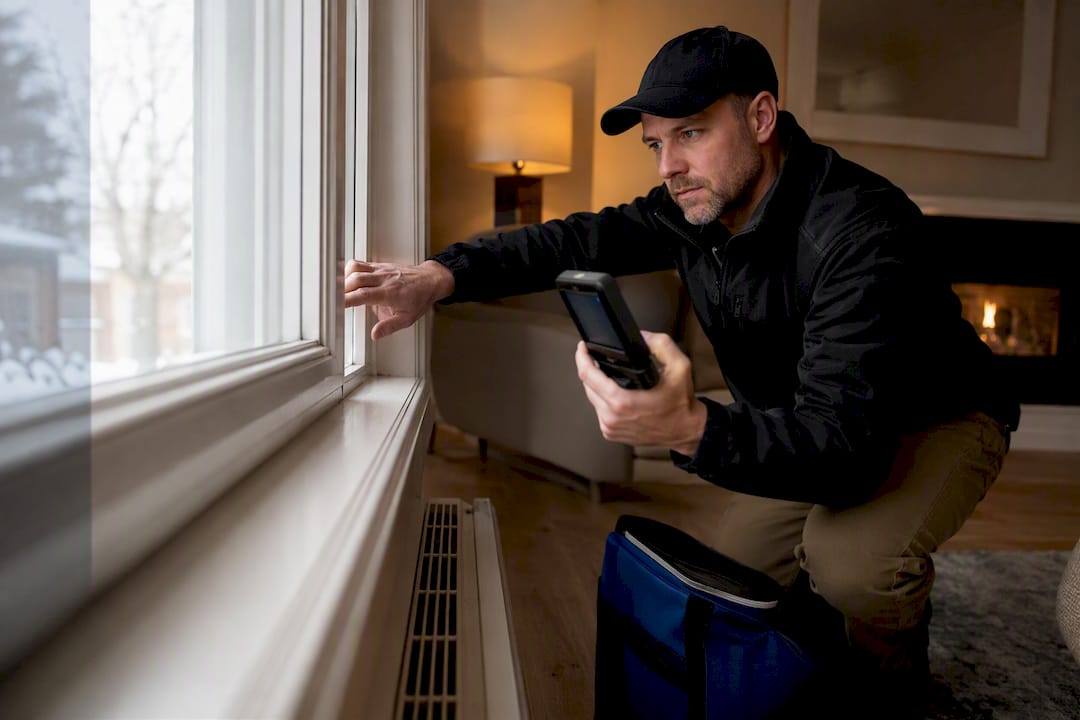
A home energy assessment is a quick screening. An energy audit is an in-depth, data-driven diagnostic that supports major upgrades and funding applications. If you’re chasing small comfort fixes on a tight budget, book an assessment; if you’re planning a major retrofit or applying for a rebate program, invest in a full audit.
TL;DR:
An energy assessment is a basic walkthrough focusing on obvious issues, while an audit involves detailed testing like blower door and infrared scans.
Audits provide costed, prioritized recommendations with estimated savings, often necessary for rebate applications and large retrofits.
Most homeowners planning a major retrofit or needing funding should opt for a Level II or higher audit to obtain reliable data and support project approval.
Assessments generally take less than an hour and cost little or nothing through subsidies, but audits can run several hours and involve higher fees.
Choosing the right service depends on your goal, with assessments suited for quick fixes and audits essential for substantial upgrades or financing decisions.
Table of Contents
Energy Audit vs Assessment: What Each One Actually Means
The terms get used loosely across the industry, but the practical distinction comes down to depth and what you get at the end.
An energy assessment is closer to a Level I walkthrough. A technician reviews your utility bills, walks through the house, and points out obvious problems like drafty windows or an aging furnace. There’s limited testing, sometimes none at all, and the report is usually a short list of suggestions rather than a formal analysis.
An energy audit goes further. It typically resembles a Level II or Level III evaluation, with detailed onsite testing, measurements, energy modeling, and costed recommendations tied to projected savings. One industry comparison frames it simply: an assessment is a quick overview, while an audit is a detailed evaluation built for capital projects.
Program language varies by province, utility, and contractor, so don’t assume a company means the same thing you do when it advertises either service. Before booking, ask what’s included:
Whether blower door or infrared testing is part of the visit
Whether you’ll receive a written report with cost and savings estimates
Whether the technician follows a recognized standard like BPI’s
Key Differences at a Glance
The gap between these two services shows up in five practical ways.
Scope. An assessment screens for obvious problems. An audit produces investment-grade analysis, sometimes including modeling software to predict how specific upgrades will perform.
Tools and diagnostics. Audits commonly use a blower door test to measure airtightness and infrared thermography to spot heat loss through walls and ceilings. Assessments often skip these and rely on visual inspection and bill history alone.
Deliverables. An assessment might hand you a short checklist. An audit delivers a prioritized, costed roadmap with expected savings for each measure, following the structure outlined in the BPI home energy auditing standard.
Time investment. Assessments can wrap up in under an hour. Audits often run one to three hours because of the added testing.
Cost and confidence. Assessments are cheaper, sometimes free through utility programs. Audits cost more but give you enough hard data to justify a five-figure retrofit or qualify for rebate programs that require documented savings projections.
That last point matters more than most homeowners realize. If you’re deciding whether to spend $15,000 on insulation and air sealing, a vague checklist won’t get you a loan approval or a rebate. A costed, tested audit report will.
Audit Levels and Types Homeowners Should Know
Contractors and rebate programs often reference “Level I,” “Level II,” or “Level III” audits. These come from ASHRAE and BPI frameworks that scale in depth, and knowing the difference helps you avoid paying for more (or less) than you need.
Level I (screening): A walkthrough with bill analysis and visual inspection. Good for a general sense of where your home stands and whether deeper testing is worth pursuing.
Level II (detailed): Adds blower door testing, infrared imaging, and duct testing, plus a report with prioritized, costed energy conservation measures. This is the level most homeowners planning a real retrofit actually need.
Level III (investment-grade): Includes engineering-level analysis and sometimes ongoing monitoring, built to support financing decisions on large capital projects.
According to Natural Resources Canada’s energy audit guidance, the jump from Level I to Level III is really a jump in data quality. A Level I audit tells you where you’re probably losing energy. A Level III audit tells you exactly how much, with numbers precise enough to back a loan application or a utility rebate claim.
Most homeowners never need Level III. That level is built for larger buildings or major financed retrofits, not a single-family home replacing its insulation.
What Happens During the Visit and What the Report Includes
A technician arriving for an audit or assessment follows a fairly predictable sequence, though the depth changes based on which service you booked.
Expect some combination of:
A review of 12 months of utility bills to establish a baseline
A walkthrough noting insulation, window condition, and mechanical systems
A blower door test, which pressurizes the house to measure air leakage
Infrared thermography to visualize where heat is escaping through the envelope
Duct testing if you have forced-air heating or cooling
Pro Tip: Ask whether the blower door result will be reported in ACH50 (air changes per hour at 50 pascals). That number lets you compare your home’s airtightness to a modern benchmark and gives real weight to any air-sealing recommendation.
Visits generally run 30 minutes to three hours, depending on home size and how many diagnostic tests are included. A full audit report should include prioritized measures, cost and savings estimates, supporting photos, and clear next steps, not just a verbal summary at the door.
What Will This Cost, and What Will You Actually Save?
Price varies by region and depth of service, and Ontario homeowners can see specific ranges here. What matters more than the sticker price is what happens after the report lands in your inbox.
Implementing standard recommendations like air sealing and insulation upgrades typically cuts annual heating and cooling bills by 15% to 30%. That’s a meaningful range on a bill that might otherwise run $2,000 to $3,000 a year in a cold climate.
Before paying full market rate, check what’s already available to you:
Many utilities and government programs subsidize or fully cover assessments, according to NAIMA Canada
Some rebate programs require a qualifying audit before you can claim funds for insulation, heat pumps, or windows
Ontario’s rebate programs often tie eligibility directly to audit findings, so check enrollment rules before booking
Paying out of pocket for a Level III audit rarely makes sense for a typical single-family home. A subsidized Level I or II service usually gets you the data you need.
How to Choose: Checklist, Questions, and Red Flags
Match the service to your actual goal rather than defaulting to whichever one a contractor pushes.
Comfort complaints only, tight budget? Book an assessment. You’ll get a quick read on drafts, insulation gaps, and easy fixes.
Planning a major retrofit or applying for a rebate? Book a full audit. You need the costed roadmap and the testing data that funding programs require.
Not sure yet? Start with a subsidized assessment, then decide whether the findings justify paying for a deeper audit.
Before hiring anyone, ask these questions:
What certification do you hold, and does your process follow a recognized standard like BPI’s?
Which diagnostic tests are included, and can I see a sample report?
What happens if I hire you for follow-up work, does the audit fee get credited?
Pro Tip: A legitimate auditor will show you a sample report before you book. If a company can’t produce one, or pressures you to sign a contract on the spot, treat that as a red flag and keep looking.
Watch for vague testing claims, no written deliverable, or high-pressure upsells before the report is even finished.
Getting Your Home Ready Before the Technician Arrives
A little prep work shortens the visit and sharpens the report’s accuracy. Pull together your last 12 months of utility bills, jot down specific comfort complaints (a cold bedroom, a drafty basement), and clear access to your attic and crawlspace so testing isn’t delayed.
A technician who can move straight to testing, instead of hunting for the attic hatch or waiting on paperwork, produces a tighter, more accurate report in less time on site.
Clear, itemized information up front saves time and money once the real work begins.
Why the Jargon Around This Topic Hurts More Than It Helps
Most guides to this topic get lost translating ASHRAE and BPI terminology instead of answering the question homeowners actually have: which service do I need, right now, for my situation?
The conventional advice tends to push everyone toward “just get an audit,” treating it as the safer, more thorough default. That’s not always the smart call. If you’re renting, on a tight budget, or just trying to figure out whether deeper investment is worth it, a subsidized assessment gives you real signal for little or no cost. Spending on Level III analysis for a modest single-family retrofit is often overkill.
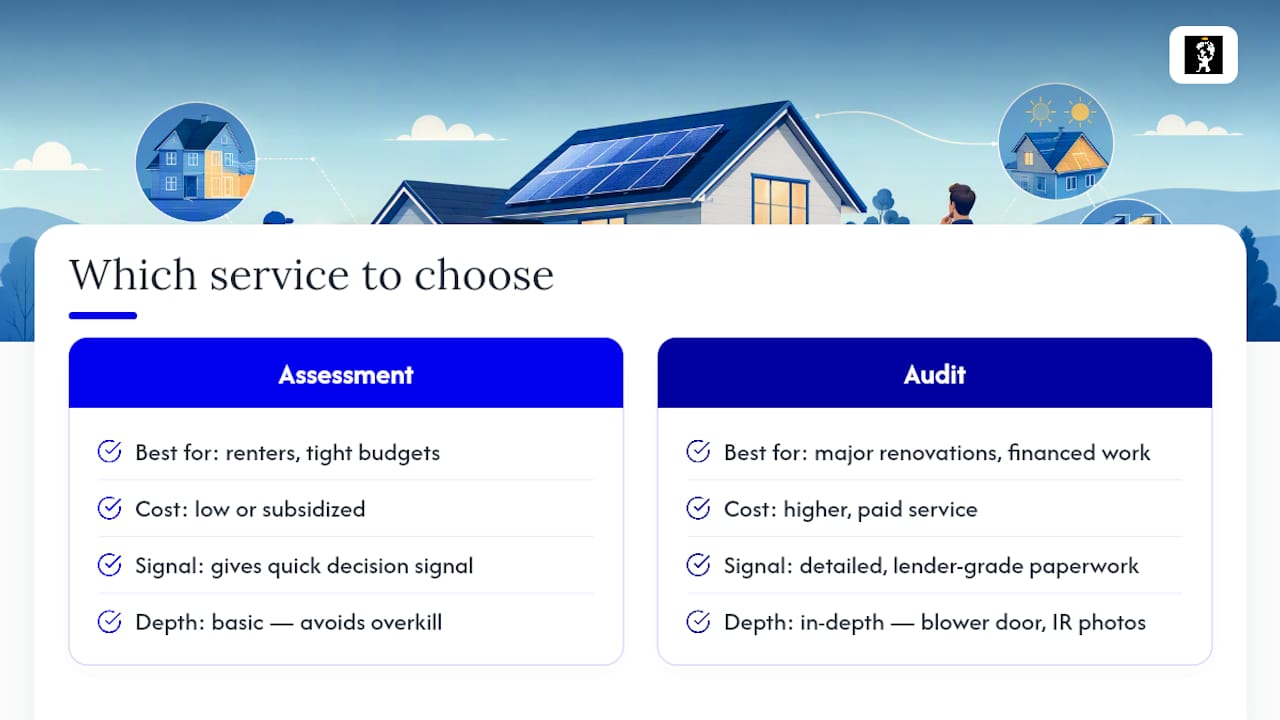
Where the audit earns its cost is when money is on the line, either yours through a major renovation or a lender’s through a financed upgrade. That’s when the blower door numbers, the infrared photos, and the costed savings projections stop being nice extras and become the paperwork that gets your project approved.
Prioritize matching the service to the decision you’re actually making, not to whichever term sounds more thorough.
— Natalie
Ready to Act on Your Audit Results?
Once your report lands, the real work starts, clearing rooms, prepping the attic, and moving materials in or out safely. That’s where Atlas Kings picks up where the auditor leaves off.

Our Inhome Refresh service handles the decluttering and space prep that makes insulation and air-sealing work go faster, whether that means clearing a crawlspace before the crew arrives or reorganizing a garage full of renovation materials. If your upgrade plan involves bringing in new equipment or hauling out old insulation and fixtures, our transport services handle that leg of the project too. Pricing is provided upfront so you know the cost before you commit, with no surprise line items after the fact.
Ready to get your space audit-ready? Book a service online and let us handle the logistics while you focus on the upgrades that actually cut your energy bill.
Sources
For deeper technical detail, see Natural Resources Canada’s energy audit manual on audit levels, the BPI home energy auditing standard for report requirements, and Canary Media’s explainer on why audits matter.
FAQ
What Are the Three Types of Energy Audits?
They’re usually described as Level I (screening), Level II (detailed, with testing and costed recommendations), and Level III (investment grade, with engineering analysis for major financed projects).
What Do They Do During an Energy Audit?
An auditor reviews utility bills, inspects the home, and often runs a blower door test and infrared scan before delivering a report with prioritized, costed recommendations.
What Is an Energy Assessment?
It’s a quicker, lighter evaluation, typically a visual walkthrough and bill review, meant to flag obvious problems rather than produce a detailed investment roadmap.
What Is a Home Energy Assessment, and How Do I Get One?
It’s a preliminary screening of your home’s energy use, often available through utility or government programs at reduced or no cost; check your local utility’s website before booking a private provider.
Recommended
Comments