

How Elevator Booking for Moves Actually Works

Yes, you need to reserve your building’s service elevator (or request “service mode”) well before moving day, and you need to do it in coordination with your movers and building management, not separately. The single next step: call your concierge or property manager today with your move date, time window, and mover’s truck size, then confirm the same details with your moving company.
Getting this right saves you real money and real stress. Atlas Kings has coordinated elevator access and large-item logistics across many completed moves since 2021, always using itemized or flat-rate pricing so there are no surprise fees tacked onto your invoice later. A few things worth knowing before you pick up the phone:
Most buildings require written notice, not a verbal heads-up
Service elevator time is usually shared across multiple residents, so slots fill fast
Movers who don’t know your elevator’s dimensions in advance can quote you wrong
Key Takeaways
Booking elevator access two to four weeks ahead, confirming building requirements in writing, and reserving the full time your movers estimate are the three habits that prevent moving-day delays.
Point | Details |
Book two to four weeks ahead | Gives building staff time to process forms and schedule any elevator overrides. |
Confirm service mode vs. dedicated elevator | Ask which type your building offers since it changes access and neighbor disruption. |
Reserve full mover time estimate, not a minimum | Underestimating hours is a common cause of overruns and extra fees. |
Get fees and deposits in writing | Written confirmation prevents disputes over damage deposits and refund timing. |
Atlas Kings coordinates the paperwork for you | Their itemized and flat-rate pricing and many completed moves since 2021 cover elevator scheduling and mover timing. |
Table of Contents
How Do You Book an Elevator for Moving?
Booking elevator access for a move follows a fairly predictable sequence, even though every building has its own paperwork. The building’s front desk, concierge, or property management office is your starting point. In condo buildings run by a strata or homeowners’ association, that’s the property manager; in rental apartments, it’s usually the superintendent or leasing office.
Call or email the building office and ask for the “move-in/move-out” or elevator reservation policy.
Fill out the reservation form, which typically asks for your move date, requested time block, your moving company’s name, truck size, and number of large items.
Submit proof of insurance if requested. Many buildings want a certificate of insurance naming the property as an additional insured party.
Pay any refundable damage deposit upfront, and get a receipt or written confirmation of the amount and refund process.
Confirm whether you’re getting a dedicated service elevator or “service mode.”
Those two terms aren’t interchangeable. A dedicated service elevator is a separate car, usually in the back of the building, reserved solely for freight and moves. Service mode means the building’s regular passenger elevator gets switched into a locked, held-open state exclusively for your movers, with property management temporarily restricting other residents’ access. Ask which one your building offers, since it changes how much interruption your neighbors will notice.
Pro Tip: Ask the property manager to email you their moving policy in writing rather than explaining it over the phone. Buildings change elevator rules often, and a written copy protects you if there’s a dispute over your deposit later.
When Should You Book the Elevator for a Move?
Book your elevator two to four weeks before your move date. That window gives building staff time to process paperwork, schedule any building engineer who needs to override the elevator controls, and slot you in before other residents grab the popular Saturday morning windows.
Weekday mornings and early afternoons tend to have the most availability, since fewer residents move mid-week. If you’re locked into a weekend move, book even earlier: some buildings only offer weekend elevator access on a first-come basis with far less flexibility.
Studio or one-bedroom move: 2 to 3 hours is often enough
Two to three-bedroom move: plan for 3 to 5 hours
Homes with oversized furniture, multiple flights of stairs to the elevator, or a long walk to your unit: add another hour
A commonly cited planning guideline is to book elevator access two to four weeks ahead of your date, which gives both your building and your movers enough runway to confirm details and adjust if something changes. Ask your moving company for their time estimate first, then add a buffer. Reserving the minimum slot instead of the full estimated time is one of the most common reasons moves run late and cost more.
What Building Rules and Fees Should You Expect?
Building policies vary widely, but a handful of requirements show up in nearly every reservation process. Some buildings designate a specific moving room, loading dock, or service entrance that your movers must use instead of the main lobby. Elevator padding, those quilted blankets bolted to the walls, is often mandatory and sometimes provided by the building, sometimes by your movers.
Fees and deposits are common, and they exist for a reason: buildings want a financial incentive for movers to be careful and to actually show up during their booked window. Typical charges include:
A refundable damage deposit, held until someone confirms the elevator interior wasn’t scratched or dented
A flat elevator reservation or administrative fee, non-refundable in most buildings
An after-hours or concierge staffing fee if your move falls outside standard business hours
Get all of this confirmed in writing, including the exact deposit amount, how and when it’s refunded, and who inspects the elevator afterward. Verbal promises from a rotating front-desk staff are the most common source of moving-day disputes, and insurance requirements in particular need to be documented before your movers arrive, not negotiated at the loading dock.
How Do You Coordinate the Truck and Movers Around Your Booking?
Your elevator reservation is only half the puzzle. The truck outside needs somewhere to park, and your movers need to know the exact elevator specs before they show up.
Send your movers the confirmed elevator window as soon as building management approves it, including the exact start and end time.
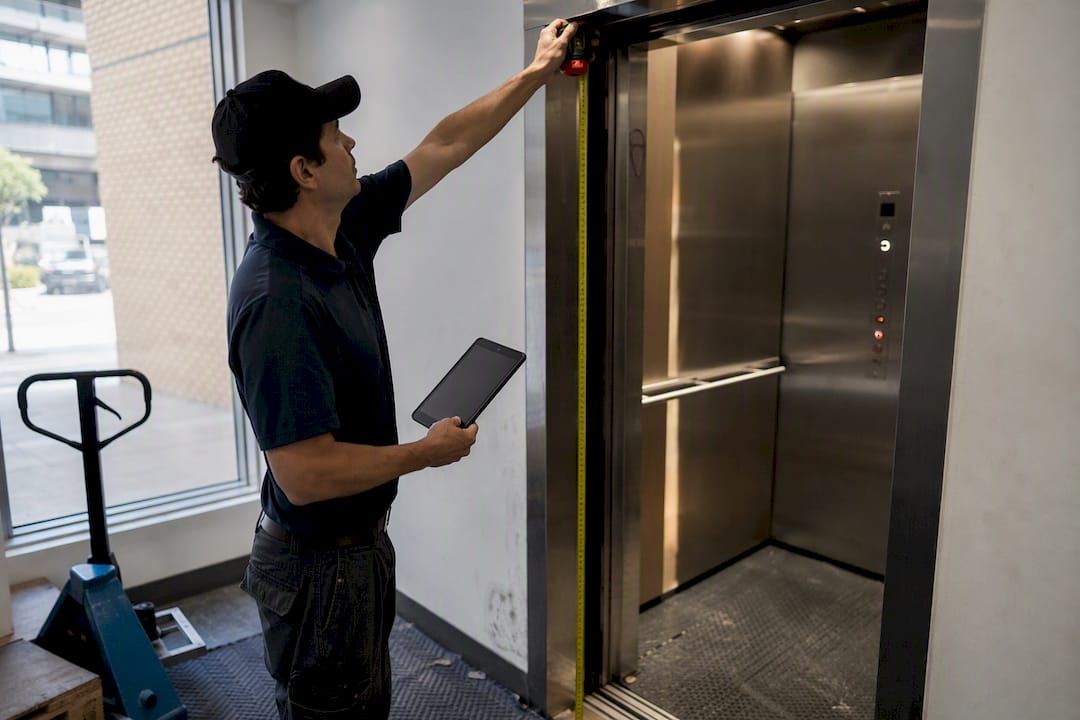
Share elevator dimensions and weight limits with your moving company so they can plan around anything oversized, a sectional sofa or a piano needs a different approach than boxes and a dresser.
Confirm your building’s parking or loading zone rules directly with the property manager. Many buildings restrict truck parking to specific hours or require a separate permit.
Build in contingency time in case another resident’s move runs long or the elevator gets stuck in service mode for a delivery ahead of yours.
Trucks that can’t park near the entrance add unloading time nobody budgeted for, which is exactly the kind of gap that eats into your reserved elevator window. If you’re moving anything unusually large, our lift and large-item handling service exists specifically because standard elevator slots and standard moving crews don’t always match up.
Pro Tip: Text your building’s front desk the morning of your move to reconfirm the reservation is still active. Staff shift changes and last-minute cancellations from other residents occasionally cause mix-ups that a two-minute check can catch early.
What’s the Simplest Way to Avoid Elevator Booking Mistakes?
A short pre-move check saves most people from the headaches that come up on moving day. Measure your largest items and compare them against the elevator’s interior dimensions and posted weight limit. Take photos of the elevator’s condition before your movers start and again once you’re done, so there’s no argument about pre-existing scuffs. Confirm your mover has a copy of your building’s requirements, including proof of insurance, so nobody gets turned away at the door.

The pitfalls that trip people up are predictable:
Common pitfall | Why it happens | Simple remedy |
Reserved slot runs out mid-move | Booked the minimum time instead of the mover’s actual estimate | Add a one-hour buffer to whatever your movers quote |
Truck has nowhere to park | Parking wasn’t confirmed with the building separately from the elevator | Ask about loading zones when you submit your reservation |
Mover shows up without proof of insurance | Requirement was mentioned verbally, not sent in writing | Request the building’s policy by email and forward it to your movers |
Damage dispute after the move | No photo record of elevator condition beforehand | Photograph the elevator before movers arrive and again after |
Confirm elevator and item dimensions match before move day, not on it
Get parking permits sorted at the same time as your elevator reservation
Walk your movers through the building’s specific rules, don’t assume they already know them
Why Booking the Elevator Early Beats Any Amount of Planning Later
Most of the advice out there treats elevator booking as an afterthought, something you handle after you’ve picked a mover and packed your boxes. That ordering is backward. Building elevator availability is often the actual constraint on your moving date, not your own schedule or your mover’s calendar. I’ve seen the logic play out the same way across dozens of building policies: the buildings with the strictest reservation systems are usually the ones with the fewest disputes, because everything gets written down before anyone touches the elevator.
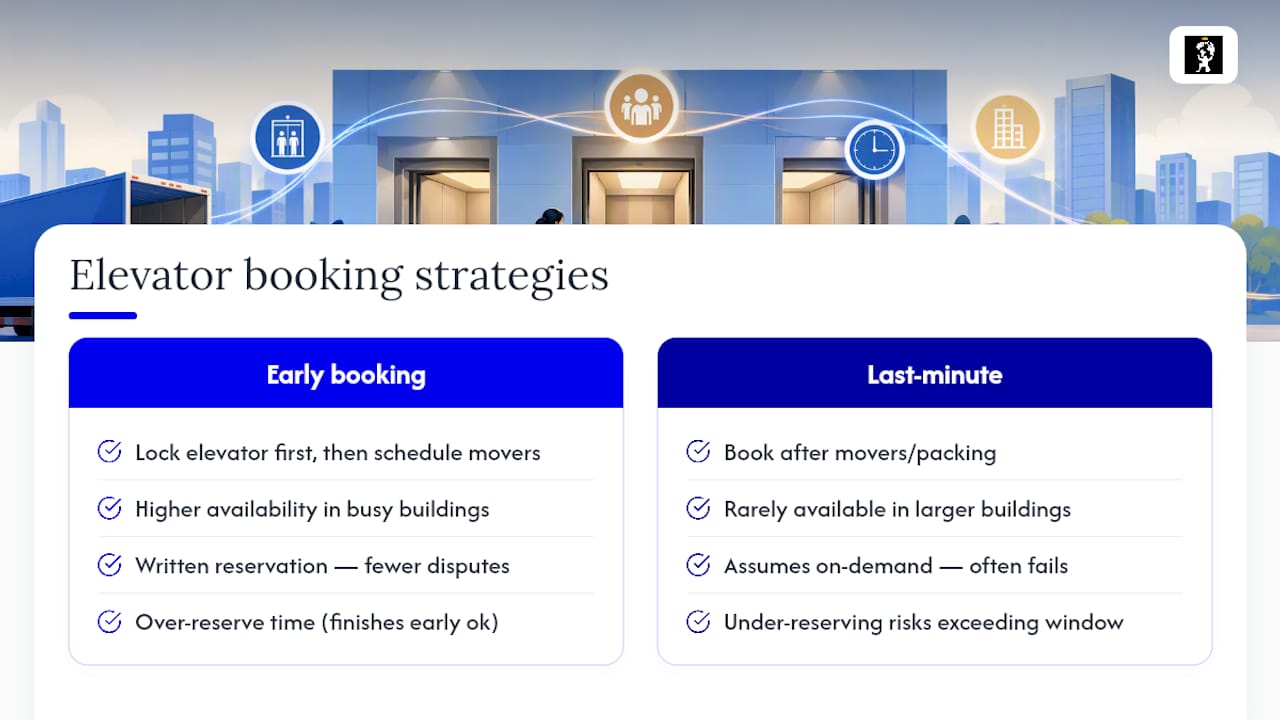
The conventional wisdom of “just call the day before” fails because it assumes elevator time is available on demand. It rarely is in buildings with more than a handful of units. What actually matters is sequencing: lock in the elevator window first, then build your mover’s schedule and your own packing timeline around it, not the reverse.
If there’s one thing worth prioritizing above all else, it’s over-reserving your time block rather than under-reserving it. A move that finishes early costs you nothing. A move that runs past its window can cost you the deposit, a rescheduled elevator slot, and a very unhappy building manager.
Let Atlas Kings Handle the Elevator Booking for You
If reading through reservation forms, deposit policies, and truck parking rules sounds like more coordination than you want to manage yourself, that’s exactly the gap Atlas Kings fills. Our in-home delivery and moving teams handle the building paperwork, elevator scheduling, and mover timing as part of the job, not as an extra hassle you’re left to sort out.
![Atlas Kings moving team]
We built our pricing around itemized and flat-rate options specifically so you know the cost before your move starts, no surprise elevator fees or last-minute charges added on. Combined with many completed moves since 2021, our team knows what most condo and apartment buildings expect and gets the reservation paperwork moving before it becomes a bottleneck. For oversized items like sectionals or home gym equipment, our transport and lift services are built to match building elevator specs without guesswork.
Ready to skip the back-and-forth with building management? Request a quote from Atlas Kings and tell us your move date, and we’ll start coordinating the elevator reservation on your behalf.
Where to Learn More About Service Elevator Reservations
Building-specific rules vary, but the underlying reservation process is consistent enough that outside guidance helps confirm you’re not missing a step.
How and Why to Book Your Service Elevator for Your Move explains the reservation timeline and the difference between service mode and a dedicated elevator in more detail, useful if your building’s paperwork uses unfamiliar terms.
Frequently Asked Questions
How far in advance should I reserve the elevator for my move? Two to four weeks is the commonly recommended window. It gives your building’s office time to process your form and schedule any staff needed to switch the elevator into service mode.
What’s the difference between service mode and a dedicated service elevator? Service mode locks the regular passenger elevator on your floor for exclusive use during your move. A dedicated service elevator is a separate car, often near the loading dock, built specifically for freight and moves.
Do I need proof of insurance to book a moving elevator? Many buildings require it, usually a certificate naming the property as an additional insured party. Confirm this requirement with your building office before your movers arrive so nobody gets turned away.
What happens if my move runs longer than my reserved elevator window? You may lose access mid-move if another resident’s reservation starts right after yours, and some buildings charge additional fees for overruns. Reserving your mover’s full time estimate plus a buffer avoids this.
Are elevator booking fees and deposits refundable? Damage deposits are typically refundable once the building confirms no damage occurred, while flat administrative or reservation fees are usually non-refundable. Get both amounts and the refund process in writing before your move.
Sources
How and Why to Book Your Service Elevator for Your Move
Recommended
Comments