

Eco Friendly Moving Supplies for Canada: Rent Crates, Paper Cushions

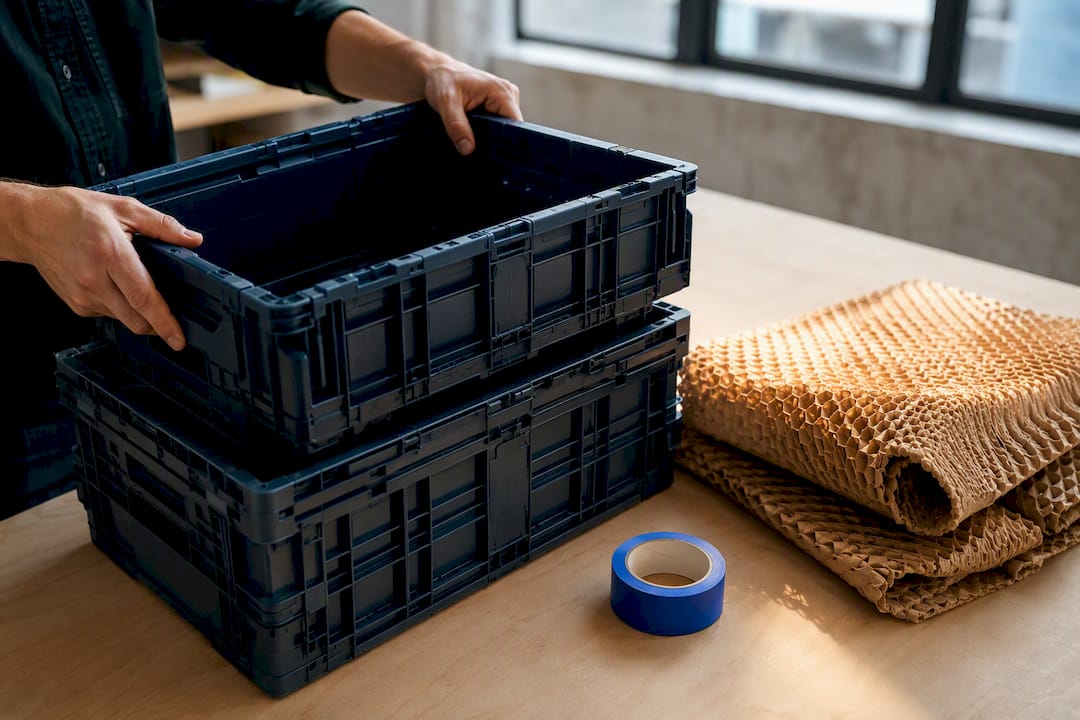
For the greenest move, prioritize reusable containers, paper-based cushioning, and household textiles, then plan disposal before you ever pack a box. That means renting or reusing sturdy crates instead of buying single-use cardboard, swapping bubble wrap for honeycomb paper or compostable filler, wrapping breakables in towels you already own, and sealing boxes with recyclable paper tape. The materials matter, but so does the exit plan.
TL;DR:
Renting reusable crates with delivery and pickup reduces waste and transportation emissions compared to buying single-use cardboard boxes.
Honeycomb and engineered paper cushions offer equivalent shock absorption to plastic bubble wrap and are fully recyclable when clean.
Cornstarch packing peanuts dissolve in water, making cleanup easy, while some plant-based foams require industrial composting; contamination should be discarded in trash.
Water-activated paper tape provides a fully recyclable sealing option, but reusable crates with attached lids do not require tape or sealing.
Properly packing household linens and clothing for cushioning can eliminate the need for plastic filler and helps reuse materials after the move.
Table of Contents
Eco-Friendly Moving Supplies: Reusable Boxes, Crates, and Rentals
The most eco-friendly moving supplies you’ll use aren’t supplies at all in the traditional sense. They’re containers built to survive dozens of moves, not one trip to the curb.
Reusable plastic crates, nestable totes, and heavy-duty rental boxes typically last longer than standard corrugated cardboard. A single reusable crate can be used many times before it’s retired, while a standard cardboard box usually collapses or tears after a few moves. That difference is why rental services have grown into a legitimate alternative to buying: you pay for the crates, someone drops them off, you pack and move, then they’re picked up and sent to the next household.
Renting beats buying when the service includes delivery and pickup, which cuts down on extra car trips to drop off flattened cardboard at a recycling depot, supporting roofing sustainability affordable steps for greener home practices. Reusable rental systems that bundle delivery with pickup are a meaningful way to shrink a move’s footprint, since one commercial run replaces what would otherwise be several separate trips in a private vehicle.
Before choosing between renting and buying, run through a short checklist:
Does the rental price include both delivery and pickup, or just one?
Are the crates stackable and uniform in size for tighter loading in a truck or car?
What condition are the crates in, and does the vendor clean them between renters?
Is there a minimum rental period, and does it match your actual moving timeline?
Packing density matters more with rigid crates than with cardboard, since you can’t just tape a flap shut on an overstuffed box. Pack heavier items low, fill gaps with soft goods rather than empty air, and keep weight under the crate’s rated limit so stacking stays stable in transit.
Pro Tip: Measure your doorways and stairwells before booking a crate size. Reusable crates are rigid and don’t compress like cardboard, so an oversized crate can turn a hallway into a bottleneck on moving day.
Atlas Kings’ moving box rental service works on this same delivery-and-pickup model, which is worth keeping in mind as you compare options.
Paper Cushioning That Replaces Bubble Wrap
Honeycomb paper and engineered paper mailers cushion items by creating a flexible, air-filled structure out of folded kraft paper instead of petroleum-based plastic film. The honeycomb pattern expands to absorb shock the same way bubble wrap’s air pockets do, but it’s curbside recyclable when it’s clean and free of tape residue.
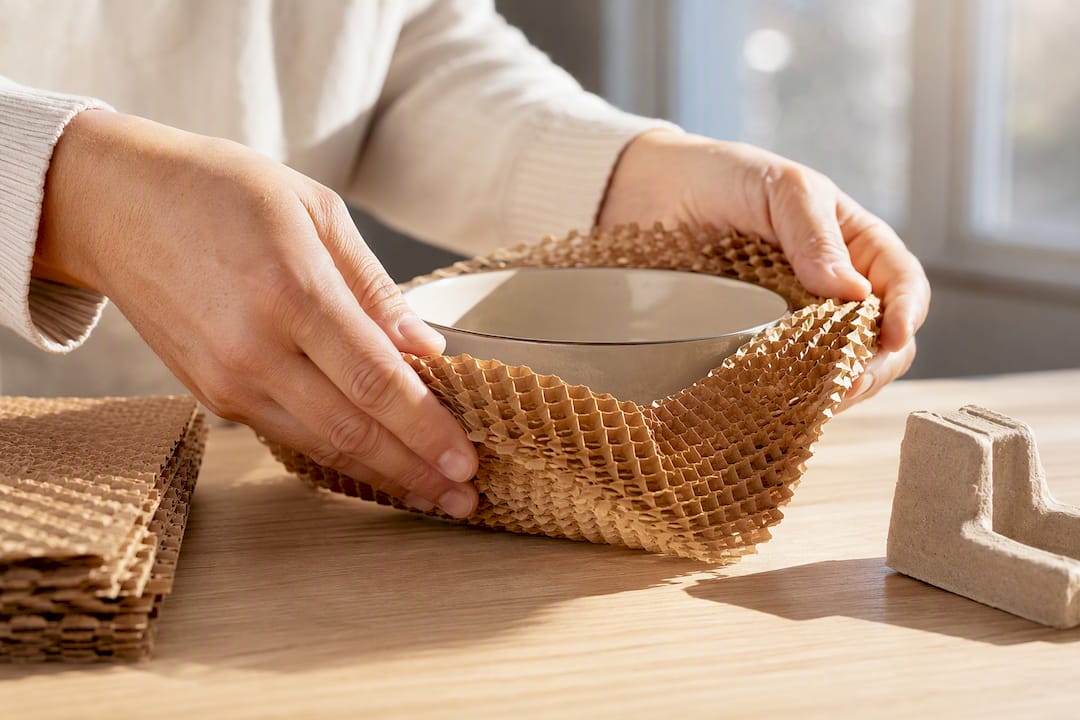
Some paper-based padded mailers now test out ahead of their plastic counterparts. TemperPack’s paper mailers can deliver up to 45% greater shock absorption than plastic bubble mailers of similar size, while staying fully recyclable. Look for products that reference third-party shock testing (ISTA standards are the industry benchmark) rather than vague “eco” language with no data behind it. For heavier fragile items like dishware or electronics, molded pulp corner guards offer more rigid protection than folded paper alone.
Biodegradable and Compostable Packing Fillers
Cornstarch-based packing peanuts and plant-based foam alternatives behave very differently from the polystyrene peanuts they replace. Most cornstarch peanuts dissolve completely in water, which makes cleanup simple: run them under a tap or toss them in a sink of warm water instead of bagging them for landfill.
Cornstarch peanuts: dissolve in water at home, no composting facility needed.
Plant-based foam blocks: check the label. Some are home compostable, others require industrial composting.
Mushroom-based (mycelium) packaging: typically breaks down in a backyard compost bin within weeks.
Contaminated fillers (soaked in packing tape residue or mixed with plastic film) should go to the trash, not compost, since contamination can spoil an entire batch.
Compostables aren’t the right call everywhere. If your municipality has no organics collection and you don’t have a backyard bin, dissolving in water is usually your best bet.
Sustainable Tape and Sealing Options
Water-activated paper tape uses a starch-based adhesive instead of plastic film and synthetic glue, so the entire box, including the tape, can go into the recycling stream. Natural-rubber adhesive paper tape and bamboo-fiber tape work well for lighter loads where a dispenser and water aren’t practical.
Water-activated tape needs a water box or wet sponge; it bonds to cardboard fibers rather than just sitting on the surface.
Natural-rubber paper tape peels off dispensers like standard plastic tape, no water required.
Skip tape entirely on reusable crates with attached lids. There’s nothing to seal.
Pack With What’s Already in Your Home
Towels, bedsheets, and off-season clothing cushion dishes, glassware, and picture frames as well as bubble wrap, and they travel to your new place doing double duty instead of getting thrown out.
Wrap each plate in a dish towel, stack flat, and box them on their edge, not flat, to reduce breakage.
Roll glasses and stemware in socks or hand towels, securing the roll with a rubber band.
Sandwich framed art and mirrors between folded blankets, taping the blanket in place rather than the glass.
Stuff shoes, drawers, and hollow spaces with rolled clothing to eliminate shifting room inside boxes.
Where to Buy or Rent, and What Labels Mean
Look for vendor pages that state recycled content percentages, FSC or SFI-certified sourcing, and How2Recycle or “Widely Recyclable” labeling rather than a generic “eco” badge with no backing. FSC certification specifically verifies that virgin fiber in cardboard comes from responsibly managed forests, which matters when 100% recycled content isn’t available.
Confirm the retailer or rental service actually ships to or operates in your province before ordering.
Ask whether the company runs a take-back or reuse program for boxes and crates once you’re done.
Treat vague claims like “eco-conscious” or “green” as red flags if there’s no certification or material breakdown listed.
Pro Tip: If a product page won’t tell you the recycled content percentage or certification body, that’s usually because there isn’t one.
After the Move: Reuse, Recycle, Donate, or Compost
Flatten and list reusable boxes and crates on a local giveaway group or return them to your rental provider for pickup.
Break down cardboard, remove all tape, and put it in curbside recycling.
Recycle clean paper cushioning and honeycomb paper with your cardboard.
Dissolve cornstarch peanuts in water or add mycelium packaging to a compost bin.
Wash and return linens, towels, and clothing to normal household use.
Check your municipality’s recycling rules before bagging materials. Tape residue and food contamination are the two most common reasons a full load of cardboard gets rejected at the curb.
What Field Experience Teaches About Box Rental
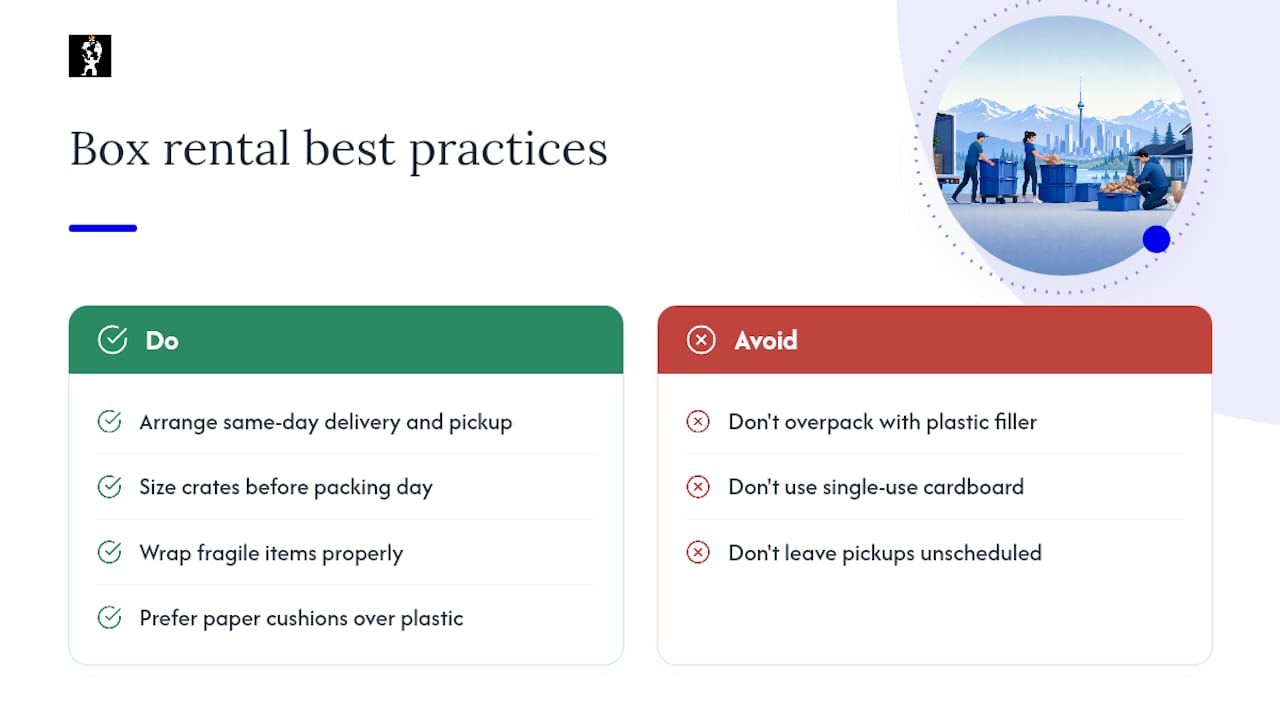
Experience from recent years shows that box rental logistics are important for many moves. Delivery and pickup on the same crates means fewer wasted trips and less cardboard heading to landfill after a single use. Sizing crates correctly before packing day, and protecting fragile items with proper wrapping techniques instead of overpacking with plastic filler, cuts down on both breakage and waste. For more on comparing paper and plastic protective materials directly, see this bubble wrap versus packing paper breakdown.
Why Your Packing Choices Outlast the Move
Every reusable crate you rent instead of buy is one less batch of virgin cardboard pulled from a forest. That’s not abstract. It’s a demand signal, and demand signals scale when enough households make the same swap. Pick one change for your next move: reusable containers, paper cushioning, or skipping plastic peanuts entirely.
— Natalie
Rent Smarter With Atlas Kings
Buying a stack of cardboard for one move, then hauling it to a recycling depot afterward, costs you time and money you don’t get back. Atlas Kings’ moving box rental service works the other way: crates arrive at your door, you pack and move, and they’re picked up when you’re done, no leftover boxes cluttering your garage. Combined with itemized, flat-rate pricing and no hidden fees, it’s a straightforward way to cut waste without adding an extra errand to your moving week.

Some providers also handle heavy furniture, marketplace pickups, or a full decluttering pass before packing, through in-home delivery and organizing services. Ready to skip the cardboard pile-up? Book your move online and add box rental to your order in a few clicks.
FAQ
What Are the Best Eco-Friendly Moving Supplies?
Reusable crates, recycled or FSC-certified cardboard, paper-based cushioning, compostable fillers, and household linens together form the lowest-impact combination for most moves.
Is Renting Moving Boxes Better Than Buying?
Renting is usually the lower-impact choice when delivery and pickup are included, since it eliminates single-use cardboard and reduces extra trips to drop off flattened boxes.
Can Packing Peanuts Be Composted?
Cornstarch-based packing peanuts dissolve in water at home, while some plant-based foam blocks need industrial composting, so check the label before disposal.
Is Paper Tape as Strong as Plastic Tape?
Water-activated paper tape bonds directly to cardboard fibers and holds well on standard boxes, though it needs a water box or wet sponge to activate.
Does Atlas Kings Offer Moving Box Rental?
Yes. Atlas Kings offers a moving box rental service with delivery and pickup included, and pricing is available on the site.
Recommended
Comments