

Finish Decluttering in 6 to 8 Weeks Before Your Move in Canada


Start decluttering 6 to 8 weeks before your move date, sorting every room into keep, donate, sell, and trash before a single box gets packed. Use quick decision rules like the 12-12-12 method to avoid stalling out, and book donation or junk removal pickups early so items actually leave the house. If the timeline feels tight or the volume feels unmanageable, a service like Atlaskings can handle the heavy lifting alongside the transport itself.
TL;DR:
Decluttering should start six to eight weeks before moving, prioritizing low-traffic spaces first and avoiding last-minute decisions.
Use decision rules like the 12-12-12 method or the three-box system to speed up sorting and prevent decision fatigue.
Items to sell should be listed four to six weeks prior, with early listings increasing chances of successful sale.
Larger movements such as furniture and hazardous materials require advance booking of donation or recycling services, ideally days before move day.
Professional decluttering services, including in-home sorting and transport, can significantly reduce stress and ensure thorough clearance before moving.
Table of Contents
Your 6-8 Week Decluttering Timeline For Moving
Moving companies bill by weight and volume, so every box you don’t pack saves money on the move itself. Experts consistently point to six to eight weeks before moving day as the sweet spot for starting, giving you enough runway to sell items, schedule donation pickups, and avoid 2 AM decisions the night before the truck arrives.
Here’s how to break that window down:
8 weeks out: Tackle the attic, garage, and any storage units first. These low-traffic spaces hide the bulkiest items, and this is also when you should measure large furniture against your new home’s doorways and room dimensions. List anything sellable now.
6 weeks out: Move into bedrooms and living areas for a first pass. Grab the obvious donations, clothes you haven’t touched in a year, duplicate lamps, that treadmill doubling as a coat rack.
4 weeks out: Clear the kitchen and bathrooms. Toss expired food and half-used toiletries, and decide which small appliances are worth moving versus replacing.
2 weeks out: Do a final sweep of every room and lock in donation and junk pickup appointments so nothing lingers past moving day.
Moving week: Confirm every pickup time and pack a labeled essentials box you’ll open first at the new place.
What To Purge In Every Room Before Moving
A closet decluttering checklist works best when you attack it by category, not by staring at a full rack hoping inspiration strikes. The same logic applies to every room in the house. AARP’s room-by-room approach recommends starting with the easiest calls first, which builds momentum for the harder ones later.
Bedrooms and closets:
Anything unworn in the past 12 months, no matter how good it looked in the store.
Shoes that no longer fit or that you’ve resoled twice already.
Duplicate belts, bags, or basics you own in triplicate.
Wardrobe pieces reserved for events you no longer attend. If you’re on the fence about formal wear, editing your closet by occasion rather than by season tends to surface the real dead weight faster.
Kitchen:
Expired spices, condiments, and pantry staples.
Duplicate gadgets. One garlic press, not three.
Chipped mugs, mismatched Tupperware, and cracked dishes.
Heavy appliances that cost more to move than to replace at the new place.
Living room:
Books you’ve already read and won’t reread.
Decor that no longer fits your style or the new floor plan.
Furniture that fails the floor-plan test, meaning it won’t clear a doorway or hallway in the new home. If a couch is borderline, measure the doorway before you commit it to the truck.
Garage and storage:
Tools you haven’t used in years, broken equipment, and dead extension cords.
Seasonal gear for sports you’ve stopped playing.
Anything already broken beyond a quick fix.
Start in the garage or storage unit. It’s the room with the least emotional weight, and clearing it first gives you real momentum before you reach the sentimental stuff.
What Decision Rules Actually Speed Up Sorting?
Decision fatigue kills more decluttering plans than lack of time does. A few structured rules keep you moving instead of standing in the middle of a room holding a single sweater for ten minutes.
The 12-12-12 rule. Find 12 items to throw away, 12 to donate, and 12 to sell, in one room, in one session. Repeat it room by room, and the count adds up fast, often 36 decisions per round without much mental strain.
5-5-5 micro-sessions. Set a timer for five minutes and clear five items from one small zone, like a junk drawer or a shelf. Use these between bigger tasks when you have downtime but not energy for a full room.
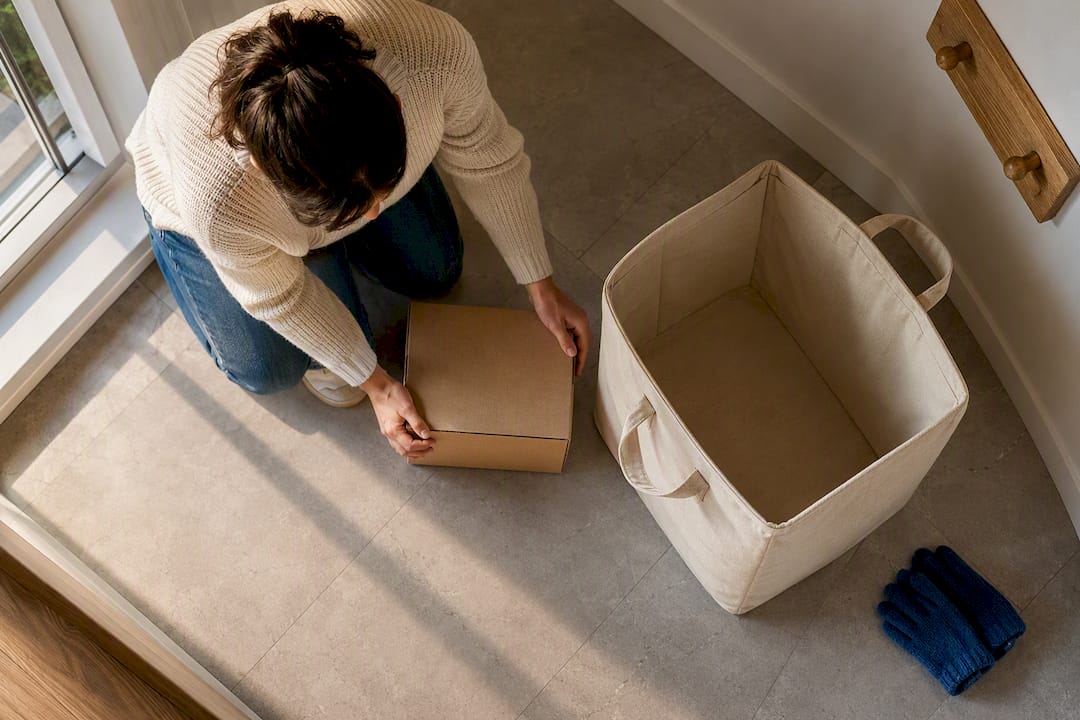
The three or four-box method. Label boxes Keep, Donate, Sell, and Trash, and physically place every item in one before moving to the next. No box means no decision, and no decision means it doesn’t leave the house.
Work through low-emotion spaces first, basements, garages, junk drawers, and save photo albums or heirlooms for last, once you’ve built the habit of letting go.
Pro Tip: Keep a small “maybe” pile capped at one box per room. If you haven’t opened it by moving week, it goes straight to donation, no second review.
Where Do Decluttered Items Actually Go?
Sorting items into piles only helps if those piles leave the house before the movers arrive. Each category has its own timeline and its own rules.
Sell: List items 4 to 6 weeks before your move on local marketplaces. Listing early increases your odds of a sale, and pricing to move beats holding out for top dollar when your timeline is fixed. Photograph items honestly, note any flaws, and set a firm pickup window.
Donate: Furniture and clothing pickups need to be booked in advance. Organizations like Habitat ReStore accept household goods but require them clean and functional, and slots fill up fast close to month-end, the busiest moving window.
Recycle and hazardous materials: Electronics need dedicated e-waste recycling, and most moving companies won’t transport paint, propane, or other hazardous goods at all. Handle these separately, well before moving day.
Junk removal: For the final sweep, same-day or curbside junk removal services clear out what’s left. Book these for the week of your move, since slots for large-item pickup tend to disappear fast during peak moving season.
When Should You Call In Professional Help?
Some moves genuinely call for outside hands, not because you’re incapable, but because the math doesn’t work. If you’re juggling a full time job, mobility limits, a health issue, or a home stuffed with decades of belongings, doing it all solo in six weeks is a recipe for burnout.
Professional organizers and move managers typically offer:
In-home decluttering sessions that sort items on the spot.
Donation drop-off, so items actually leave instead of sitting in the trunk for three weeks.
Furniture measuring and the floor-plan test, done for you.
Full packing and transport, coordinated on one schedule instead of five.
When requesting a quote, ask exactly what’s included, whether pricing is itemized or flat rate, and whether donation runs are part of the package or billed separately.
Atlaskings built its Inhome Refresh service, including the ADHD Reset option, around exactly this gap between good intentions and an overwhelming pile of stuff. With over 500 completed moves, the operational pattern is familiar: declutter first, then transport, all on one coordinated timeline.
What Moving Assisted Declutters Actually Teach You
The mistake I see most often across hundreds of moves is people packing first and sorting later, which just relocates the clutter to a new address at a higher cost per box. The fix is boring but effective: sort before you tape a single box shut.
One habit worth stealing: pack an “open first” essentials box, toiletries, chargers, a change of clothes, so night one at the new place doesn’t start with digging through forty identical boxes.
If you’re committing to a move date in the next 48 hours, do three things immediately. Book your 8 week starting point on the calendar. Measure your largest furniture piece against the new home’s front door. Pick one low-emotion room to clear first.
— Natalie
Ready To Get Moving? Here’s Your Next Step
A professional moving and decluttering service can act as a practical shortcut for readers who’ve read this whole plan and still don’t want to execute it alone. The Inhome Refresh service, including the ADHD Reset option, sends people into your space to sort keep, donate, sell, and trash piles directly, so you skip the decision fatigue entirely instead of just reading about how to avoid it.

Once your rooms are sorted, delivery services can handle single bulky items or marketplace finds that need to move without a full truck, and full transport services cover the entire relocation once your piles are cleared. Some moving and delivery services offer itemized or flat-rate pricing, helping reduce surprise costs on the final invoice.
If your move date is already set, request a quote online and get a real schedule back instead of a vague estimate.
Sources
Recommended
Comments