

Condo Loading Dock Rules for Residents & Managers

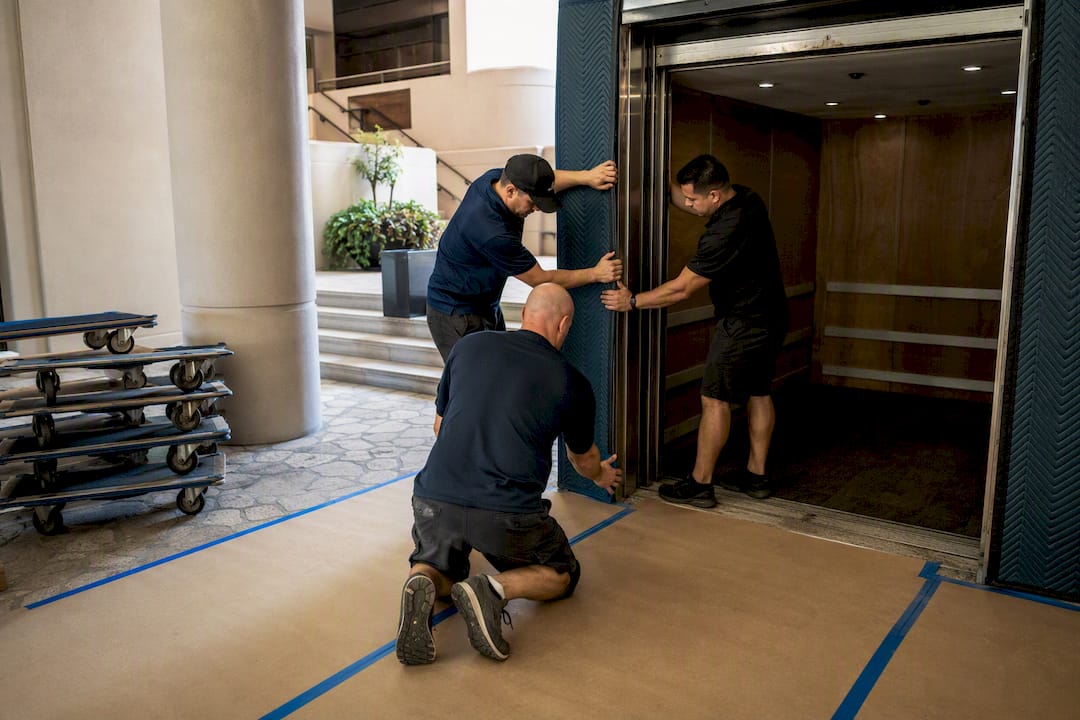
Condo loading dock rules are the reservation, insurance, timeslot, and enforcement policies a building sets for using its freight elevator and dock. The single most important first step is to contact your management office and book your timeslot, then confirm what proof of insurance and deposit are required before your movers show up.
Most buildings follow a similar pattern. A sample policy like the Skyline Plaza Condominium’s Move-In Policy requires reservations at least two business days ahead, a security deposit, and a separate non-refundable move-in fee. Insurance requirements typically call for general liability coverage naming the building as additional insured. Freight elevators often run on a set schedule, commonly locking down by evening on weekdays and closing entirely on Sundays.
Before you book anything, run through this sequence:
Reserve the dock and freight elevator with the management office
Submit your certificate of insurance and pay any required deposit
Confirm your timeslot and verify your truck and furniture will actually fit
Key Takeaways
Condo loading dock rules work because they tie a reservation, a deposit, an insurance certificate, and a fixed timeslot together, and skipping any one of them causes the delay.
Point | Details |
Book early | Reserve the dock and freight elevator with management 2 to 14 days ahead, first-come, first-served. |
Insurance is non-negotiable | Movers typically need $1,000,000 general liability naming the building as additional insured. |
Measure before you move | Check elevator door width and cab depth against your largest items and your truck’s dock clearance. |
Timeslots are strict | Sundays and holidays are often off-limits, and overrunning your slot can trigger fines or back-charges. |
Let a mover manage the details | Atlaskings coordinates COIs, dock scheduling, and elevator protection so residents avoid rejected bookings. |
Table of Contents
What Are Loading Dock Rules and Why Do They Exist?
Loading dock rules exist because one elevator and one dock have to serve dozens, sometimes hundreds, of units. Without a reservation system, move day turns into a standoff between three movers all trying to use the same elevator at 10 AM on a Saturday.
Buildings write these rules to protect three things: the equipment, the common corridors, and the schedule fairness between residents. A single overloaded freight elevator repair can cost tens of thousands of dollars, and a resident who blocks the dock for two hours past their slot delays everyone behind them.
At-a-Glance Checklist for Residents and Movers
Most buildings expect reservations several business days to two weeks out, and slots go on a first-come, first-served basis, so the earlier you call, the better your pick of times.
Here’s what to line up before move day:
Several days to two weeks out: Call or email the management office to book your dock and elevator slot.
A few days before move day: Submit your certificate of insurance and pay the security deposit and any non-refundable move-in fee.
Day before: Confirm your timeslot and ask which entrance and elevator bank you’re assigned.
Move day: Check in with security, park where directed, and return the elevator to passenger service the moment you’re done.
Pro Tip: Call the management office before you book your moving company. Some buildings only allow certain days of the week for moves, and locking in your date first prevents a costly rebooking with your mover.
How Do Reservations, Fees, and Elevator Rules Actually Work?
Every condo’s rule set breaks down into six practical categories, and understanding each one saves you from a surprise fee or a rejected booking at the dock.
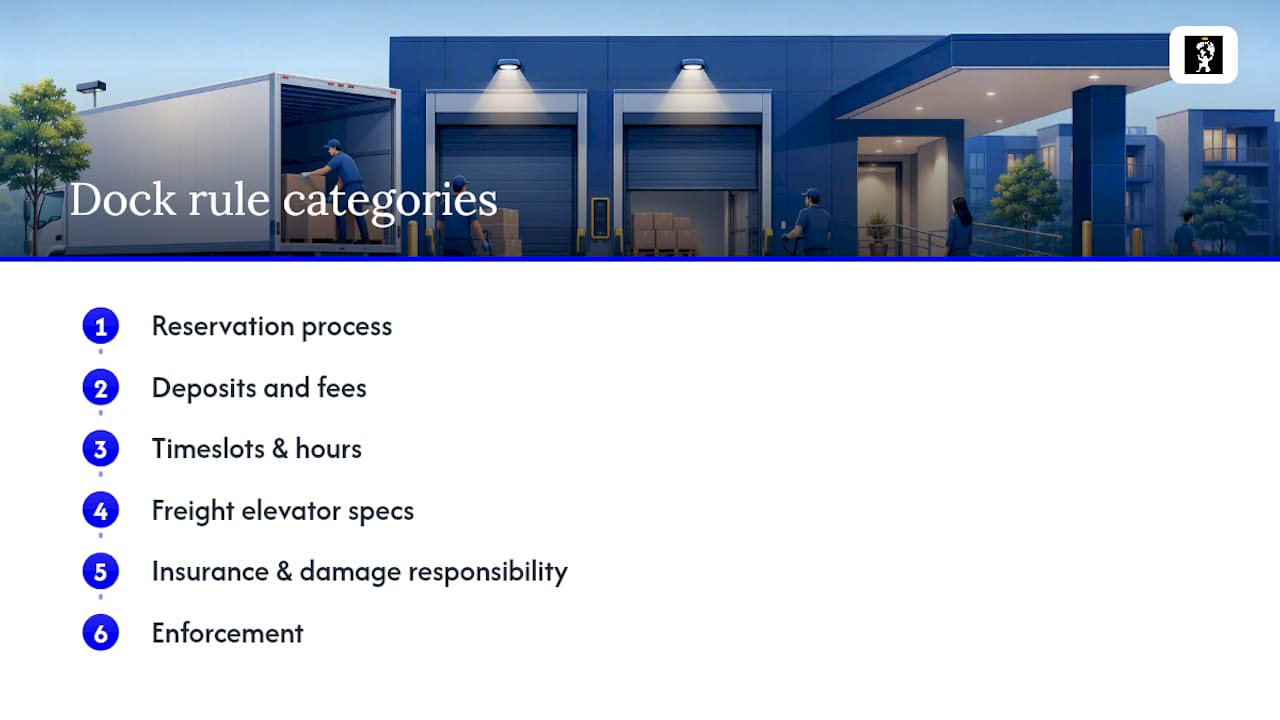
Reservation process
Unit owners and tenants can generally both reserve the dock, though some buildings ask the owner to authorize a tenant’s booking in writing. The Skyline Plaza policy sets a minimum of two business days’ notice, handled first-come, first-served through the management office. That minimum is a floor, not a target. Moving guides recommend booking two weeks ahead, and up to four weeks in busy buildings, since end-of-month and seasonal move weeks fill up fast.
Deposits and fees
Expect two separate charges: a refundable security deposit and a non-refundable move-in fee. Skyline Plaza’s policy requires the deposit paid at least two business days before the move, with the move-in fee charged on top, not instead of, the deposit. The deposit gets returned after a post-move inspection confirms no damage to elevator walls, corridor paint, or door frames.
Timeslots and hours
Buildings commonly restrict moves to blocks like 7 AM to 1 PM or 1 PM to 7 PM, Monday through Saturday, with Sundays and holidays off-limits entirely. Dock doors often lock at 7 PM on weekdays. Running past your slot doesn’t just annoy the next resident. It can trigger a fine or a back-charge for the extra staff time.
Freight elevator specs
Service and freight elevators are not interchangeable, and the size gap matters more than most residents expect.

These figures come from ItemFits’ service elevator reference and its full elevator dimension guide. Measure your largest piece, your sofa or your headboard, against the door width before move day, not the cab size. A sectional that fits diagonally in the cab still won’t clear a 42 inch door frame.
Insurance and damage responsibility
Movers typically carry general liability coverage at levels commonly required by buildings, often with the building named as additional insured and certificate holder. This isn’t paperwork for its own sake. If a mover dents the elevator wall or scratches a corridor floor, the certificate of insurance is what determines who pays. Buildings that skip this step have no recourse beyond the resident’s own deposit.
Enforcement
Violations include encroaching on the next reservation’s timeslot or failing to return the elevator to passenger mode. Sanctions commonly include fines, cleaning back-charges, or repair costs deducted from the security deposit. Some buildings also require sign-in at the dock and vehicle keys left with security, per policies like One Boston Place’s freight elevator procedures, which cap unscheduled dock standing time at 30 minutes before a vehicle risks being ticketed or towed.
How Should You Prepare for Move Day?
A little sequencing prevents almost every common delay.
Book the elevator and dock as soon as you have a move date, ideally two to four weeks ahead in buildings with heavy turnover.
Request your mover’s certificate of insurance early. Some moving companies take a few days to generate the exact wording your building requires.
Pay your deposit and move-in fee by the deadline stated in your reservation confirmation, typically several business days before the move.
Measure your largest items against the elevator door width and cab depth, and confirm your moving truck fits the dock’s height and length clearance.
On move day, check in with security, leave keys if asked, and stay nearby to supervise elevator padding and corridor protection.
After the move, walk the corridors and elevator with a staff member for a quick damage check before you leave.
Pro Tip: Take photos of the elevator interior and corridor walls before your movers start. If a damage dispute comes up during the deposit refund process, timestamped photos settle it faster than a memory argument.
Deposit refunds usually process within a week or two after the inspection, once management confirms no claims are filed against it.
What Should a Condo Manager’s Loading Dock Policy Include?
A clear written policy heads off most disputes before they start. At minimum, it should spell out reservation rights, fee structure, and what happens when someone breaks a rule.
Policy Element | Recommended Approach |
Who may reserve | Unit owners and tenants, with written owner authorization for tenant bookings |
Booking limits | One timeslot per day per unit, exceptions only in writing from management |
Lead time | Minimum 2 business days, recommend 2 weeks in high-turnover buildings |
Insurance requirement | $1,000,000 general liability, building named as additional insured and certificate holder |
Enforcement | Fine schedule for slot overrun, cleaning back-charge, damage billed against deposit |
Operationally, require photo ID and sign-in at the dock, keep a printed elevator protection checklist for staff to confirm before each move, and set a standard post-move inspection window. Publish an appeal process too. A resident who disputes a damage charge should have a clear, short window to request a re-inspection before the deposit gets forfeited.
A Mover’s View on What Actually Causes Delays
Most move-day delays trace back to two things: a late COI and nobody measuring the elevator beforehand. We’ve watched a move get pushed a full week because the certificate of insurance didn’t name the building correctly. Confirm the exact wording your building wants, and verify your truck’s dock clearance before it’s loaded, not after it’s parked outside.
Let a Professional Handle the Loading Dock Logistics
There’s another way through all of this paperwork: hand the coordination to a mover who deals with condo loading docks every week. Atlaskings manages the certificate of insurance, the parking and dock scheduling, and the elevator padding so you’re not the one chasing management office emails three days before your move.

Our in-house delivery service is built around exactly this friction point: getting large or bulky items through a loading dock and freight elevator without a rejected booking or a damage dispute. For a full move that involves elevator coordination from start to finish, our lift and moving service handles the reservation logistics directly with your building. If you’re only moving a handful of large pieces rather than a full household, our transport service covers timed, dock-scheduled delivery too. If your building requires movers to carry specific coverage, a partner resource like Fix. Move. Haul.'s furniture delivery guide walks through what a compliant delivery crew looks like on the ground. Reach out and get a quote for your move date, and we’ll confirm your building’s requirements before we ever show up at the dock.
Frequently Asked Questions
Who is allowed to reserve the condo loading dock? Both unit owners and tenants can usually reserve it, though some buildings require the owner’s written authorization before a tenant can book a slot.
How far in advance should I book the freight elevator? Most policies require a minimum of two business days, but buildings with heavy move traffic recommend booking two to four weeks ahead, especially around month-end.
What insurance do movers need to use the loading dock? Buildings commonly require $1,000,000 in general liability coverage, sometimes with a $2,000,000 aggregate, naming the building as additional insured and certificate holder.
What happens if my move runs past its scheduled timeslot? Expect a fine, a back-charge for extra staff time, or a deduction from your security deposit, depending on the building’s enforcement policy.
Can I move on a Sunday or holiday? Many buildings prohibit moves on Sundays and holidays entirely, so check your specific policy before scheduling movers for those dates.
This article is general information, not a substitute for advice from a qualified lawyer. Consult a qualified legal professional about your own circumstances before acting on anything here.
Sources
Recommended
Comments