

Bubble Wrap vs Packing Paper: Which Protects Better?

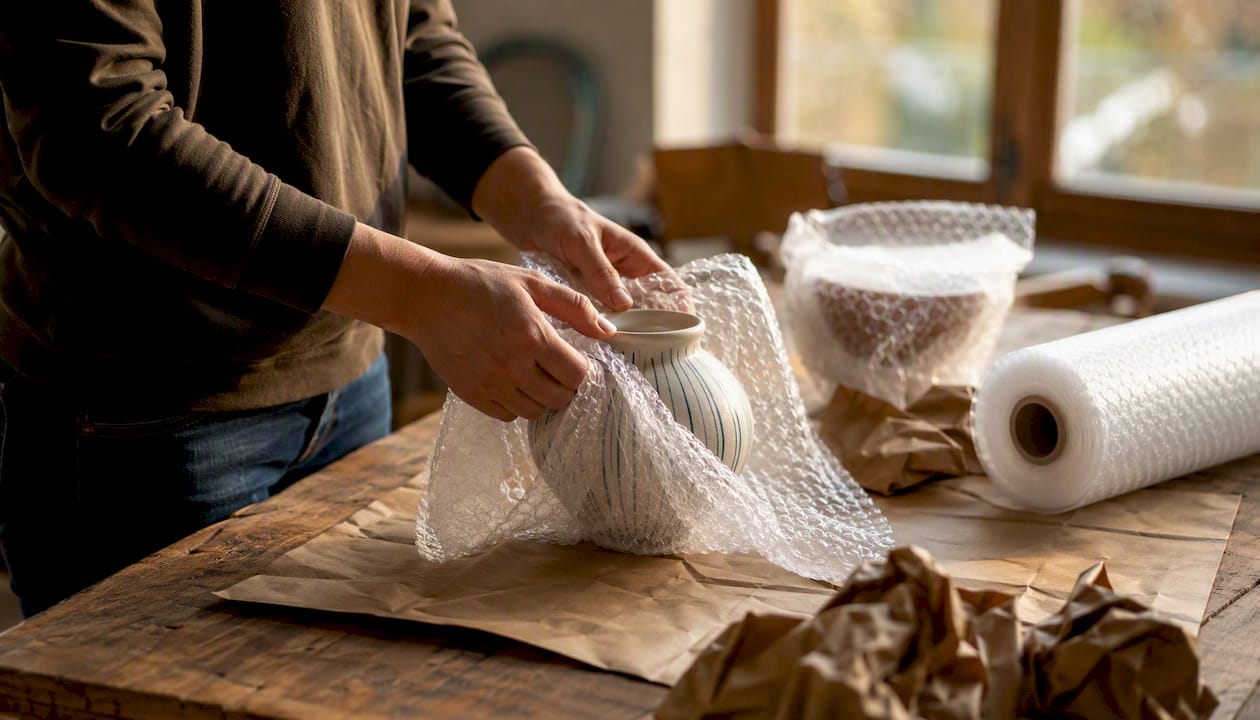
Use bubble wrap for shock-prone, high-value, or oddly shaped fragiles. Use packing paper for surface protection, bulk filling, and budget-conscious moves. That one rule covers most packing decisions you’ll face.
Bubble wrap is best for:
Glassware, stemware, and ceramics that need impact cushioning
Electronics, screens, and mirrors where a single drop causes real damage
Oddly shaped items and anything moisture-sensitive during transit
Packing paper is best for:
Books, framed prints, and stacked plates separated by layers
Void fill inside boxes to stop items from shifting
Eco-friendly and cost-sensitive moves where coverage matters more than cushion
For most household moves, combining both materials gives you the best result: paper wraps the surface, bubble wrap absorbs the impact.
Table of Contents
What are bubble wrap and packing paper, and what variants should you know?
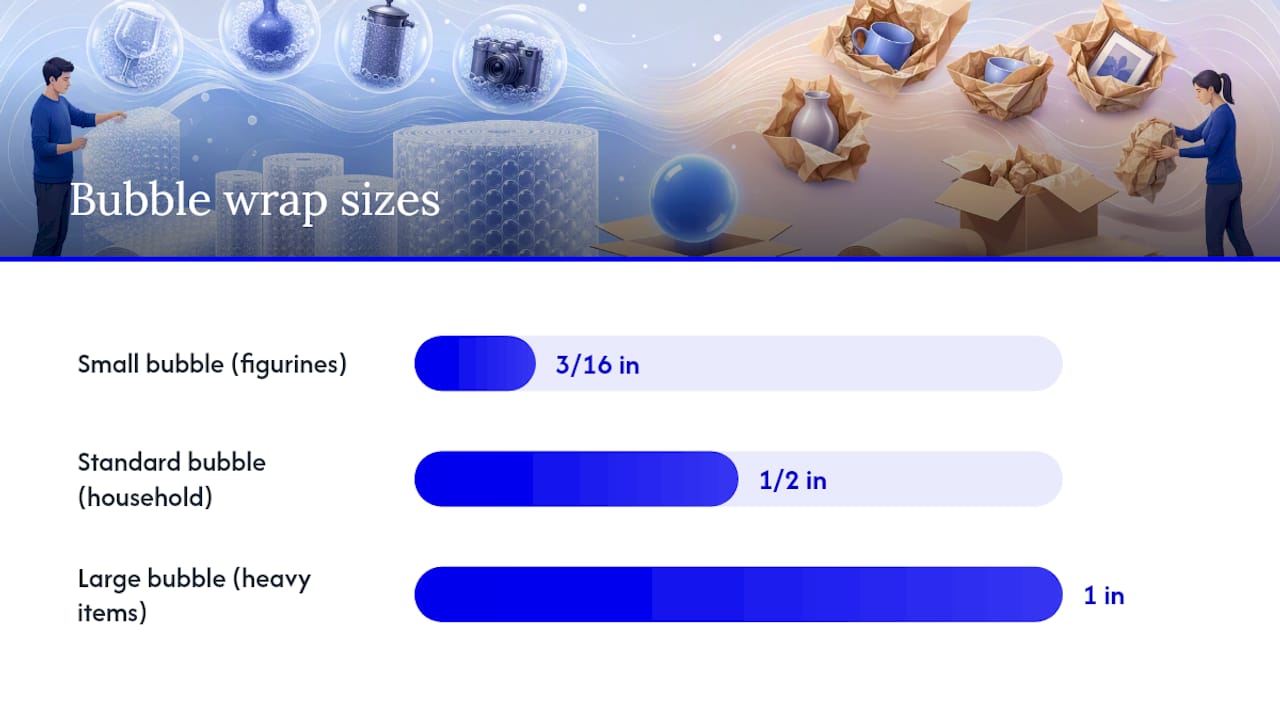
Bubble wrap is a plastic film with sealed air pockets that absorb impact by compressing on contact. The bubble size directly affects cushioning performance: small bubbles (3/16") protect lighter, delicate items like figurines; standard bubbles (1/2") handle most household fragiles; large bubbles (1") are built for heavier items that generate more force on impact. Anti-static bubble wrap adds a pink-tinted coating that dissipates electrical charge, making it the right call for electronics and circuit boards. Pre-formed bubble bags let you slip items in without wrapping, which saves time on packing day.
Packing paper is unprinted, ink-free paper used for wrapping and void fill. Kraft paper is the most common type: sturdy, recyclable, and available in large sheets. News-free white packing paper is a cleaner alternative that won’t transfer ink onto delicate surfaces. Honeycomb wrap is a newer option with a die-cut hexagonal structure that cushions better than flat paper while staying fully recyclable and biodegradable.
Variant | Best for |
Small-bubble wrap (3/16") | Figurines, light glassware, small fragiles |
Standard-bubble wrap (1/2") | Most household fragiles, dishes, vases |
Large-bubble wrap (1") | Heavy items, mirrors, electronics |
Anti-static bubble wrap | Electronics, circuit boards, hard drives |
Kraft packing paper | General wrapping, void fill, surface protection |
News-free white paper | Delicate surfaces, china, silverware |
Honeycomb wrap | Eco-friendly cushioning, fragile items, void fill |
When is bubble wrap the better choice?
Bubble wrap’s core strength is shock absorption. When a box drops or shifts in a truck, the air pockets compress and distribute the impact force across the item’s surface rather than concentrating it at one point. That physics matters most for items where a single impact causes irreversible damage.
Use bubble wrap for:
Stemware and crystal with thin, breakable stems
Electronics, tablets, and monitors (use anti-static wrap)
Mirrors and framed glass art
Ceramics and figurines with protruding details
Any item that needs minor moisture resistance during a long-distance move
There are real limitations to know. Bubble wrap takes up significant storage space on a roll, costs more per square foot than packing paper, and degrades under repeated compression. If items will be stacked in storage for months, the bubbles can flatten and lose their protective value. For sustained, repeated-impact situations, packaging engineers recommend closed-cell foam (EPE) or molded pulp instead.
Pro Tip: Always place the bubble side facing inward, toward the item. Bubbles facing outward reduce cushioning effectiveness significantly. For heavier items, choose large-bubble wrap; small bubbles compress too easily to absorb meaningful force.
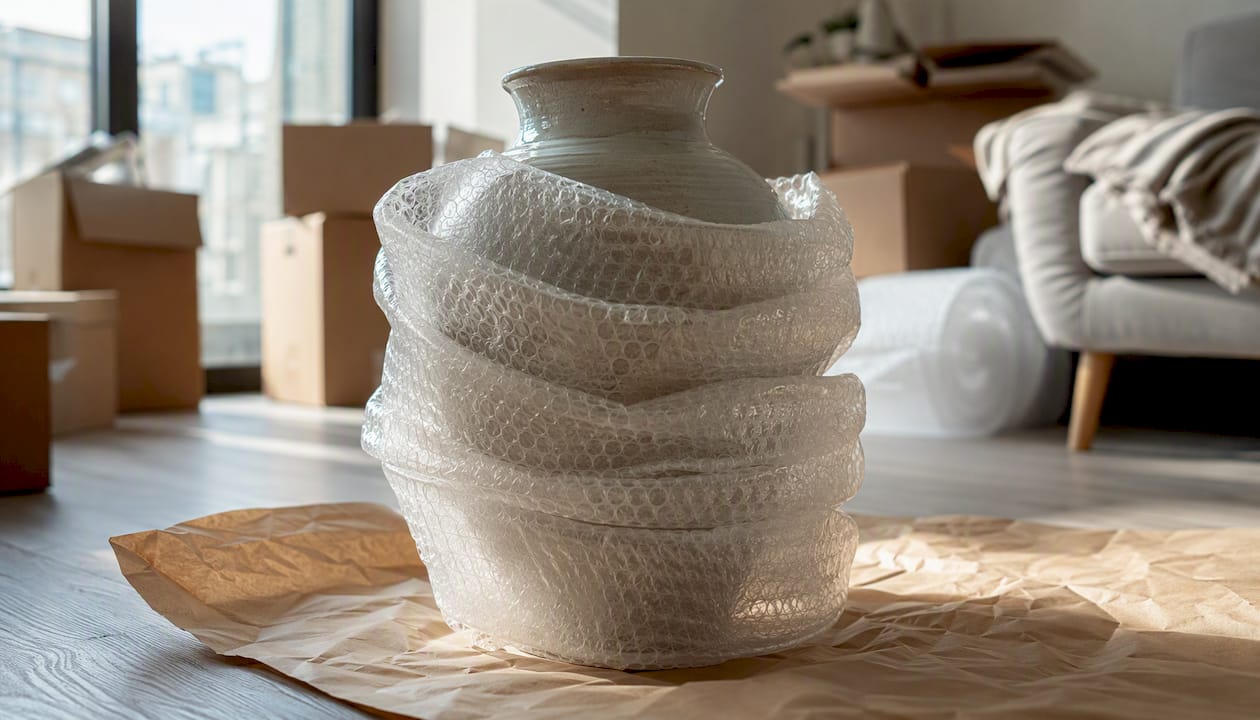
For a delicate wine glass, two layers of standard bubble wrap with bubbles inward is sufficient. For a heavy ceramic vase, three layers of large-bubble wrap plus a paper base layer gives you real protection.
When is packing paper the better choice?
Packing paper’s primary job is surface protection, not shock absorption. It prevents scratches, scuffs, and ink transfer during transit. It also stores flat, costs less per sheet than bubble wrap, and is far easier to recycle or compost after a move.
Use packing paper for:
Books and boxed sets (paper keeps covers clean and prevents corner damage)
Plates stacked with a sheet between each one
Framed prints as a surface layer before any outer wrap
Lining drawer interiors and furniture surfaces during transport
Void fill inside boxes, scrunched into balls to stop items from shifting
The honest limitation: packing paper offers almost no shock absorption on its own. A wrapped plate dropped from counter height will still break. Paper also performs poorly in damp conditions, since it can absorb moisture and transfer it to whatever it’s wrapped around.
Pro Tip: For void fill, scrunch paper into loose balls rather than folding flat sheets. A scrunched ball creates air pockets that resist compression better than a flat layer. One full sheet of packing paper, scrunched, fills roughly the same volume as three flat sheets.
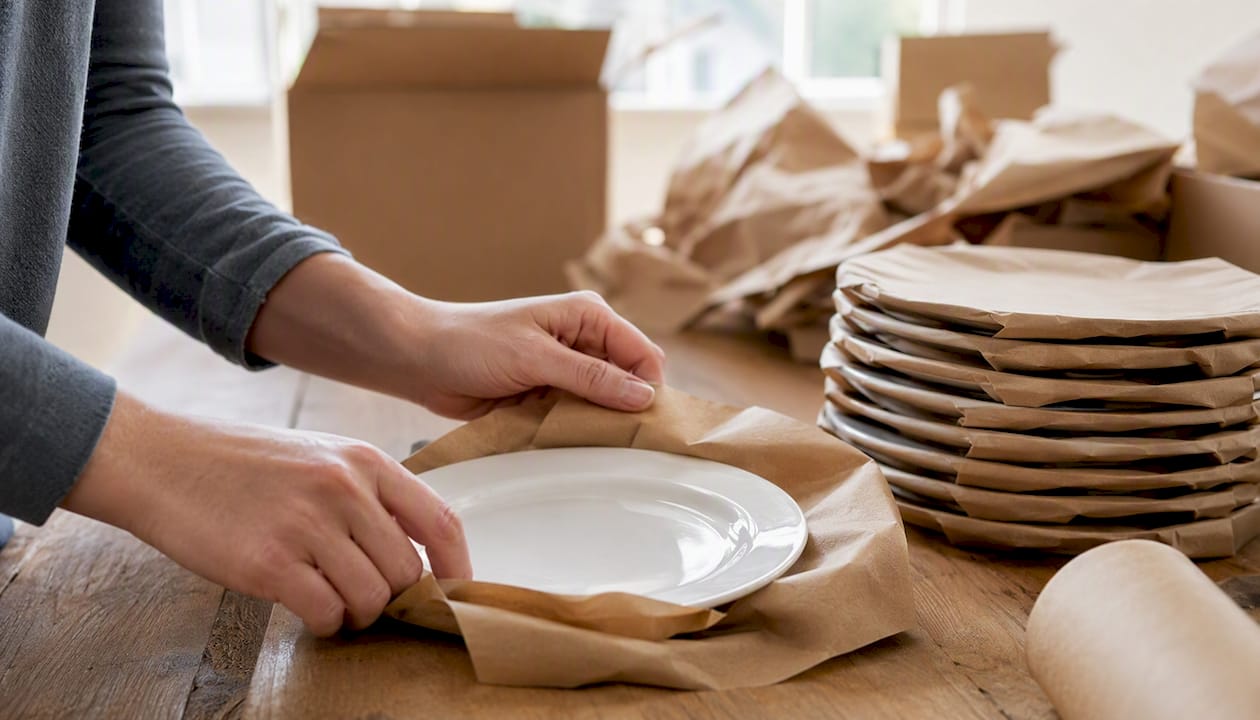
To wrap a dinner plate, lay one sheet flat, center the plate, fold the sides over, then roll the plate forward to wrap the remaining paper around it. Stack wrapped plates vertically in the box, not flat, to reduce the chance of breakage from stacking pressure.
Which material should you use for common household items?
Bubble wrap handles shock; packing paper handles surfaces. Most items fall clearly into one camp, though a handful benefit from both.
Item | Best material | Protection level | Rationale | Combo tip |
Dinner plates | Both | High | Paper separates layers; bubble wrap cushions the stack | Paper between each plate, bubble wrap around the bundle |
Stemware | Bubble wrap | High | Thin stems break from vibration and impact | Large-bubble wrap, two layers minimum |
Glassware (tumblers) | Both | Medium | Surface scratches and impact both matter | Paper first, one layer of bubble wrap over |
Electronics | Anti-static bubble wrap | High | Static discharge can damage components | Anti-static wrap only; no standard plastic |
Framed art / mirrors | Both | High | Glass face needs surface protection; frame needs cushion | Paper on glass face, bubble wrap around frame |
Furniture surfaces | Packing paper | Low–Medium | Scratch prevention only; no impact risk | Paper layer, then moving blanket |
Books | Packing paper | Low | Covers and spines need surface protection only | Paper wrap, pack spine-down in box |
Ceramics / figurines | Bubble wrap | High | Protruding details break on impact | Small-bubble wrap, three layers |
Quick rules for edge cases:
Heirlooms and irreplaceable items: use both materials and double-wall boxes regardless of weight
Odd shapes (sculptures, lamp bases): wrap in paper first to create a smooth surface, then apply bubble wrap without gaps
Long-term storage over three months: replace bubble wrap with EPE foam padding, since bubbles compress and lose effectiveness over time
Shipping large items like furniture panels: moving blankets plus packing paper are more practical than bubble wrap at that scale
How much will packing materials cost for a typical house move?
Packing paper is consistently cheaper per square foot than bubble wrap, and it covers more items per dollar. A 200-sheet bundle of unprinted packing paper typically runs $15–$25 and handles most of a one-bedroom apartment’s wrapping needs. Bubble wrap rolls vary widely: a 12-inch by 100-foot roll costs roughly $15–$30, and a two-bedroom move can require two to four rolls depending on how many fragiles you own.
For a one-bedroom move, a realistic materials budget using both products runs a moderate amount. A two-bedroom move with significant glassware and electronics can increase costs further when you factor in boxes, tape, and markers. Operational costs go beyond unit price: the time it takes to wrap each item, the storage space rolls occupy before moving day, and the damage rate if you under-protect all factor into the real total.
Ways to reduce packing materials cost:
Rent reusable moving boxes instead of buying cardboard (see moving box rental options)
Buy bubble wrap in bulk rolls rather than small retail packs
Reuse bubble wrap from recent deliveries if bubbles are still intact
Source recycled kraft paper from local print shops or office supply stores
Use towels, linens, and clothing as supplemental padding for medium-fragility items
Pro Tip: Store bubble wrap rolls upright in a corner rather than flat on the floor. Flat storage causes the outer layers to compress under the roll’s own weight, reducing cushioning before you even use it.
One practical space note: a 100-foot bubble wrap roll takes up roughly the same closet space as a large beach ball. Flat-bundled packing paper, by contrast, stores like a ream of printer paper and fits almost anywhere.
How do bubble wrap and packing paper compare on environmental impact?
Bubble wrap is made from low-density polyethylene (LDPE), a plastic that is technically recyclable but not accepted in most curbside programs. You can drop it off at participating retail locations (many grocery and big-box stores accept LDPE film), but it requires a separate trip. It is not biodegradable, and bubbles that have been popped or compressed cannot be recycled effectively.
Packing paper has a meaningfully lower environmental footprint. Kraft and honeycomb paper are both recyclable through standard curbside programs and compostable if uncoated and clean. Honeycomb wrap in particular offers a strong eco case: it provides real cushioning without any plastic content.
Practical steps for responsible disposal:
Bubble wrap: check the How2Recycle label or your local retailer’s store drop-off program for LDPE film; never place it in curbside recycling bins
Packing paper: flatten sheets, remove any tape, and place in your paper recycling bin or compost pile if uncoated
Reuse bubble wrap for future shipments as long as the air pockets remain intact
Donate clean, intact bubble wrap to local shipping centers, art studios, or schools
For sustainability-minded movers, prioritize honeycomb or kraft paper for the majority of wrapping and reserve bubble wrap for the small number of items that genuinely need impact protection. Recycled-content bubble wrap is available from several packaging suppliers and reduces the virgin plastic footprint without sacrificing performance.
What does a professional packing system actually look like?
Experts consistently emphasize that the right box size and proper void fill matter as much as the wrapping material itself. An item wrapped perfectly but placed in an oversized box will still shift and break. Here is the step-by-step approach professionals use:
Wrap the item in packing paper first — to protect the surface from scratches and provide a clean base layer.
Pro Tip: Match bubble size to item weight. Small-bubble wrap for figurines and light glassware; large-bubble wrap for anything over five pounds or with significant drop risk. Using small bubbles on a heavy ceramic vase gives you a false sense of security.
For home organization before a move, reducing clutter first means fewer items to wrap and fewer boxes to manage. Resources like home organization tips can help you decide what’s worth packing carefully versus what to donate or discard.
If you have a large number of fragile items, high-value pieces, or simply limited time, hiring professionals removes the guesswork entirely. Atlaskings handles packing, transport, and placement so nothing gets left to chance.
What are the final rules for choosing between these materials?
The decision comes down to three straightforward rules:
Use bubble wrap — when the item can break from a single impact, has protruding details, or needs any moisture resistance during transit.
A phrase worth keeping in mind while you pack is: “Paper for surface, bubbles for impact.” That covers the vast majority of household items in one line.
For a fast decision while packing, ask yourself one question: “If this box dropped three feet, would this item break?” If yes, it needs bubble wrap. If the risk is only scratching or scuffing, paper is enough.
Key Takeaways
Bubble wrap protects against impact; packing paper protects surfaces and fills voids, and combining both gives fragile items the most reliable protection during a move.
Point | Details |
Bubble wrap for impact | Use bubble wrap, bubbles inward, for any item that breaks from a drop or vibration. |
Paper for surfaces and fill | Packing paper prevents scratches and fills box voids more cheaply than bubble wrap. |
Combine both for fragiles | Wrap in paper first, then bubble wrap over the top for dishes, glassware, and ceramics. |
Eco choice | Kraft and honeycomb paper are curbside-recyclable; bubble wrap requires store drop-off. |
Atlaskings for professional packing | Atlaskings handles fragile packing and transport for household and small-business moves with transparent, itemized pricing. |
The case for not overthinking your packing materials
There is a tendency in moving guides to treat packing materials as a binary choice, as if picking bubble wrap means abandoning paper entirely. In practice, the movers who protect fragile items most reliably are not the ones who use the most bubble wrap. They are the ones who right-size their boxes, fill every void, and match the material to the actual risk each item faces.
The detail most people miss: bubble wrap’s protection depends almost entirely on orientation and bubble size. Bubbles facing outward, or small bubbles on a heavy item, give you the appearance of protection without the substance. Packing paper, meanwhile, is consistently underused as void fill. A box that doesn’t rattle is safer than a box where every item is individually wrapped but still has room to shift.
The other overlooked factor is time. Bubble wrap takes longer to apply per item than paper. On a full household move, that difference adds up to hours. If you are packing on a deadline, paper-first wrapping with targeted bubble wrap on your ten most fragile items is a faster and often equally effective strategy than wrapping everything in plastic.
The real packing system is not about which material is “better.” It is about using each material where it earns its place, and not using either one as a substitute for a properly sized, properly filled box.
Atlaskings takes the packing off your plate
Packing fragile items correctly takes time, the right materials, and a clear system. Atlaskings offers a faster, lower-stress alternative for households and small businesses that would rather not manage it themselves.

With over 500 moves completed since 2021, Atlaskings brings a professional packing workflow to every job: right-sized boxes, layered wrapping for fragiles, and careful placement in the truck. Pricing is itemized and flat-rate with no hidden fees, so you know exactly what you’re paying before moving day. Whether you need in-home delivery for a single large item or a full local or multi-city move, the team handles the materials, the wrapping, and the transport.
You can also rent reusable moving boxes through Atlaskings to cut down on cardboard waste and storage clutter. Get a quote and book your move at atlaskings.ca.
Sources and further reading
Recommended
Comments