

Book in 10 Minutes: Appliance Recycling in Ontario Costs $80–$300

Yes, a paid moving or decluttering company can remove your large appliances in Ontario, transport them, and arrange certified recycling or disposal. Atlas Kings offers exactly that: in-home pickup, itemized and flat-rate pricing, and coordinated disposal with a certified technician handling refrigerant recovery when needed. The next step is simple: request an itemized quote or book a pickup window that works for your schedule.
TL;DR:
Confirm refrigerant recovery is handled by a certified technician before booking, as it is a legal requirement for appliances with a compressor.
Expect appliance removal costs in Ontario to range from $80 to $300 per item, influenced by size, location, and access difficulties.
Request an itemized quote to clearly see labor, disposal, and refrigerant handling fees, preventing unexpected charges on pickup day.
Ensure the company provides documentation of proper recycling or disposal, including the appliance’s final destination and refrigerant reclamation.
Prepare for pickup by unplugging, clearing pathways, and coordinating building procedures in advance, especially for high-rise or condo settings.
Table of Contents
What Does a Professional Appliance Pickup Service Include?
Booking a crew for appliance recycling in Ontario means more than someone showing up with a dolly. A proper service walks through several stages, and knowing them helps you spot a company that’s cutting corners.
It starts with an assessment, either in person or from photos you send ahead of time. This is where the quote gets built, factoring in the appliance type, its location in your home, and any access issues. From there, the crew reviews disconnection needs. Most movers can unplug a standard washer or unhook a fridge’s water line, but a gas stove or dryer typically needs a licensed plumber or gas technician to cap the line safely before removal.
Once disconnected, the actual move requires the right equipment: appliance dollies, moving straps, and floor runners to protect hardwood or tile. A two-person crew is standard for most single appliances, though stairs or tight hallways may call for a third set of hands.
Assessment and written quote before the job starts
Disconnection handled directly, or a referral to a licensed technician for gas lines
Protective equipment for floors, walls, and doorframes during the carry
Transport to a certified recycling center, processor, or donation outlet
Documentation showing how and where the appliance was recycled or disposed of
Pro Tip: Ask the company to confirm in writing which disconnections they handle themselves and which require a separate technician. This one question prevents the most common scheduling surprise on pickup day.
How Much Does Appliance Recycling Cost in Ontario?
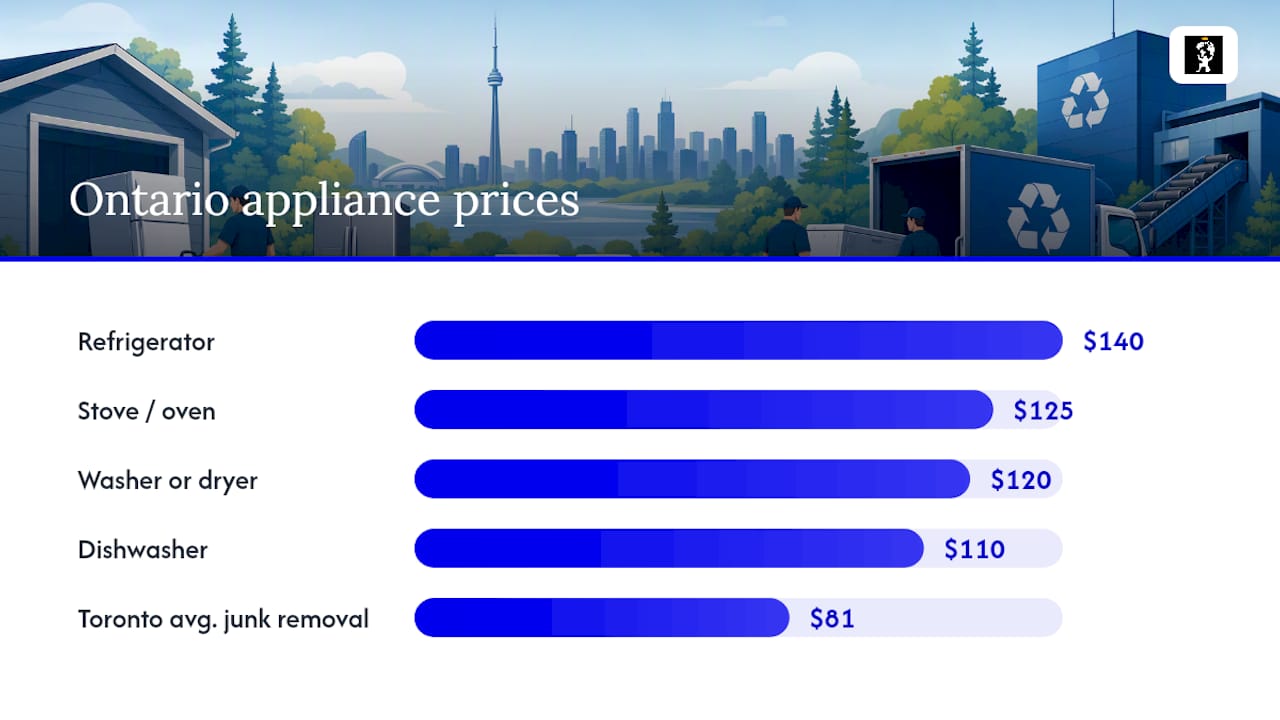
Most single-appliance removals in Ontario fall between $80 and $300 per item, with the final number driven by size, weight, and how hard the appliance is to reach. A fridge in a ground-floor kitchen costs a lot less to move than one wedged in a basement behind a finished bar.
Southern Ontario pricing data gives a clearer picture of what to expect item by item:
Refrigerator: $100 to $180
Stove or oven: $90 to $160
Washer or dryer: $90 to $150
Dishwasher: $80 to $140
Several factors push costs to the higher end of these ranges. Refrigerant recovery on a fridge or freezer adds a certified-technician fee. Multiple flights of stairs, a narrow hallway, or an elevator booking window in a condo building all add labor time. Capping a gas line before a stove leaves the house is another add-on if your provider doesn’t have an in-house technician for it.
If you’re clearing out more than one appliance, ask about volume pricing. Many companies discount per-item rates when you bundle a full kitchen swap or a basement cleanout into one trip, which is worth mentioning up front rather than after you’ve already booked a single pickup.
Toronto’s average junk-removal invoice runs around $81, with hourly labor near $33, useful context for judging whether a quote is in line with market norms or padded with vague fees.
The smartest way to compare quotes is to request an itemized breakdown rather than one flat number. That way you can see exactly what you’re paying for labor, disposal, and any refrigerant-handling charge.
Is Refrigerant Recovery Required for Appliance Disposal in Ontario?
Cooling appliances carry rules that other appliances don’t. In Ontario, refrigerant must be properly removed by a certified technician before a fridge, freezer, air conditioner, or similar unit can be legally disposed of or recycled. This isn’t a suggestion; it’s tied to environmental handling standards that prevent refrigerant gases from being released or dumped improperly.
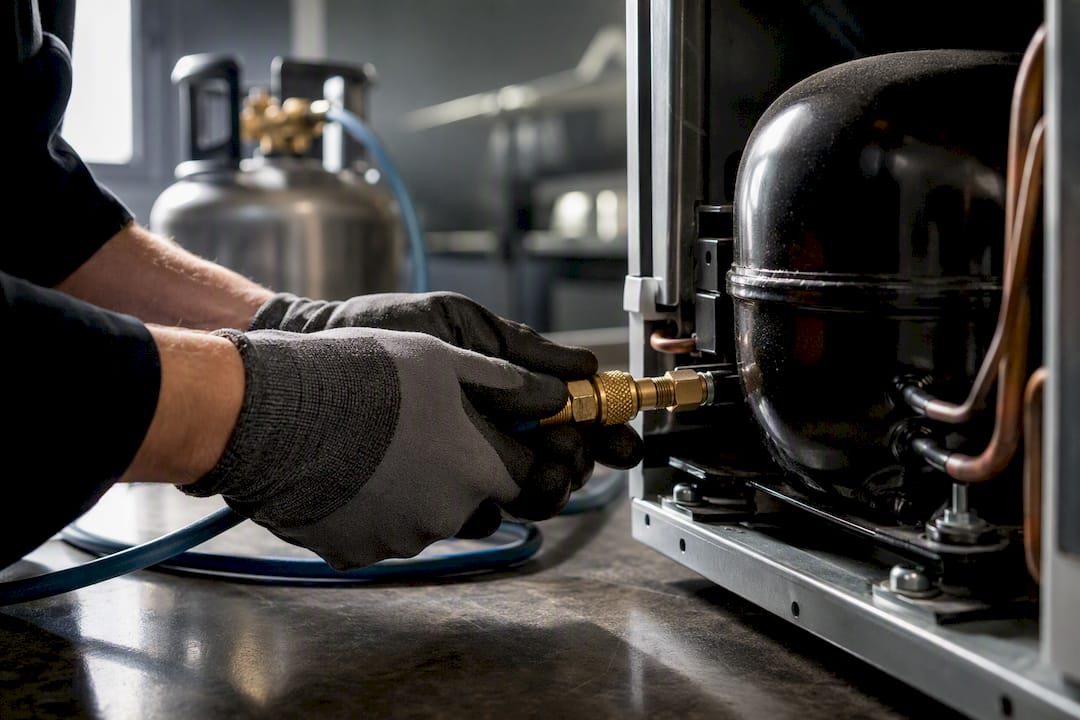
Before you book, ask directly whether the company performs certified recovery themselves or arranges it through a licensed technician. A company that shrugs off this question or says they’ll “figure it out later” is one to avoid. Southern Ontario removal services routinely confirm this step as part of a standard fridge or freezer pickup, so a hesitant answer is a red flag rather than a minor detail.
Ask for documentation, too. A reputable provider can tell you where the appliance ended up, whether that’s a certified recycler, a parts processor, or a donation outlet, and can confirm the refrigerant was reclaimed rather than vented.
Confirm certified refrigerant recovery before booking, not after the crew arrives
Request a disposal record or receipt showing the appliance’s destination
Ask what safety equipment the crew uses on stairs, tight turns, and heavy lifts
Verify the crew carries insurance in case of damage to floors, walls, or doorframes during the move
Safe handling matters beyond the appliance itself. A fridge full of old food, a washer still connected to water, or a stove with a live gas line are all injury risks if a crew isn’t trained to check for them first.
How Do You Book and Prepare for Appliance Pickup Day?
Getting ready for a pickup takes less than an hour, but skipping a step can turn into a delay or an extra fee on the day of. Here’s the order that works.
Unplug and empty the appliance. Clear out the fridge or freezer, disconnect washers from water lines, and let a fridge defrost overnight if it’s been running.
Clear the path. Measure doorways, move furniture out of the hallway, and confirm parking access for the truck, especially if you’re in a condo with loading dock rules.
Get a written, itemized quote. Confirm labor, disposal, and any refrigerant-handling fee are broken out separately, not folded into one number.
Confirm certifications and insurance. Ask whether the crew is insured and whether refrigerant recovery is certified or subcontracted.
Verify the arrival window and building procedures. Condo elevator bookings often require 24 to 48 hours’ notice, so confirm this early if you live in a high-rise.
Watch for red flags. Vague pricing, refusal to discuss insurance, high-pressure upsells, or no clear damage policy are all signs to look elsewhere.
On pickup day, keep contact info handy and ask for your disposal documentation before the crew leaves.
Pro Tip: If you live in a condo, call your building’s property manager the same day you book your pickup. Elevator reservations fill up fast, and a missed booking window is the single most common reason appliance pickups get rescheduled.
Readers combining appliance pickup with a full room refresh often pair it with decluttering services or check current moving company pricing to plan a bigger cleanout in one trip.
Why Most Ontario Homeowners Overthink This Decision
The conventional advice on appliance recycling treats it like a research project: compare five quotes, read every review, interrogate every certification before you dial a phone number. That caution is understandable, but it’s overkill for what is, in practice, a straightforward transaction with a handful of checkable facts.
What actually matters is narrower than most guides suggest. Confirm refrigerant certification if the appliance has a compressor. Get the quote itemized so you can see the labor and disposal costs separately. Everything else, including crew size, exact arrival time, or how many trucks they run, is operational detail that doesn’t change the outcome for you.
Where people waste the most time is agonizing over price differences of $20 or $30 between quotes, while skipping the one question that actually protects them: whether refrigerant handling is certified. That’s the detail with real legal and environmental weight behind it, not the line-item total.
If there’s one shift worth making, it’s this: treat the certification question as non-negotiable and treat the price comparison as secondary. Get that order right, and booking a pickup takes ten minutes instead of an afternoon.
— Natalie
Book Appliance Pickup With Atlas Kings
Atlas Kings handles appliance pickup the way it should work: one crew, one itemized quote, and no guessing about where your old fridge ends up. We’ve completed over 500 moves since 2021 across Ontario, and appliance removal fits naturally alongside our in-home delivery service, tight-access lifts, and small-move jobs for households that don’t need a full moving truck.

A typical appliance pickup with Atlas Kings includes an in-person or photo-based assessment, safe disconnection or a referral for gas lines, protective handling on stairs and through doorways, and coordinated transport to a certified recycler. If you’re also refreshing a room or decluttering a space, our Inhome Refresh service pairs well with a pickup so you’re not scheduling two separate visits. Every quote is itemized upfront, so you see the labor, disposal, and any refrigerant-handling fee before you commit to anything.
Ready to get a number? Request a quote or book your pickup window and we’ll confirm scheduling, crew size, and disposal documentation before the truck ever leaves our lot.
Sources
Recommended
Comments